2026/27 Premier League: Intrigue Awaits as Giants Shift
The 2025/26 Premier League season barely has a pulse in the history books, yet the next campaign is already looming like a sequel that knows it has to top a blockbuster. The final day felt less like closure and more like a cut-to-black. Questions everywhere, answers delayed until August.
Here are eight reasons why 2026/27 is already crackling with intrigue.
Life After Pep: Man City Step Into the Unknown
For the first time in a decade, the Premier League kicks off without its defining figure on the touchline. No Pep Guardiola. No familiar silhouette in the technical area, no metronomic control of the title race.
Manchester City now face the challenge that swallowed giants before them. Arsenal stumbled after Arsene Wenger. Manchester United never truly recovered from Sir Alex Ferguson’s departure. City have enjoyed a long stretch of stability and serial success; now the safety net has gone.
Supporters have grown used to a team that knows exactly what it is, how it plays, how it wins. The next chapter is different. New ideas, new methods, and the nagging fear that the empire might finally be vulnerable. For the rest of the league, that uncertainty is oxygen.
Carrick’s Man Utd: Momentum Meets the Hard Part
Michael Carrick has the job full-time now. No interim tag, no half-measures, no caveats. With the permanent appointment comes the weight: expectation, scrutiny, and the unforgiving calendar of a club back in the UEFA Champions League.
His first full summer in charge will be revealing. How bold will he be with his tactical tweaks? Which profiles will he target in the transfer market? And how will he cope when the rhythm changes from one game a week to the relentless churn of midweek European nights?
United played only 40 matches in all competitions in 2025/26. Arsenal, by contrast, racked up 63. That gap matters. Extra fixtures stress-test a squad’s depth and a manager’s ability to rotate without losing identity. Carrick’s “Carrick-ball” has already produced standout moments, but this is the season when style meets strain.
Alonso at Chelsea: A New Voice, A New Model
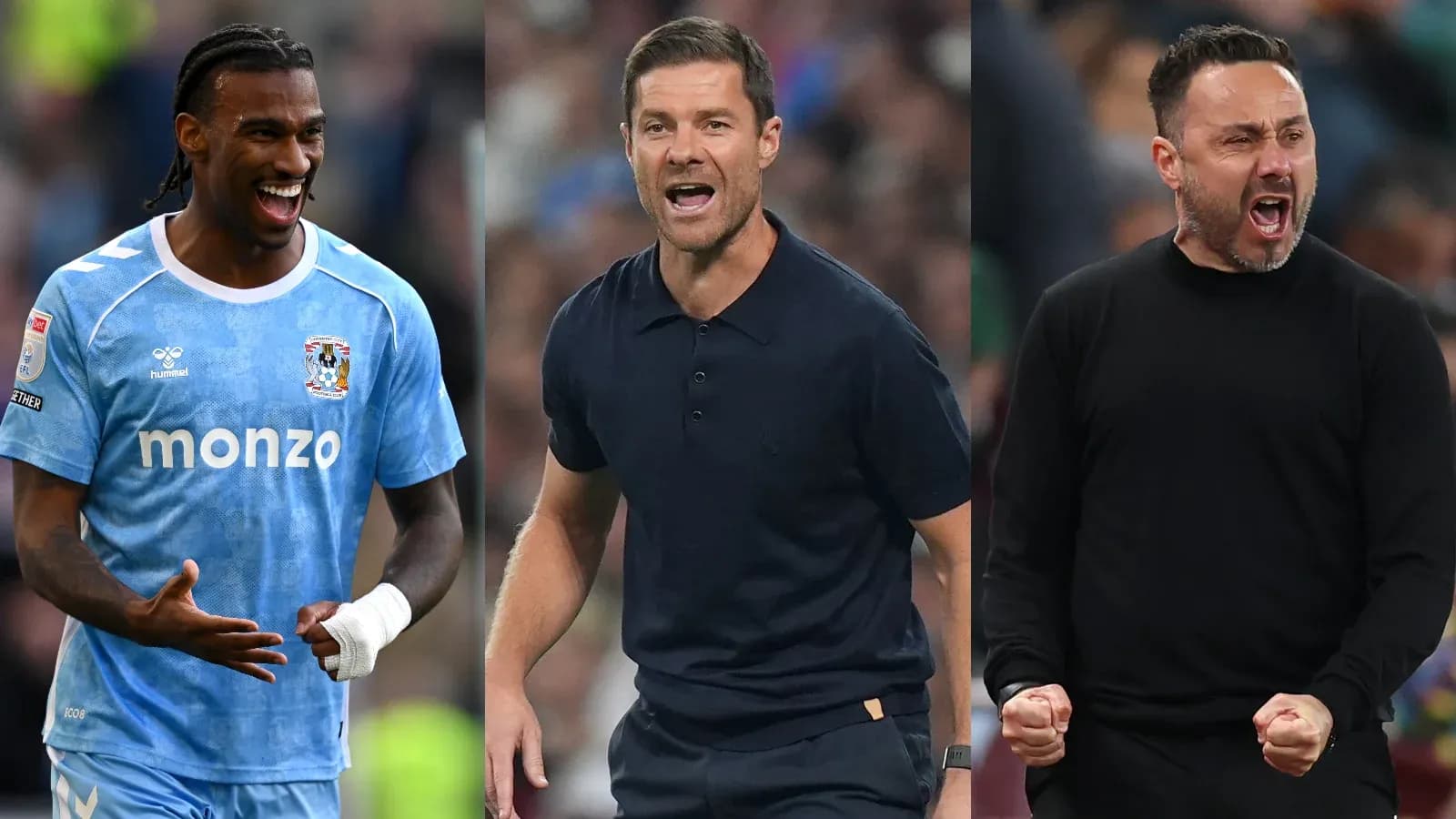
Chelsea have turned to one of Europe’s most coveted young coaches. Xabi Alonso arrives not as a stop-gap or a glorified trainer, but as manager – a deliberate shift in power and philosophy after a bruising 10th-place finish.
The title on his door matters. It signals a club ready to hand more authority to the man in the dugout, especially with a crucial summer transfer window looming. Recruitment will shape everything: how quickly he can imprint his ideas, how well he can balance an already bloated squad, how ruthlessly he can cut through the noise of recent seasons.
Chelsea will also enjoy something rare in west London: clear midweeks. No European football means time on the training ground, time to drill patterns, time to reset. If the window is sharp and the dressing room buys in, Alonso’s side will not be planning to loiter in mid-table.
De Zerbi and Spurs: From Survival to Ambition?
Tottenham Hotspur survived by the skin of their teeth. Safety only came on the final day, and a second consecutive 17th-place finish laid bare the scale of the rebuild.
Yet the end of the season hinted at something more hopeful. Roberto De Zerbi took 11 points from the final six matches. Only Manchester United, Arsenal and AFC Bournemouth collected more in that stretch. That’s not a title charge, but it is a pulse.
Now comes the real test. Can Spurs turn a late surge into a full-season identity? Can De Zerbi remodel a fragile squad into one that reflects his aggressive, front-foot football? The escape act is over; the supporters will not tolerate another year of clinging on.
Coventry and Hull: Old Names, New Stories
The Premier League always feels fresher when it welcomes unfamiliar faces or long-lost names. This time, it gets both.
Coventry City are back for the first time since 2000/01. In the years between, they plunged as low as League Two before clawing their way up again. Their return as champions is more than a promotion; it’s a redemption arc that has taken a quarter of a century to complete.
Hull City’s story is different but no less intriguing. They have been out of the top flight for a decade, and the underlying numbers from their promotion campaign raise eyebrows. Opta’s “Expected Points” table had them all the way down in 23rd in 2025/26. Reality defied the metrics.
Both clubs will look at recent examples and dare to dream. Sunderland stormed into the UEFA Europa League in their first season back. Leeds United secured safety with matches to spare. Coventry and Hull arrive as underdogs, but the Premier League has a habit of rewarding fearless newcomers.
Liverpool: End of an Era, Start of What?
Liverpool were already braced for a significant summer after a disappointing season. Then the ground shifted again. Arne Slot departed, Andoni Iraola arrived, and what looked like a reset suddenly became a full-scale rebuild.
The erosion of the club’s once-clear tactical identity has unsettled supporters. Under Jurgen Klopp, everyone knew what Liverpool were. The seasons since have chipped away at that certainty, and 2026/27 now feels as pivotal as the first year after Klopp walked away.
Key figures have gone. Mohamed Salah, Andy Robertson and Ibrahima Konate have all moved on, underlining the sense that a defining era has closed. Iraola must build something new, not just patch up the old. Whether Liverpool endure another turbulent campaign or rediscover their edge, the consequences will echo far beyond a single season.
Europe’s Pull: Nine Clubs, One Chaotic Table
The Premier League has rarely felt this dense with contenders. One reason is simple: Europe keeps dragging teams into deeper waters.
Spurs, Chelsea, Newcastle United and Nottingham Forest all wrestled with the demands of European football last season, and their domestic form often sagged under the weight. The pattern is set to repeat. Nine clubs will again juggle continental commitments in 2026/27, and that almost guarantees a league table that twists and buckles.
This past campaign, Bournemouth, Brighton & Hove Albion and Sunderland all overshot expectations to qualify for Europe. The gap between seventh and 11th was just two points. That kind of congestion turns every minor wobble into a crisis and every hot streak into a charge. There is no obvious reason to expect clarity next time.
Arsenal and the Art of Tension
Arsenal’s story comes wrapped in contradiction. Three consecutive second-place finishes, then the title finally secured – but with a brand of football that has split opinion.
Pundits argue over whether the Gunners’ cautious approach reflects Mikel Arteta’s cold tactical calculation or a team gripped by the tension of chasing history. Were they protecting what they had, or paralysed by what they might lose?
Next season should strip away the excuses. Arsenal will defend their crown with the weight of that long wait finally lifted. Arteta must decide: double down on the control, the restraint, the risk-averse structure that delivered the title, or loosen the handbrake and let his side attack with greater freedom.
The league, as ever, will not wait for them to decide.