2026 World Cup Roadmap: Dates, Venues, and Key Matches
The wait is over. The 2026 World Cup, the biggest tournament the sport has ever staged, finally has its roadmap.
From June 11 to July 19, across 16 stadiums in the USA, Canada and Mexico, 104 matches will carve a new shape into football history. The kick-off times are locked in, the venues assigned, the travel paths sketched. Now it’s over to the teams.
A World Cup stretched across a continent
The curtain rises at the spiritual home of Mexican football. On Thursday, June 11, Estadio Azteca in Mexico City hosts Mexico vs South Africa at 3pm ET, the first act in Group A and the first step of a 48-team epic. Later that night, South Korea meet Czechia in Guadalajara’s Estadio Akron, a reminder that this World Cup will be played at altitude, on coasts, in heat and under floodlights from Monterrey to Vancouver.
The group phase sprawls from June 11 to June 27, a daily drumbeat of football. Mexico’s group alone offers a tour of North America: Mexico City, Guadalajara, Atlanta, Monterrey. Canada’s Group B journey starts at BMO Field in Toronto against Bosnia and Herzegovina on June 12, then swings west to Vancouver and south to Seattle and the Bay Area.
The United States, drawn into Group D, begin under the Hollywood lights. On Friday, June 12, USA vs Paraguay opens at SoFi Stadium in Los Angeles at 9pm ET, a prime-time launch in a venue built for American football but about to be repurposed for the global kind. Their group also drags them north to Seattle and back to LA, with Australia and Turkiye completing a section that will test both stamina and logistics.
Brazil open their campaign on June 13 at MetLife Stadium in the New York/New Jersey area, facing Morocco in Group C at 6pm ET, before heading to Philadelphia and Miami. Argentina’s first glimpse of this expanded World Cup comes in Kansas City on June 16 against Algeria, under the lights at Arrowhead Stadium.
Germany kick off on June 14 in Houston against Curacao, Portugal land in Houston too, against Democratic Republic of Congo on June 17, while England’s first steps come in Dallas that same day against Croatia at AT&T Stadium. The giants are scattered deliberately across the map: from Seattle and Vancouver in the Pacific Northwest to Miami and Houston in the south, to Boston, New York/New Jersey and Philadelphia in the northeast.
Every group has its own mini-tour. Spain start in Atlanta against Cape Verde, then roll through Miami and Guadalajara. France move between MetLife, Philadelphia and Boston. Portugal’s path cuts from Houston to Guadalajara to Miami. England’s route traces Dallas, Boston, Toronto and New York/New Jersey.
The new format, laid bare
The expanded format means 12 groups, A through L, with three group games per team and a Round of 32 waiting on the other side. Group placement now matters in a different way: not just for top-two qualification, but for the lottery of which third-placed sides survive and who they face.
Group play closes on Saturday, June 27, with four games that could shape the entire knockout bracket: Algeria vs Austria in Kansas City, Jordan vs Argentina in Dallas, Colombia vs Portugal in Miami and Croatia vs Ghana in Philadelphia. By then, the full list of 32 survivors will be set—and so will the chaos.
The Round of 32 begins the very next day, Sunday, June 28, at SoFi Stadium. Match 73 pits the runner-up of Group A against the runner-up of Group B at 3pm ET, a high-stakes clash in Los Angeles to open the knockouts.
From there, the bracket stretches across the continent. Houston, Boston, Monterrey, Dallas, New York/New Jersey, Mexico City, Atlanta, Seattle, San Francisco Bay Area, Toronto, Vancouver, Miami and Kansas City all host Round of 32 ties between June 28 and July 3. Group winners will see their reward in the form of third-placed opponents from a web of possible groups; runners-up face each other in more evenly matched, nervier affairs.
The Round of 16 condenses the field again from July 4–7. Houston and Philadelphia stage the first two last-16 games on Independence Day. MetLife and Azteca take over on July 5, with Mexico City hosting a primetime knockout under the lights. Dallas and Seattle follow on July 6, then Atlanta and Vancouver close the round on July 7.
By then, the travel patterns will be clear. Some teams will have hopped borders multiple times. Others will have built a base in one region and stayed there. The schedule offers no hiding place.
The road to MetLife
The quarterfinals arrive on July 9, 10 and 11, split across Boston, Los Angeles, Miami and Kansas City. Gillette Stadium hosts Match 97, the first quarterfinal, at 4pm ET on July 9. SoFi Stadium follows on July 10. Hard Rock Stadium in Miami and Arrowhead Stadium in Kansas City share the spotlight on July 11, with a late 9pm ET kick in Missouri for Match 100.
From there, the tournament narrows to two colossal showpieces.
On Tuesday, July 14, AT&T Stadium in Dallas hosts the first semifinal, Match 101, at 3pm ET. The following day, Wednesday, July 15, Mercedes-Benz Stadium in Atlanta stages the second semifinal, also at 3pm ET. Two matches, two cities, and the final word on who will travel north for the biggest game of all.
The third-place game lands in Miami on Saturday, July 18 at Hard Rock Stadium, a 5pm ET kick that will still matter deeply to whoever falls short in the last four.
Then comes the finale.
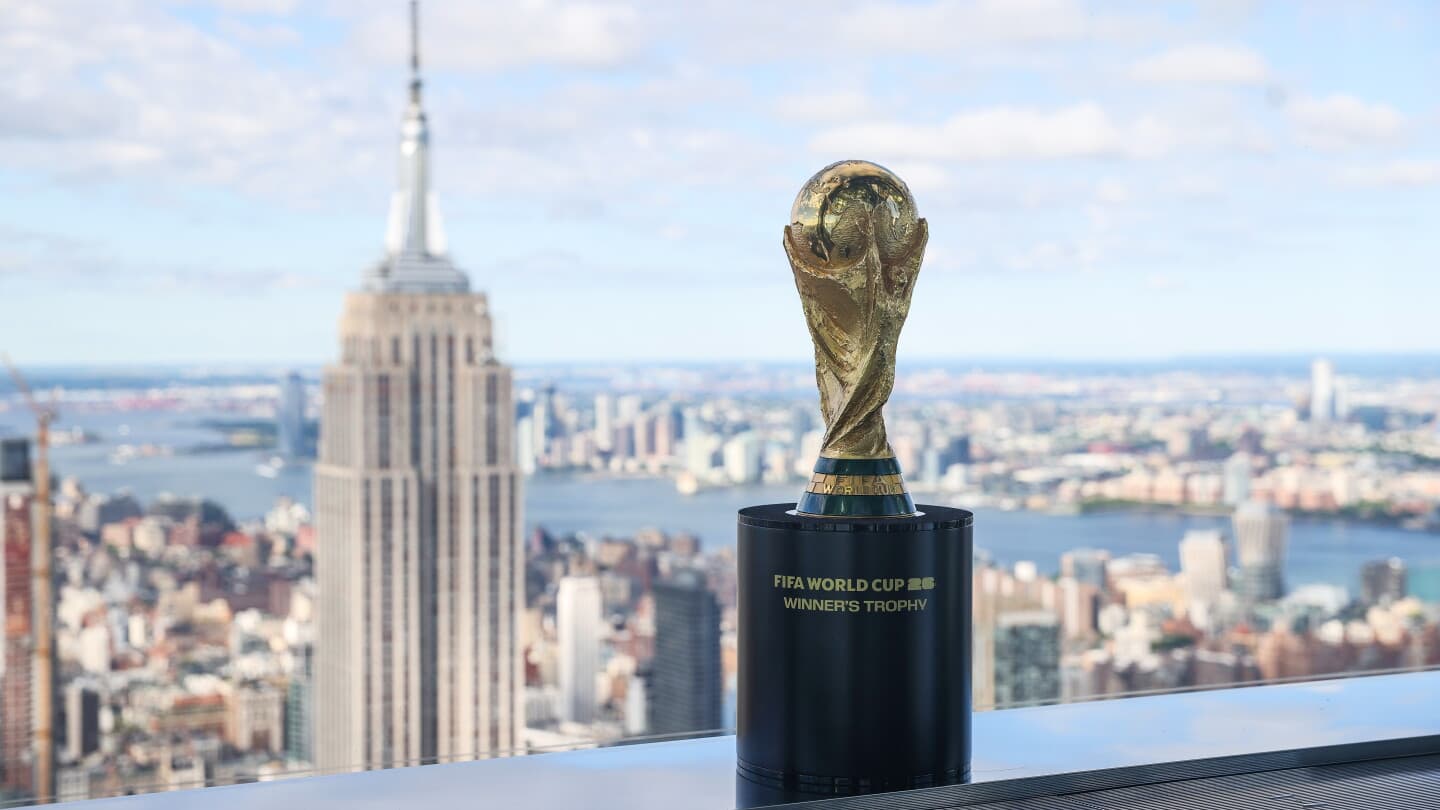
On Sunday, July 19, at 3pm ET, MetLife Stadium in the New York/New Jersey area hosts Match 104, the World Cup final. The journey that began at Azteca on June 11 will end there, under East Coast skies, with one team lifting the trophy in front of a global audience.
A tournament built on scale
The numbers are stark: 104 matches, 16 venues, 48 teams, three host nations. Group games in Mexico City, Guadalajara and Monterrey; in Toronto and Vancouver; in Los Angeles, Seattle, San Francisco Bay Area, Kansas City, Dallas, Houston, Miami, Atlanta, Boston, Philadelphia and the New York/New Jersey corridor.
Every game will be available in Spanish on Telemundo and Universo, with all 104 matches streaming on Peacock en Espanol. Kick-off times are tailored to ET, but the reality is a rolling festival across time zones, from early afternoon starts to midnight and late-night fixtures.
The structure is set. The calendar is fixed. Routes to glory and routes to heartbreak are already drawn across the map.
Now the only question left is who will navigate this sprawling, unforgiving schedule best—and who will be standing on the MetLife turf on July 19, with the world watching.