Alphonso Davies Injury: Canada Faces World Cup Challenge
Alphonso Davies’ latest injury setback has hit Canada like a cold wind off Lake Ontario.
Five weeks out from their World Cup opener against Bosnia and Herzegovina in Toronto on June 12, Bayern Munich confirmed the left back will miss four to five weeks with a left hamstring injury. For Jesse Marsch, for Canada Soccer, for a fan base that has built its hopes around the 23-year-old, the timing could hardly be worse.
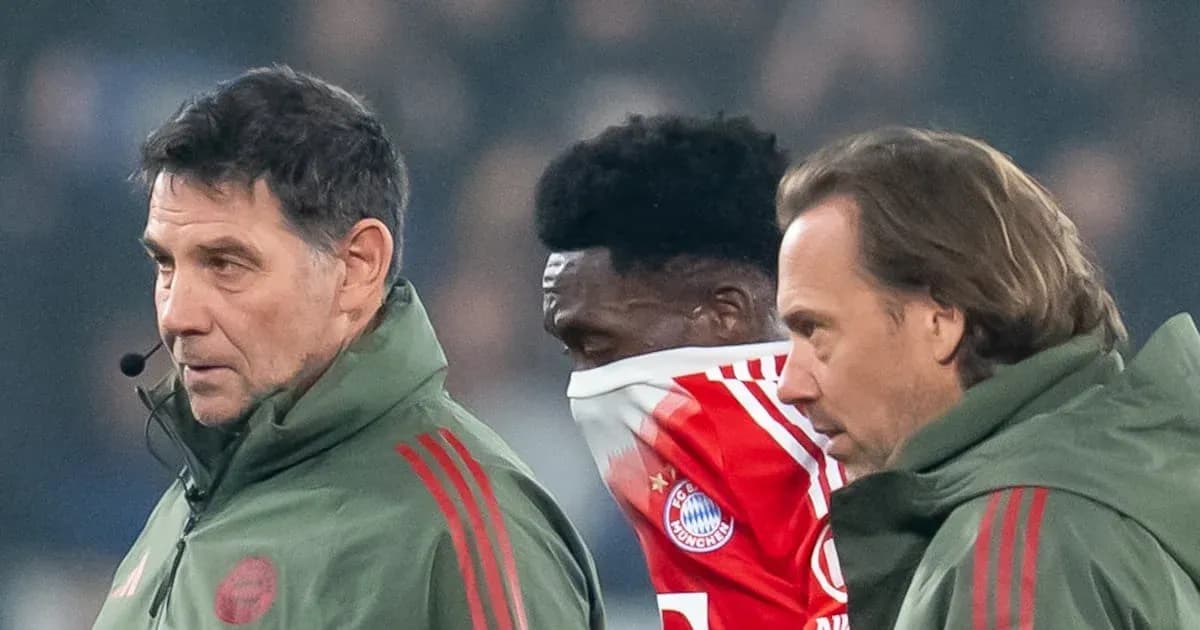
Davies pulled up after a trademark burst down the left in the 86th minute of Bayern’s 1-1 draw with Paris Saint-Germain in the UEFA Champions League semifinal on Wednesday, a tie the German champions lost 6-5 on aggregate. The moment he reached for his leg, you could almost hear the calculators clicking in Canada: four to five weeks… June 12… group stage… what now?
Canada and Bayern close ranks
Canada Soccer moved quickly. The federation stressed it is working hand in hand with Bayern to give Davies every chance of making it back in time.
“We’re in close contact with Alphonso and remain in touch with Bayern’s medical team following his recent setback,” read a statement provided to TSN. The message was clear: all resources, including specialized soft-tissue expertise, are being thrown at the problem to carve out “the best possible pathway back to full fitness ahead of the FIFA World Cup.”
But science and schedules don’t always cooperate. Canada’s group-stage calendar is unforgiving: Bosnia and Herzegovina in Toronto on June 12, Qatar in Vancouver on June 18, Switzerland on June 24. A four-to-five-week layoff drops Davies right into that window. His availability for any of those games is now a giant question mark.
If Canada advance, the Round of 32 offers potential dates on June 28, 29, July 1, or July 2 in Vancouver should they top Group B. That longer runway might suit a player easing back from a hamstring problem. It doesn’t solve the headache of how to start a tournament without the captain and most explosive talent.
A body that won’t relent
This is not an isolated setback. It’s the latest chapter in a gruelling two-year battle between Davies and his own body.
He missed nine months after tearing the ACL in his right knee while playing for Canada in the Concacaf Nations League Finals in March 2025. He finally returned to Bayern in mid-December, only to tear a muscle fibre in his right hamstring by the end of February.
He came back just over two weeks later. First game back, another hamstring strain, again on the right side, and out until early April. Since that most recent return, he has managed nine appearances across all competitions, four of them starts, and has not gone beyond 62 minutes in any outing.
And this isn’t even his first prolonged absence from the national team. In late 2021, myocarditis kept him out for seven months and forced him to miss Canada’s final six qualifiers for the 2022 World Cup.
When he does play, the impact is obvious. In his 41 caps, Canada have 20 wins, 12 losses and nine draws, scoring 74 and conceding 44. Without him, across 36 matches, Canada have actually matched the 20 wins, with six losses and 10 draws, but with 68 scored and only 26 conceded. The team can cope. It cannot replace what he brings.
Few players in the world can match his ability to rip open a defence from a standing start with the ball glued to his feet. That weapon may now be holstered for the most important weeks of Canada’s footballing calendar.
Tactical puzzle on the left
The questions pile up quickly for Marsch and his staff.
- Will Davies miss the entire group stage?
- If he does make it back, is he a 20-minute burst off the bench rather than a 90-minute anchor?
- Who starts on the left in his absence?
- What does that do to the balance of the team?
- How does it shape a World Cup roster that must be finalized by June 1?
- Who wears the armband on June 12?
Marsch has at least had time to experiment. Davies has not played for Canada in 14 months, forcing the manager to explore alternatives.
Richie Laryea, Ali Ahmed, Liam Millar, Junior Hoilett and, most recently, Marcelo Flores have all been tasked with protecting Canada’s left side while offering some of the thrust Davies normally provides. They’ve given Marsch options and data. But the injury gods haven’t stopped at Davies.
Ahmed limped out of Norwich City’s final game of the English Championship season last weekend with an undisclosed problem. Laryea has missed Toronto FC’s last three matches with a thigh issue, though TFC insist it will not rule him out of the World Cup.
If both Ahmed and Davies lose minutes, Flores suddenly moves from intriguing prospect to genuine starting candidate on the left of midfield. His direct running and creativity stood out in March friendlies against Iceland and Tunisia, and his fearlessness in one-v-one situations could be vital.
Behind him, Laryea remains an option when fit, as does Zorhan Bassong. Even Tajon Buchanan, a right midfielder by trade, has some experience at left back from his time with Club Brugge. Marsch has used Hoilett sparingly so far, but the veteran’s nous and ability to manage big moments could yet earn him a larger role.
There is also Sam Adekugbe, working his way back from a torn Achilles suffered nearly a year ago. His name sits firmly in the “dark horse” category. There is no clear indication when he will be match-ready, and the same uncertainty clouds several other key figures in the squad.
A squad held together by tape and resolve
Canada Soccer’s medical team has been busy on both sides of the Atlantic.
They recently worked with Nice to support Moïse Bombito’s recovery from a broken leg suffered last fall. The centre back is back in training and may not see competitive action until the pre-tournament friendlies in June against Uzbekistan in Edmonton and Ireland in Montreal.
Derek Cornelius, Bombito’s partner at the heart of defence, also missed significant time with a muscle injury and has only recently returned to training. Now, a reported dispute with his head coach has left him frozen out at Rangers FC since November. Match fitness is a concern there too.
Up front, Promise David is racing the clock. Multiple sources told TSN his recovery from hip surgery three months ago is ahead of schedule. An MRI later this month will determine whether he can be considered for World Cup selection. Even if he makes it, the expectation is that he would be used as a late-game attacking option, not a 90-minute starter.
Layer on top the players who are back but still under careful monitoring: Buchanan, who missed time with an undisclosed issue; Stephen Eustáquio, recently returned from a hematoma; Luc de Fougerolles, coming off groin and ankle problems; Jacob Shaffelburg, back from a groin injury. For Marsch and his staff, the past few months have been less about picking a best XI and more about tracking who can simply get through 90 minutes.
Yet the group hasn’t fractured. The camaraderie and resilience forged during the run to the 2022 World Cup remain a defining feature of this team. The dressing room has lived without Davies before and found ways to win.
Leadership without the captain
If Davies cannot start the World Cup, Canada will lose not only their star but their captain. That shifts responsibility onto the leadership council Marsch has built around him.
Eustáquio, the vice-captain, will carry even more weight in the middle of the park, dictating tempo and tone. Jonathan David, who wore the armband at last summer’s Gold Cup when both Davies and Eustáquio were absent, stands ready again as a natural focal point in attack and in the dressing room.
Canada will not tear up their plans because of one injury, even one this significant. The system remains. The philosophy remains. The belief, they insist, remains.
But the image of Davies clutching his hamstring in Munich lingers. For a country counting down the days to a World Cup on home soil, everything now hangs on a fragile muscle in a left leg and a medical timetable that refuses to bend.