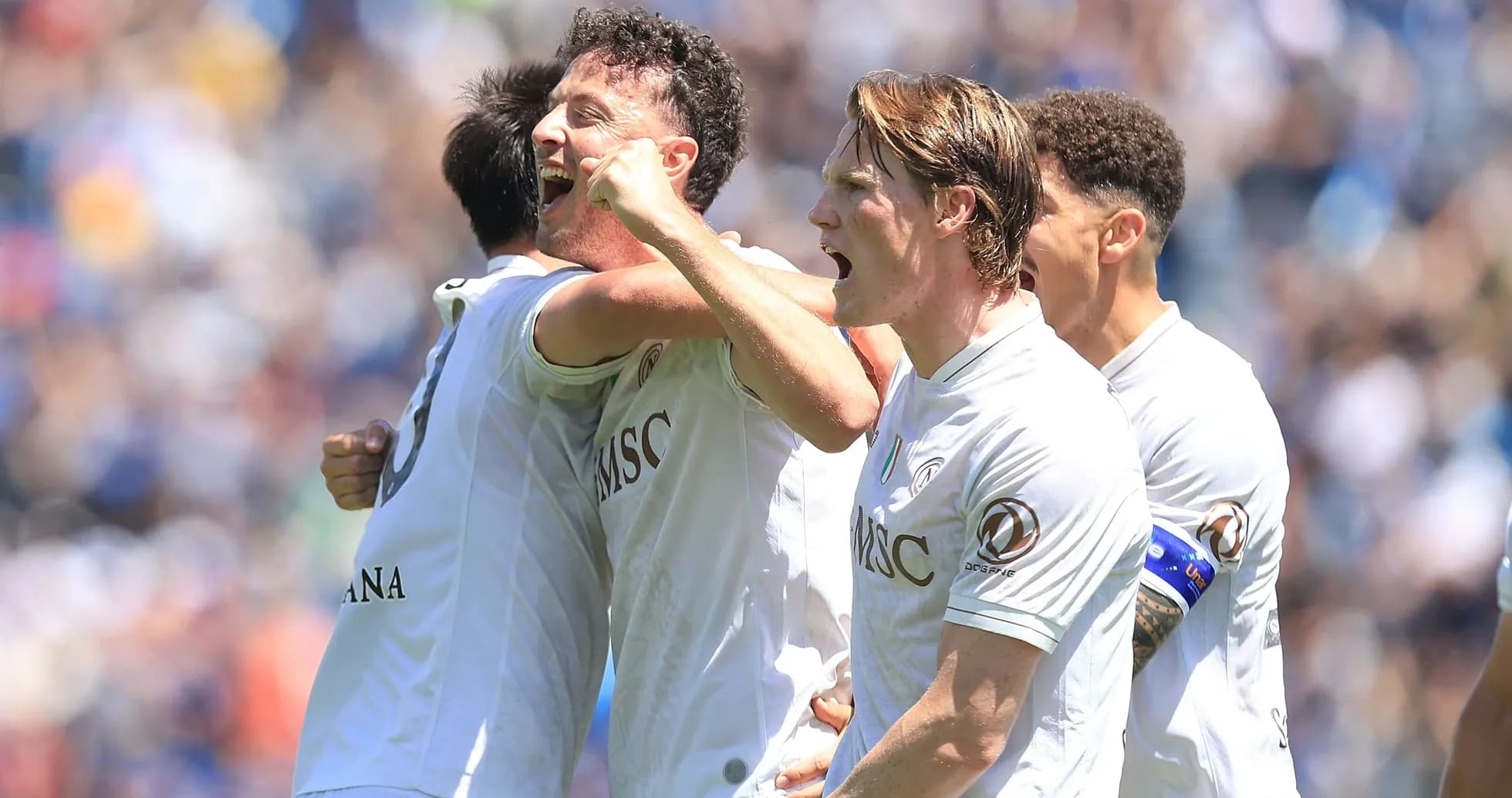
Amir Rrahmani Retires from Kosovo National Team Amid Federation Conflict
Amir Rrahmani has walked away from Kosovo. Not quietly, and not on friendly terms.
The Napoli centre-back, captain of his country for seven years and a pillar of their rise on the international stage, has announced his retirement from national-team duty at 32 – and he has aimed straight at the top of the Football Federation of Kosovo (FKK) on his way out.
A decade ends in open conflict
Rrahmani’s decision, confirmed on Friday evening, ends a 10-year international career that brought him 66 caps and made him the face of the team. Instead of a farewell lap, it arrives in the middle of a severe breakdown in relations with the federation.
He did not sugar-coat it.
On Instagram, where he chose to break the news to supporters, the defender laid out a blistering critique of the FKK and the people running it. He said he felt abandoned, exposed, and ultimately pushed into a corner.
“After ten years with the national team, seven of which were spent as captain, I am announcing that I will no longer be part of the Kosovo national team as long as the FKK is led by its current individuals,” he wrote, drawing a clear line between his love for the shirt and his rejection of the leadership above it.
“What did I get in return?”
Rrahmani detailed long-standing frustrations with the federation, describing “numerous factors, persistent disagreements and a lack of competent people” to deal with the squad’s concerns. Those issues, he said, had dragged on for years without any meaningful improvement.
The tone hardened further as he accused those in charge of actively working against him.
“And what did I get in return? Constant, co-ordinated attacks for more than two years from those people who should have been protecting us. Justice will prevail one day.
This decision comes from the need to preserve my integrity as a captain and as a professional footballer, but above all, my values as a human being.”
This was not the language of a player easing himself out of the international scene. It read like a final break, a captain deciding he could no longer front a project he no longer believed in.
Captaincy void for Kosovo
For Kosovo, the sporting impact is immediate and heavy. Rrahmani has been their on-field organiser, their most experienced voice, and the symbol of continuity through qualification campaigns and coaching changes.
Losing that presence is one thing. Losing it in such a public and politically charged fashion is another.
The national team must now identify a new captain and rebuild a leadership structure without the man who has worn the armband for most of their modern history. Whoever steps up inherits not just the responsibility of leading the side, but a dressing room that has seen its former skipper openly clash with the federation.
Door closed – but not locked
Despite the ferocity of his statement, Rrahmani did leave one small opening. His retirement, as he framed it, is conditional on the current FKK leadership.
He made it clear he will not play for Kosovo “as long as” the same individuals remain in charge. The implication is obvious: a change at the top could prompt a conversation about a return.
For now, though, his focus turns fully to club football. A mainstay at Napoli, where he has already passed the 200-appearance mark, he remains a central figure in Serie A and will pour his energy into that role while the storm rages back home.
Kosovo, stripped of their long-time captain in the middle of a power struggle, are left to answer a stark question: can they move forward on the pitch while the battle off it shows no sign of easing?