Arijon Ibrahimovic's Unexpected Loan to Augsburg
Two months ago, FC Bayern were still rolling out the red carpet.
“FC Bayern are planning firmly with Arijon Ibrahimovic,” blared the headline on 7 July as the German record champions announced the 20-year-old’s contract extension.
Sporting director Christoph Freund smiled into the club camera and set the tone: “Now it is no longer just about learning for him – now it is about making an attack, here at FC Bayern!”
Attack? Yes. But not in Munich.
From Bayern’s future plan to Augsburg’s present
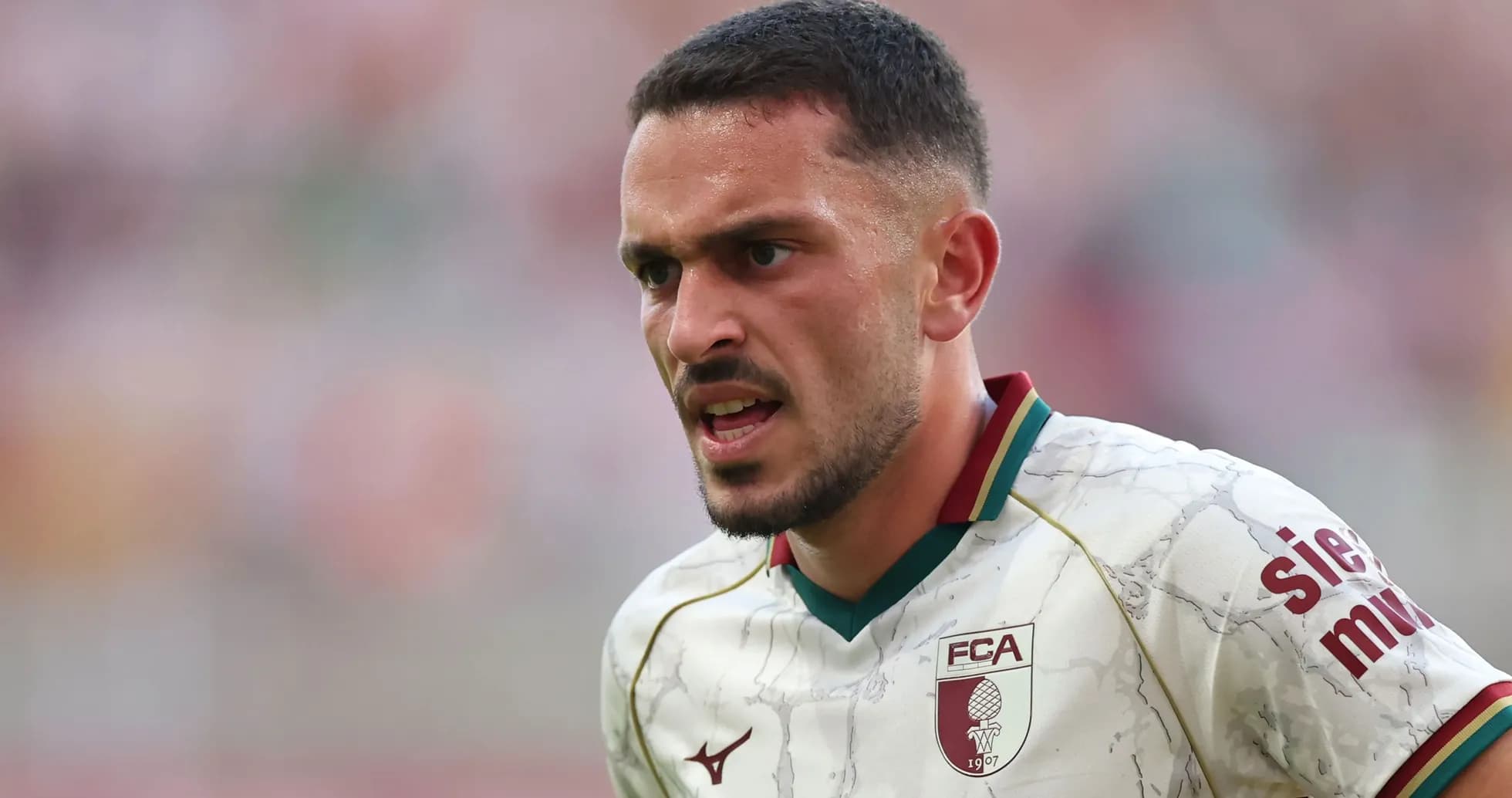
Fast-forward a few weeks and Ibrahimovic can already point to a neat little line on his CV: one Bundesliga appearance, one goal, top of the table after two wins from two. Only he is not doing it in Bayern red, but in the green and white of FC Augsburg.
For a player who has already been sent out on loan several times, the sudden change of direction must have felt brutal. “Here today, gone tomorrow, I'm hardly here before I must leave” – the old line from Hannes Wader could have been written for his summer. Only days after talking about how happy he was to “get the chance to play for the biggest club in the world,” Bayern abruptly stopped planning with him.
The idea had seemed clear enough. Ibrahimovic was earmarked as the back-up to the tireless Luis Diaz, the young attacker learning his trade behind an established star. Then came Max Eberl.
Shortly before deadline day, the sporting boss sat down in front of the microphones and opened the door: “If there is something there that is ready to be announced, that could be interesting for both parties, then we would be open to that again.” A sentence like a cold draft through a room Ibrahimovic thought was finally locked.
Confusion, irritation, and a late twist
How keen Ibrahimovic really was to leave Bayern remains murky. Officially, Freund framed the move on 1 September as a joint decision: they had “reached an agreement with Arijon that it is best for his development if we loan him out for another season.”
Behind the scenes, the mood sounded very different. According to Sport1, Ibrahimovic was “extremely irritated”. His agent Roman Rummenigge reportedly felt “blindsided” by Eberl’s uncoordinated change of course. From their perspective, nothing in the previous weeks had suggested a U-turn. Quite the opposite: the signals from the club had led them to believe he would actually get minutes.
Werder Bremen sensed an opportunity and tried to bring him north. Augsburg, though, won the race. FCA did not just secure a straight loan until the end of the season, but also an option to buy set at eight million euros. Freund, at least in public, kept the door in Munich ajar: Ibrahimovic was still “a young player with great attributes, and he needs regular match practice at this stage. He will get that at FC Augsburg, and we will continue to support him closely along the way.”
Between the lines, the question lingered: was this a carefully managed development step – or a quiet admission that he is not yet at Bayern level?
Criticism in Munich, a clean start in Augsburg
The backdrop to Bayern’s change of heart is not fully clear. What is clear: Ibrahimovic did not help himself in pre-season. He missed some big chances, and parts of the fanbase turned on him quickly. On social media and in comment sections, criticism grew. Some supporters openly doubted whether he had the class to influence the really big games.
At Augsburg, that noise melted away in a single afternoon.
Coach Manuel Baum threw him straight into the starting XI for his first game. Ibrahimovic responded with the kind of performance every loanee dreams of: he scored in a 4-1 win at Eintracht Frankfurt, immediately stamping his name on the match and on Augsburg’s early-season story.
Two games, two wins, top of the table. While Bayern wrestle with their own squad decisions and mixed messaging, Ibrahimovic has something simple and priceless: a team that plays him, a coach who trusts him, and a stadium that already has a new name to cheer.
For now, the “hasty departure from Säbener Strasse” looks less like a demotion and more like a launchpad. The real question is no longer why Bayern let him go – it’s whether they will be able to get him back.