Arsenal's Triumph: A Celebration of Progress and Hope
The final whistle had barely gone when the Emirates simply let go.
After weeks of tension, tight jaws and tighter scorelines, Arsenal’s stadium erupted on Tuesday night as if 20 years of European frustration had been sitting under the surface, waiting for a crack. Atletico Madrid were beaten, the Champions League final secured, and a club that has so often flinched on this stage suddenly felt like it belonged again.
Budapest now beckons. On 30 May, Arsenal will walk out to face either Bayern Munich or Paris St-Germain, chasing a first European crown and the possibility of a continental double while sitting top of the Premier League. For a fanbase that has lived on near-misses and memes, this is uncharted, giddy territory.
And that, of course, is where the “celebration police” showed up.
Who gets to decide what’s “too much”?
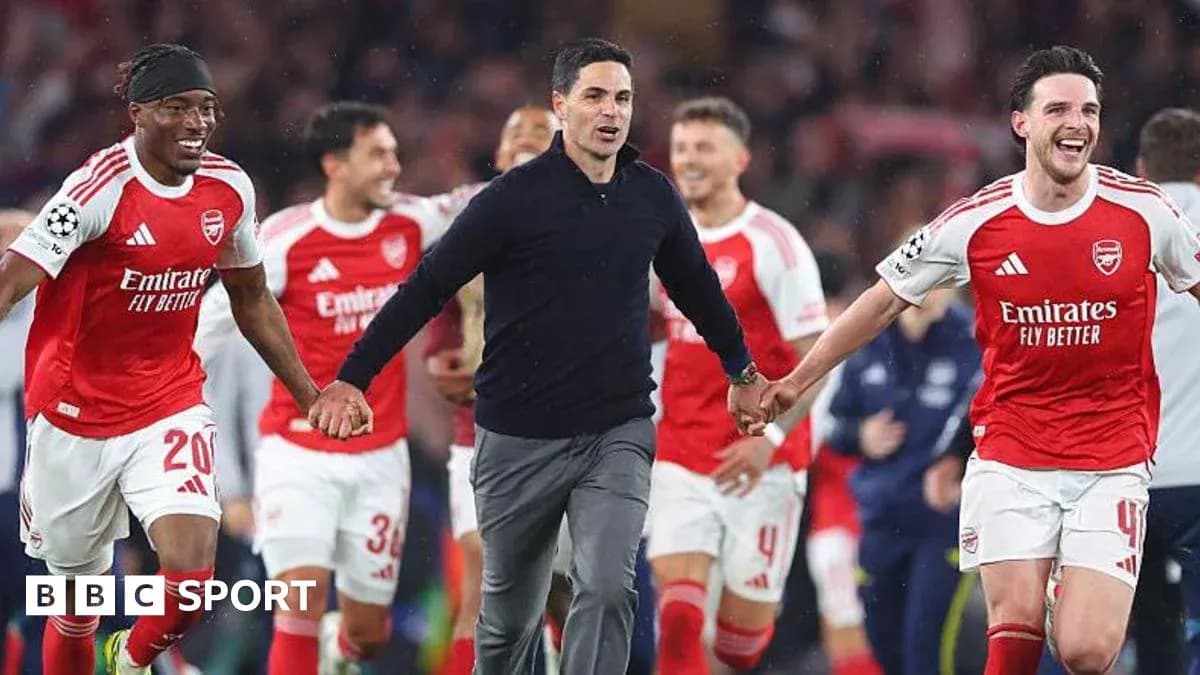
Arsenal’s players formed a line, joined hands with Mikel Arteta and charged towards each end of the Emirates, saluting a fanbase that had spent the night roaring them through a nerve-shredding semi-final. It looked like catharsis. To some, it looked like excess.
Wayne Rooney, who knows what it takes to win this competition, didn’t like it.
“They deserve to be in this position but they haven't won it yet,” he said on Amazon Prime. “I think the celebrations are a little bit too much. Celebrate when you win.”
Rooney’s perspective comes from the summit. He was part of Manchester United’s 2007-08 side that took both the Premier League and Champions League, one of only three English clubs to have done the double before: United, Liverpool and Manchester City. Arsenal are trying to become the fourth, and the seventh English club to lift the European Cup or Champions League at all.
From that vantage point, maybe anything short of lifting the trophy feels like a checkpoint, not a destination.
But football is not lived at the summit. It is lived in the climb.
Former Arsenal striker Ian Wright saw it differently. On X, he urged supporters to ignore the tutting from the sidelines.
“Arsenal fans, let me tell you something: enjoy this. The celebration police will be out in force. Do not get nicked!
“Enjoy yourselves, football's about moments and this is a big moment. Enjoy it and let's hope that in the final and after the final we have another massive moment. It's a great day.”
That clash of views cuts to the heart of the modern game: is joy only valid when there’s silverware in the captain’s hands, or is reaching a first Champions League final in 20 years reason enough to lose yourself for a night?
Wenger’s warning – and his understanding
Arsene Wenger knows better than anyone at Arsenal what it means to stand on the brink of Europe and fall short. He took the club to their only previous Champions League final in 2006, led for an hour against Barcelona, and watched it all unravel in Paris.
Watching from the studio this time, he struck a balance between indulgence and insistence.
“They celebrated well tonight, which is normal,” he told beIN Sports. “But you want more to focus already on the final and the next game.
“The celebration is deserved and happiness is absolutely normal, but now the next step is of course to go to the final and win it.”
Wenger understands the release. He also understands how quickly it must turn into resolve. Arsenal’s history in this competition is littered with regret; the current squad has a chance to redraw that story in one match.
When joy becomes a weapon
The debate over “over-celebration” is not new. Rooney raised the same complaint when Manchester City beat Arsenal 2-1 last month to haul themselves back into the Premier League title race.
“I think it was a little bit over the top,” he said of City’s reaction. “It is obviously a big win. I just think it's a little bit premature and it might come back to bite them.”
Danny Murphy agreed that City’s celebrations “looked a bit excessive, like maybe they had already won [the title]”, before softening the blow. For him, it was more a release of knowing they were back in control, that the title was “in their own hands”.
Control. That’s the point. City have spent years turning emotional spikes into fuel. Arsenal are only just learning how to ride that wave.
Scarlet Katz Roberts, from the Goal Difference podcast, argued that Arsenal had every right to lean into the moment. For her, the lesson from the days between the win over Fulham and the victory against Atletico was simple: vibes matter.
For much of the season Arsenal have sat on top of the table, surrounded by noise about quadruples, collapses and “bottle jobs”. The numbers say it has been outstanding. The mood has often felt suffocating.
That’s why Tuesday night cut through. ‘Freed From Desire’ thundered around the ground as players streamed onto the pitch. ‘North London Forever’, once dismissed by some as corny, suddenly sounded like a genuine anthem. Fans drowned out Martin Keown before kick-off. It wasn’t curated. It was instinctive.
It felt like a club finally understanding the power of its own noise.
The science of letting go
Strip away the tribal squabbling and there is another angle: what does that kind of shared eruption actually do to a team?
Bradley Busch, a chartered sports psychologist who runs Inner Drive, sees a healthy squad dynamic in those images of Arsenal players and staff celebrating together on the pitch.
The research term is “emotional contagion” – the idea that behaviours, attitudes and unity spread through a group. One of the clearest ways to build that connection is to celebrate as one.
On a basic level, as Busch points out, players are not sprinting to the corner flag with their manager because a journal article told them to. They do it because they have lived under relentless pressure, thinking about this target every hour of every day, and have finally smashed through a barrier.
In a world where the stakes are so high and the margins so fine, letting that pressure vent is not a luxury. It is a necessity.
For Busch, talk of “over the top” reactions feels like the same old “celebration police” in a new suit. The only meaningful definition of over-celebration, he argues, is anything that harms future performance: showboating mid-match, intensity dropping, preparation for the next game being disrupted.
This, he believes, is “a world away from that”.
He even adds a twist of rivalry to his verdict. As a Tottenham fan, he jokes that he hopes it is over-celebration – but that’s his heart talking, not his professional judgment.
A night that changes the temperature
Look beyond the arguments and something else comes into focus. Arsenal have spent years being told they are brittle, naive, too emotional. On Tuesday, that emotion turned into something else: a force that carried them through a high-wire semi-final and out the other side.
Arteta has been chasing that feeling since he walked back through the doors of the club. A connection between pitch and stands that is not just sentimental, but competitive. A noise that unsettles opponents and steadies his own players.
At the Emirates, it finally felt real.
Whether this ends with a trophy in Budapest or another scar, no one can say. What is clear is that Arsenal are back on the biggest stage, with a shot at history and a fanbase that has remembered how to enjoy the ride.
The medals will be handed out on 30 May. The question now is simple: will this eruption of joy prove to be a prelude, or the moment the club’s modern era truly changed course?