Arsenal's Martinelli Transfer Saga: Understanding the Real Story
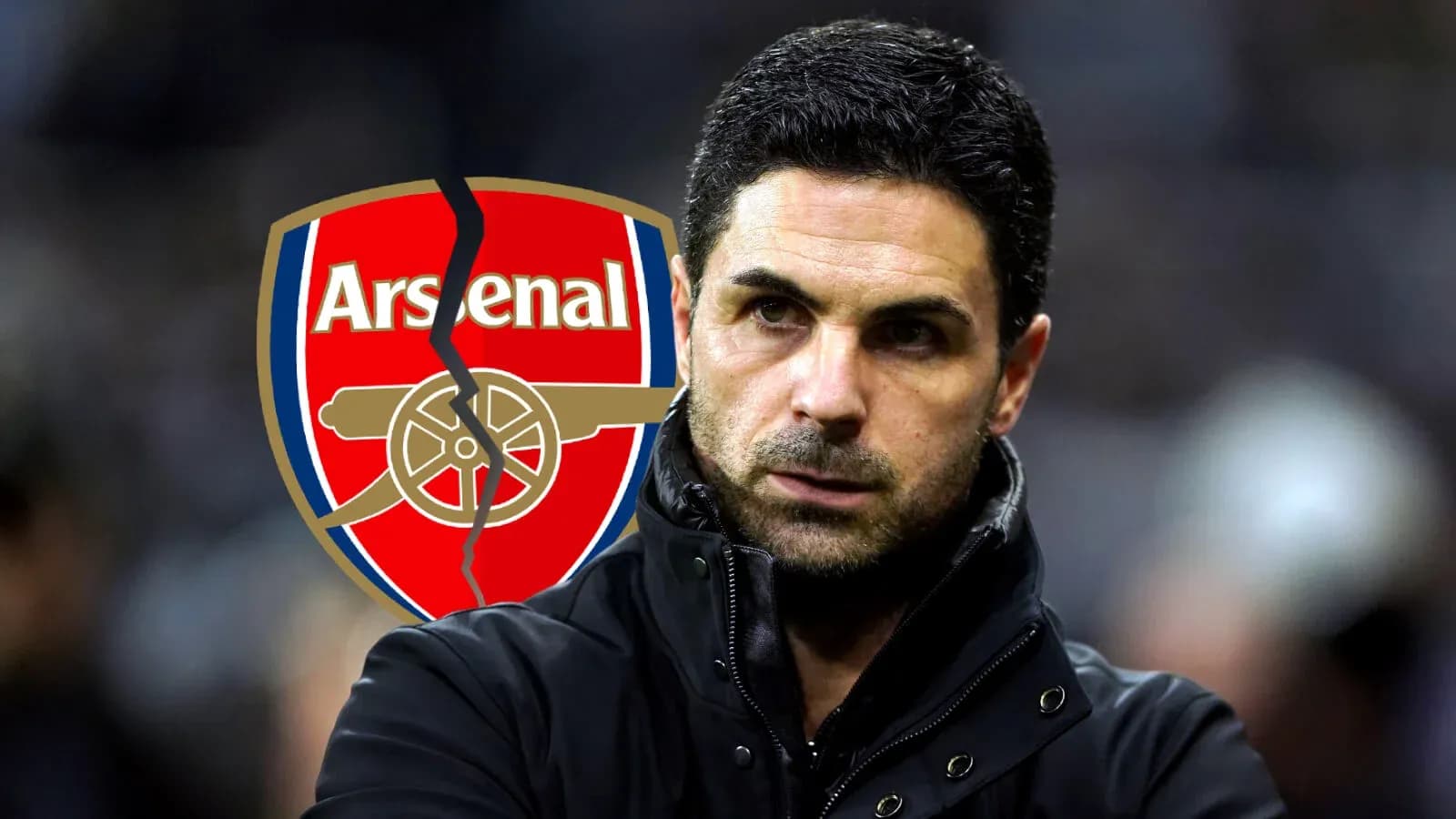
Mikel Arteta has apparently “lost” the Arsenal dressing room.
Gabriel Martinelli is said to have teammates “on his side”.
The squad is reportedly “unhappy”.
Except the story holding all that up is hanging by a thread – a single, throwaway line from ESPN Brasil.
The Martinelli fee that isn’t a scandal
The noise started elsewhere.
In the Daily Mirror, John Cross posed a question that has been echoing around north London: why is Gabriel Martinelli on the market for around £50m when Tottenham are ready to drop £85m on Savinho?
On the surface, it sounds like Arsenal are selling themselves short.
Dig even a fraction deeper and the picture changes.
Savinho’s price is inflated by the deliberately low fee agreed for Omar Marmoush in a related deal. The market has been skewed. Arsenal’s has not.
Martinelli’s numbers last season tell their own story: one goal, four assists. For a winger at the reigning champions, those are not the figures of an untouchable star. His contract situation matters too. He is effectively into the final year of his deal, with the club holding an option for an extra 12 months. That weakens Arsenal’s hand.
In that context, £50m is not a giveaway. It’s realistic.
Chelsea or Manchester City might squeeze more out of a similar profile of player, but they have built entire departments around that kind of trading. Arsenal have not.
The comparisons haven’t helped either.
Martinelli has been mentioned alongside Kenan Yildiz as a benchmark. Yet Yildiz is four years younger, hit 10 Serie A goals last season and added seven assists. Different stage of career, different output, different market value.
Even the Mirror’s own question undercuts the outrage:
“Martinelli has pace, is dangerous but has he really kicked on in the past two seasons?”
The answer, bluntly, is no. And that’s exactly why £50m makes sense.
A civil war built from 12 words
Then came the escalation.
“Gabriel Martinelli has Arsenal stars on his side after being pushed out by Mikel Arteta,” claimed the Mirror’s website.
“Arsenal stars ‘side with Gabriel Martinelli’ as Mikel Arteta tries to force him out,” echoed the Daily Star.
“Arsenal squad ‘unhappy’ with Mikel Arteta as Gabriel Martinelli nears £40m Al-Hilal transfer,” added Goal.
Three headlines, one source: ESPN Brasil.
And the supposed evidence? One translated paragraph, with the key line reading:
“At the start of this season, the Brazilian wasn’t even included in Arsenal’s matchday squad and didn’t even receive a medal for winning the English Super Cup after beating Manchester City 3-0, something that even caused some discomfort among other players in the team.”
That’s it.
No dressing-room revolt. No detailed breakdown of factions. Just “some discomfort” because a long-serving teammate was left out of the squad and the medal ceremony.
From that, we somehow arrive at players “siding” with Martinelli and being “unhappy” with Arteta, all wrapped in quote marks that suggest direct citation. They’re not. They’re interpretations, stretched to snapping point.
And really, is it remotely surprising that a player who has been at Arsenal for seven years, now being frozen out ahead of a likely sale, has the sympathy of his colleagues? It would be far stranger if Gabriel Magalhaes or Declan Rice were delighted to see him banished from the squad and ignored on trophy day.
Sympathy is not mutiny.
Discomfort is not open revolt.
Arteta’s ‘one condition’ that isn’t a condition
While the Martinelli saga was being inflated, another Arsenal story took shape.
“Mikel Arteta sets one condition for £130m Julian Alvarez transfer as Arsenal plan emerges,” declared the Mirror’s website.
One condition for a £130m move? That sounds dramatic.
Then you read it.
Arteta, the piece says, is ready to push for Alvarez but wants “assurances the Argentina star wants to move to Arsenal.”
So the big “condition” is that the player actually wants to join. Not a tactical demand. Not a structural guarantee. Just the absolute baseline of any transfer: the target has to be willing.
That’s not a revelation. It’s common sense dressed up as a scoop.
Time-wasting, or just trying to see a game out?
Away from Arsenal, the Premier League’s new era of added-time scrutiny has already claimed its first managerial critique.
Writing in the Daily Mail, Ian Ladyman took aim at Newcastle coach Matthias Jaissle after Liverpool snatched a late draw via a penalty awarded by Stuart Attwell. Ladyman argued Jaissle was wrong to blame the referee, pointing to clear contact from Lewis Hall on Victor Munoz.
He went further, suggesting Jaissle should examine his own role. The foul came in time added on for what Ladyman described as a “totally unnecessary” substitution: Yoane Wissa off, Fabian Schar on, in the final minute of stoppage time. The implication was clear – this was a classic time-wasting change, and it backfired when Attwell extended the game by another 30 seconds, during which Munoz won the penalty.
New guidelines state that players must leave the pitch within 10 seconds of their number going up or risk a booking, a move designed to kill off time-wasting changes.
But to frame Wissa-for-Schar purely as a ploy to run down the clock is a stretch. Newcastle were defending a lead. Swapping a forward for a defender in the dying moments is one of the oldest tactical decisions in football. It shores up the back line. It doesn’t automatically scream “waste time”.
The substitution may have hurt Newcastle. That doesn’t mean it was made just to tick down the seconds.
United’s ‘plan’ that looks a lot like drift
Manchester United have also been busy reframing events.
“Manchester United’s transfer plan has paid off with £45million boost,” claimed the Manchester Evening News, focusing on Carlos Baleba.
The logic runs like this: Baleba might have cost around £115m last summer. Now United are set to sign him for roughly £70m. That £45m difference is presented as the payoff of a deliberate strategy.
But describing it as a masterplan is generous.
United did not spend “stupid money” a year ago. They are now preparing to spend less, but still a huge sum, on a player coming off a season of underperformance. On top of that, they have stumbled into the new campaign short in midfield, lost to newly promoted Hull on opening day, and been exposed by Youri Tielemans’ lack of legs in the middle.
If this is a plan, it’s one that also seemed to include the possibility of signing Elliot Anderson, Mateus Fernandes or even Sandro Tonali before circling back to Baleba. That’s not a straight line. It’s a scatter plot.
The fee might be lower. The process still looks reactive.
The real story behind the noise
Strip away the spin and the pattern is clear.
Arsenal are moving on a winger whose form has stalled and whose contract is running down, for a fee that fits the market once you remove the distortion of creative accounting elsewhere. His teammates feel for him. Of course they do.
Arteta wants any big-money signing to actually want to play for him. A Newcastle coach is being told his defensive substitution was really just time-wasting. Manchester United are calling improvisation a blueprint.
The season has barely started, and already the narratives are flying.
The question is which of them will still look credible by the time the window slams shut and the table starts to take shape.