Arsenal's Ambitious Quest for a Title After Major Squad Overhaul
Arsenal finished last season with a trophy case that felt too light for a club of their ambition. The Fifa Champions Cup was a nice line on the CV, but it did little to satisfy a squad and fanbase still buzzing from the Champions League triumph of 2025 and desperate for something more substantial at home.
The sense inside the club was clear: this group had gone as far as it could without surgery. So this summer, they didn’t tinker. They tore up and rebuilt.
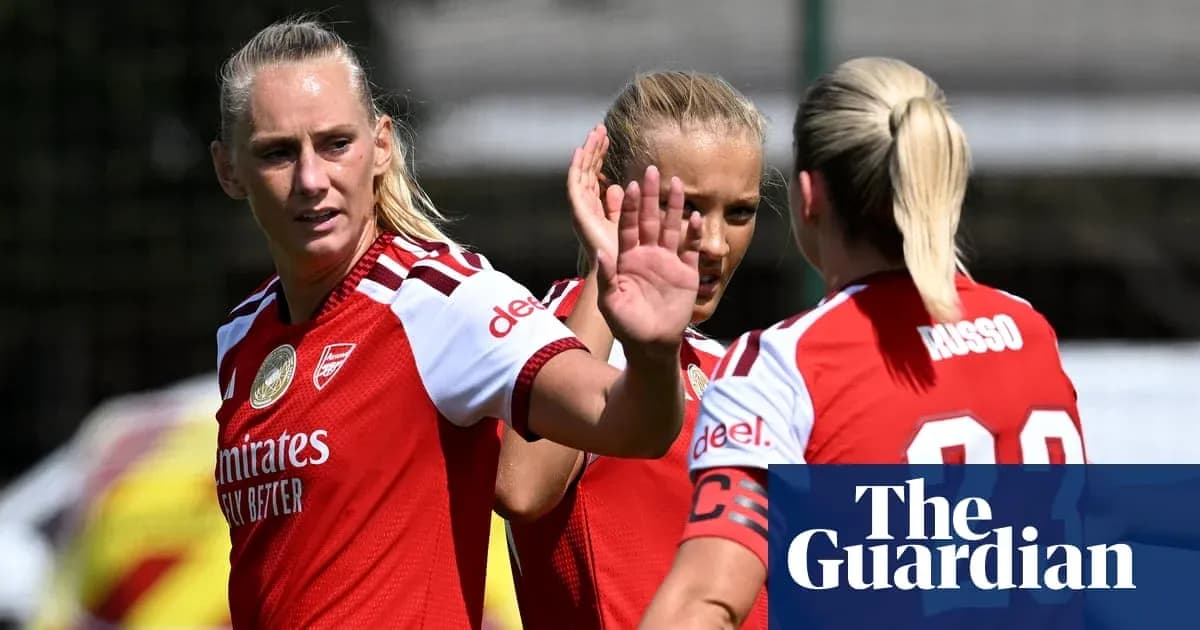
Eleven players have gone, among them two modern Arsenal icons in Beth Mead and Katie McCabe. Seven have arrived. Out go familiar faces, in comes a refreshed core with a sharper edge and a lower age profile. Spain full-back Ona Batlle, England’s double European champion Georgia Stanway, Switzerland midfielder Géraldine Reuteler and German forward Selina Cerci headline a window that has brought in players used to the highest level – and to winning.
Whether allowing Mead to join Manchester City and McCabe to move to Chelsea proves a ruthless masterstroke or a decision that stalks Arsenal all season will hang over this campaign. But for the first time, Renée Slegers has had a full pre-season to shape what comes next.
No more slow starts
Two years running, Arsenal have stumbled out of the blocks in the Women’s Super League. Last season’s opening nine games brought four draws and a defeat. In a title race decided by tiny margins, that was fatal.
This time there are no obvious alibis. No major summer tournament. No early Champions League qualifiers to clutter the calendar. Their second-place finish last term has already banked a spot in the Champions League league phase. The runway is clear.
The expectation, inside and outside the club, is that the title race tightens. Manchester City will also juggle Champions League football. Rivals have recruited with intent. But Arsenal know this is a real window to end a seven-year wait for a league crown.
“We’re in a great place of course, but we would have liked to have won more trophies last season and that is our huge ambition coming into this year,” the technical director, Jodie Taylor, said. “I’ll flat out say it: we want to win the league and want to take that next step.”
The language is unambiguous. So is the pressure.
A club growing off the pitch – and still leaning on the parent
While the squad has been overhauled, the balance sheet has been moving too. Arsenal’s latest accounts, for the year ending May 2025, showed revenue rising by £6.5m to £21.5m.
The Emirates Stadium has been central to that. Across eight games there in that period, average attendance hit 29,833, generating just under £6m in matchday income. Those numbers are set to climb again once last season’s figures land: more than 34,000 on average for all 11 WSL home matches points to another jump.
The growth is not just at the turnstiles. Broadcast revenue broke the £2m barrier, more than doubling the £956,000 recorded in 2024, helped by that Champions League success. Commercial income surged from £649,000 to £1.77m.
Yet, like most WSL clubs, Arsenal’s women’s team still leans heavily on the wider organisation. Group income – effectively money from the parent club – rose from £9.3m to £11.85m, accounting for more than half of overall revenue. The project is expanding quickly, but it is not yet standing on its own financial feet.
Slegers’ team, at last
This is Slegers’ second full season in charge, and the first where the squad truly looks like hers. The 37-year-old initially arrived as a firefighter, stepping in as interim manager after Jonas Eidevall’s exit and steadying an established dressing room.
Now, after a summer clear-out and targeted recruitment, she has licence to imprint her ideas fully. The spine is different. The profile is different. The expectations are not.
Slegers inherits the pressure that comes with Arsenal’s name and budget, but also a platform: a team that lost only once in the league last season and topped Opta’s expected points metric. The building blocks are there. The demand is to turn dominance on the data into a trophy in the cabinet.
Stanway’s steel at the core
Among the new faces, one stands out. Arsenal have landed some serious names, but Georgia Stanway is the statement signing.
A two-time European champion with England, Stanway arrives as a proven big-game player and a natural leader, already familiar with several teammates from the national side. She brings quality, of course, but also something Arsenal have lacked in key moments: edge.
At 27, she is in her prime, a combative, physical midfielder who describes herself as “ruthless and robust”. That mentality, as much as her passing and pressing, is what Arsenal want running through their spine. In a title race that last season came down to fine margins and emotional control, that kind of steel could be decisive.
The numbers that still sting
Arsenal’s underlying performance last season tells a story that will both encourage and irritate Slegers. By Opta’s expected points model, they were the best team in the WSL. They lost just one game all year.
They still did not win the league.
The problem? Six draws. Manchester City drew only once. Expected goals data suggests Arsenal comfortably did enough to win three of those stalemates, with only one – against Chelsea – where the numbers argued they might have been fortunate to get a point.
Arsenal and City traded a win apiece in their head-to-heads. The title didn’t swing on the big clashes; it slipped away in the games they should have killed off. That is the habit they must break.
Young talent on hold, then unleashed?
This season was supposed to be about lift-off for Michelle Agyemang and Katie Reid. Agyemang, now 20, had dazzled at Euro 2025. Reid, 19, started the domestic campaign with real authority. Both looked ready to step from promise into prominence.
Then came the worst three letters in football: ACL. Each suffered an anterior cruciate ligament injury, each saw their momentum shattered.
Almost a year on, both are nearing a return. Arsenal will manage their minutes cautiously and any expectation of instant fireworks would be unfair. But the hunger will be there, from player and club alike, to pick up the threads of what had begun so brightly.
A recipe still missing its final touch
Inside the dressing room, there is a sense of a project close to completion rather than one just starting out. Defender Lotte Wubben-Moy captured it neatly: “It’s like you’re cooking the most beautiful recipe and then you add the final small ingredients that make the marginal difference, that elevate, and you create something that’s beautiful and that you can relish and enjoy. That’s what we’re in the process of.”
The ingredients have changed. The taste test comes now.
Emirates rising, Meadow Park straining
On the pitch, Arsenal are chasing City. In the stands, they are setting the pace.
All WSL home games and any European knockout ties, if they get there, will be staged at the Emirates Stadium. Domestic cup fixtures and Champions League league-phase matches will stay at Meadow Park.
It is a compromise that underlines both progress and growing pains. Arsenal accounted for more than 40% of all WSL attendances last season, a remarkable share. Yet they remain stuck in a logistical bind: the Emirates is too big and too tightly scheduled around the men’s team to host every cup or European league-phase match, while Meadow Park now feels too small for the demand this side generates.
Somewhere between those two grounds lies the true scale of what this team has become – and what it could yet be.
Arsenal have refreshed the squad, grown the crowds and hardened their ambition. The question is no longer whether they are building something. It’s whether this is the year they finally turn it into a title.