Arsenal vs Sporting CP: Tactical Clash in Champions League Quarter-Final
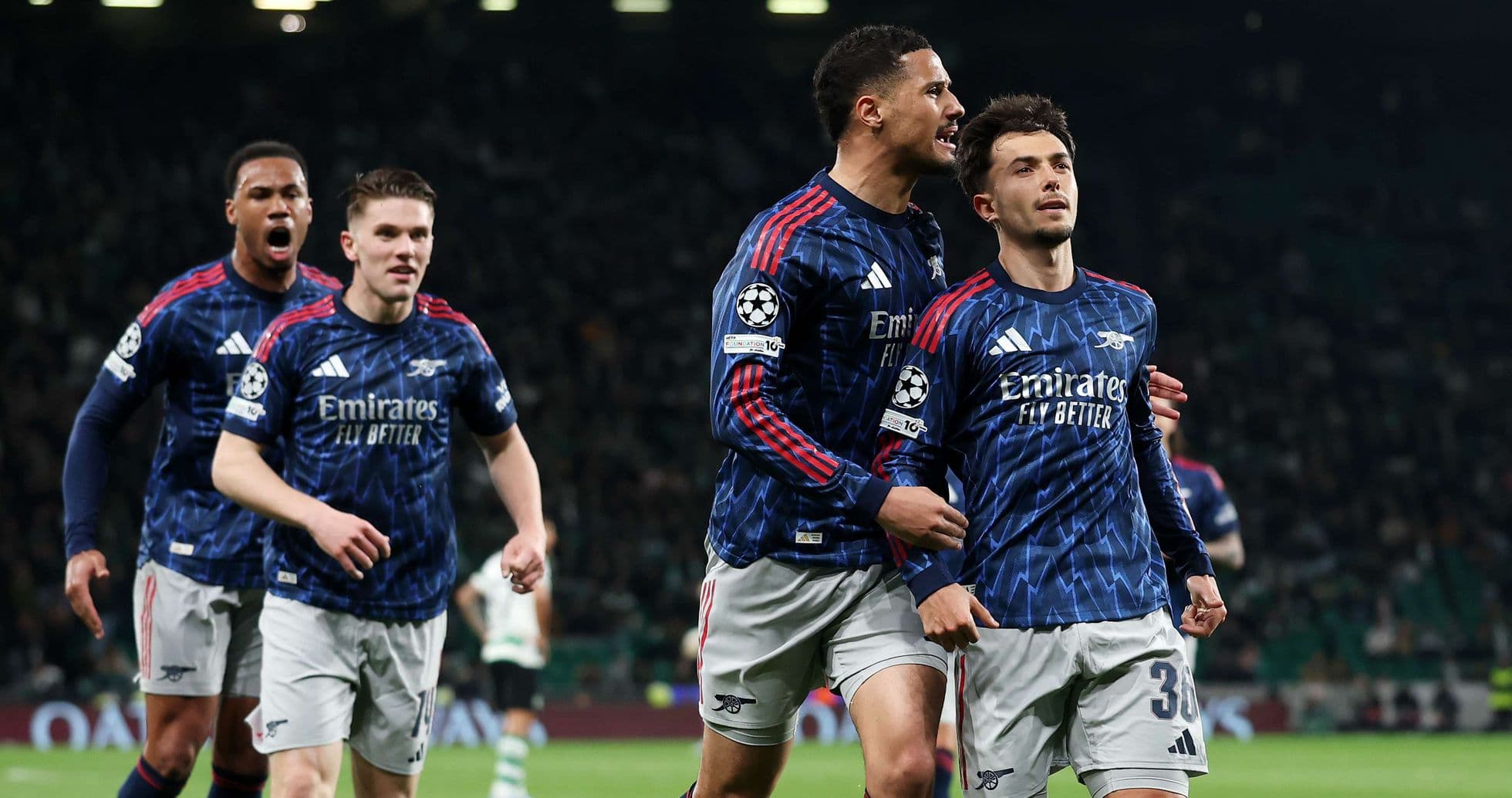
Under the Lisbon lights at Estádio José Alvalade, this quarter-final first leg always looked like a clash of ideologies: Sporting CP’s front-foot, high-risk 4-2-3-1 against the most complete machine in this season’s UEFA Champions League. Over 90 minutes, Arsenal’s 1-0 win underlined why they sit No. 1 in the standings, but the underlying numbers and lineups tell a more nuanced tactical story than the narrow scoreline suggests.
Sporting arrived as one of the competition’s most volatile sides. Across the campaign they have averaged 2.0 goals per game, but that figure is split starkly: 2.7 goals per match in their six home fixtures, only 1.2 away. They had won five of six at Alvalade in this Champions League run, scoring 16 and conceding just four at home. Rui Borges kept faith with the 4-2-3-1 that has defined their European identity, with R. Silva in goal behind a back four of I. Fresneda, O. Diomande, G. Inacio and M. Araujo, and a double pivot of H. Morita and J. Simoes tasked with threading the ball into an attacking line of G. Catamo, Trincao and P. Goncalves behind lone forward L. Suarez.
The problem? They ran into a juggernaut. Arsenal came in with a perfect record in the group and knockouts to date: eight wins from eight in the standings, 23 goals scored and only four conceded at that stage. Broaden it out to the full statistical sample and it gets even more imposing: 27 goals in 11 Champions League fixtures (2.5 per game) and a defence allowing just 0.5 goals per match. Crucially, that defensive parsimony travels. In six away fixtures to date, Arsenal have conceded only two goals, with four away clean sheets. Their away goal difference of +11 (13 scored, 2 conceded) is the profile of a side that dictates games on foreign soil rather than merely surviving them.
Mikel Arteta doubled down on that identity with an aggressive 4-3-3. D. Raya started in goal behind a back four of B. White, W. Saliba, Gabriel and R. Calafiori, a unit that has underpinned those seven clean sheets so far this campaign. In front of them, M. Zubimendi anchored the midfield as the metronome-enforcer hybrid, flanked by D. Rice and M. Odegaard. Up front, N. Madueke and L. Trossard worked the flanks around centre-forward V. Gyökeres, a front three built to stretch Sporting’s full-backs and pin their double pivot deep.
If the big picture framed Arsenal as favourites, the absentees tilted the tactical chessboard further in their favour. Sporting’s list of missing players was brutal for a tie of this magnitude. M. Hjulmand, one of the league’s most combative midfielders and ranked third for yellow cards, was suspended for accumulation. His numbers across the competition – 598 passes at 92% accuracy, 18 tackles, 17 interceptions and five blocked opponent attempts – underline the scale of the void. He is the natural shield in front of the back four, and without him Sporting had to improvise that role with Morita and the relatively less battle-hardened J. Simoes.
The injury absences of F. Ioannidis, Luis Guilherme, G. Quenda and N. Santos stripped Borges of both a reference point up front and some of his best wide and depth options. In a squad built on attacking rotation and the threat of late substitutes, that mattered. The bench still offered options – the pace of S. Faye, the directness of R. Nel, the versatility of F. Goncalves – but the ceiling of those changes is not the same as having a fit Ioannidis or a dribbler like Luis Guilherme.
Arsenal had their own issues, but their squad depth softened the blow. E. Eze, P. Hincapie, M. Merino, B. Saka and J. Timber were all out, a list that in isolation would cripple most sides. Yet Arteta could still call on Gabriel Jesus, K. Havertz and Gabriel Martinelli from the bench, plus an extra midfield controller in C. Norgaard. Martinelli, with six Champions League goals and two assists this season, has been among the highest-ranked forwards in the competition, averaging 7.31 with 15 key passes and 16 successful dribbles. To be able to unleash that profile as a substitute rather than rely on him from the start speaks to Arsenal’s structural advantage.
The disciplinary profiles of both teams also shaped the risk calculus. Sporting’s yellow cards are heavily concentrated after the break: 21.74% of their bookings arrive between 61-75 minutes, with another 17.39% in both the 31-45 and 46-60 windows, and 17.39% again from 91-105. That pattern hints at a side that ramps up aggression as the game wears on, especially around the hour mark and into stoppage time. Arsenal’s own peaks are even more pronounced: 33.33% of their yellows fall in the 61-75 band, with 19.05% between 76-90 and 14.29% from 91-105. In other words, both teams tend to live dangerously in the very phase when legs tire and spaces open. In a tight knockout tie, that is precisely the period where a second yellow or a mistimed challenge can dismantle a game plan.
The Hunter vs. The Shield
Within that context, the headline duel was “The Hunter vs. The Shield”: Arsenal’s attacking core against Sporting’s previously formidable home defence. Before this match, Sporting had conceded just four goals in six home fixtures across the campaign, an average of 0.7 per game. Arsenal’s away attack, meanwhile, has been relentless, averaging 2.2 goals per away match. Over 90 minutes at Alvalade, it was the English side’s defensive structure that ultimately dictated terms. Raya, protected by the Saliba–Gabriel axis, preserved yet another away clean sheet in a season where Arsenal have yet to lose a Champions League match, home or away.
The Engine Room Duel
The “Engine Room Duel” played out between Zubimendi and Sporting’s reconfigured midfield. Zubimendi, ranked 11th in the competition for yellow cards, walks a disciplinary tightrope – four yellows from 17 fouls committed – but he has also supplied two assists and 14 key passes. His job here was twofold: neutralize the pockets P. Goncalves and Trincao like to exploit, and launch Arsenal’s transitions. Without Hjulmand, Morita and Simoes had to cover more ground, and every time they were dragged towards Odegaard or Rice, the channels behind them became vulnerable to Gyökeres dropping in or Madueke darting inside.
Depth & Game-Changers
On the benches, the contrast in “Depth & Game-Changers” was stark. Sporting’s attacking reinforcements – S. Faye, R. Nel, F. Goncalves – offered energy and verticality, but not the proven Champions League production that Arsenal could summon. When Arteta turned to his bench, [IN] came on for [OUT] options like Gabriel Jesus or Havertz allowed Arsenal to either lock the game down with more possession or chase a second goal with fresh pressing. The presence of Martinelli, in particular, meant Sporting’s full-backs could never fully commit forward, even in the closing stages.
The statistical prognosis from this first leg is clear. Arsenal’s unbeaten run in the competition, their seven clean sheets (four away) and a goals-against average of 0.5 to date mark them out as the more stable, repeatable model. Sporting’s home scoring rate of 2.7 per match suggests they still have the weapons to flip a tie in a chaotic spell, but their overall defensive average of 1.4 goals conceded per game – and a far leakier record away from Lisbon – leaves them walking a fine line heading into the return.
In the end, the deciding factor may not be a single star but a time window. Both teams spike in bookings between 61-75 minutes, precisely when substitutions and fatigue intersect. Arsenal’s ability to introduce high-level attackers while maintaining defensive discipline in that danger zone could dictate whether this quarter-final remains a controlled arm-wrestle or descends into the kind of chaos that would suit Sporting’s attacking instincts. For now, Arteta’s side have imposed their structure on the tie – and the numbers suggest they are better equipped to do it again.