Arsenal's Summer After the Title: Ruthless and Ready to Gamble
The Premier League trophy is barely settled in the cabinet and already Arsenal are tearing into the squad that delivered it. There is no lap of honour at London Colney this summer, only meetings, medical reports and transfer calls that stretch late into the night.
Mikel Arteta and new sporting director Andrea Berta are not behaving like champions content to admire their work. They are acting like a club that knows the window between dominance and decline can close in a single bad summer.
A squad on the move
The plan is clear: a new attacker, a midfielder, a full-back. And not just depth pieces. Arsenal are shopping at the top end of the market again, while quietly preparing for some brutal decisions on familiar faces.
Jakub Kiwior’s loan at Porto has already turned permanent, bringing in an initial £14.7million that could rise to £19m. Karl Hein has gone too, joining Werder Bremen for around £2.6m after a solid year in the Bundesliga. Eight academy players have been released. That is just the undercard.
The headline acts come next. The futures of Gabriel Martinelli, Leandro Trossard, Gabriel Jesus, Ben White, Reiss Nelson, Fabio Vieira and even Christian Norgaard are all in play. None are being openly pushed out, but each has been quietly placed in the “right offer” category. Champions or not, sentiment will not dictate this window.
Barcola, Diomande and the hunt for a new edge
Arsenal’s attack is already one of Europe’s most fluid, yet Arteta wants another weapon – and he is looking straight at World Cup breakout stars.
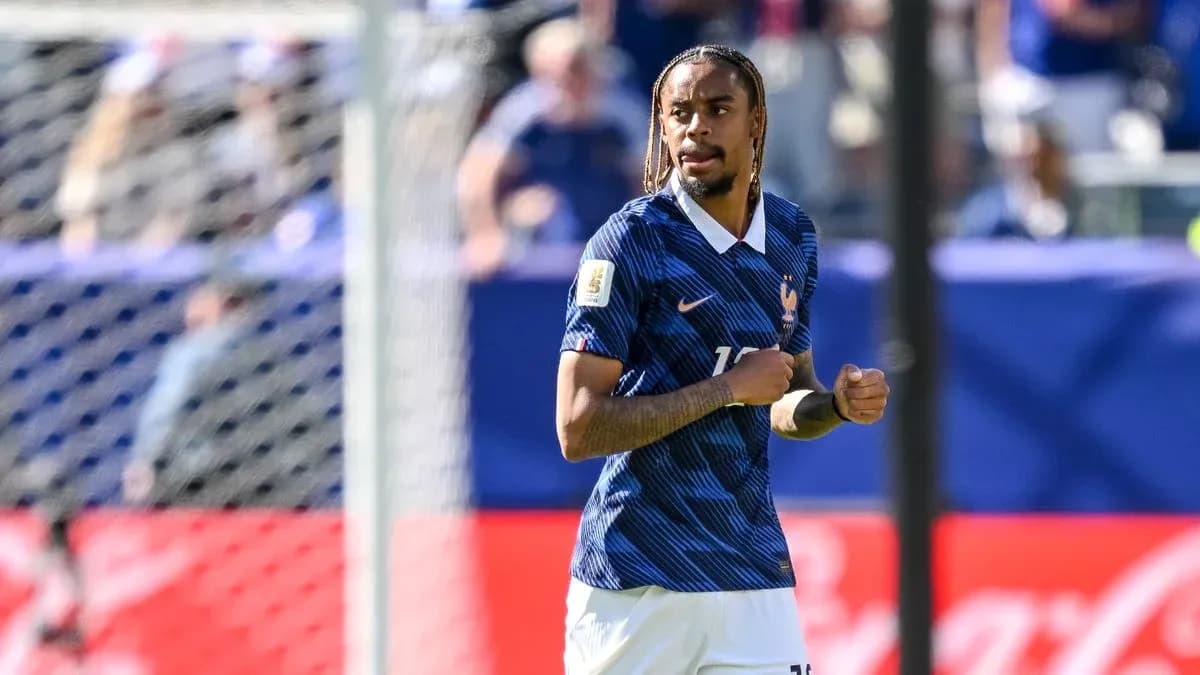
Bradley Barcola is one of them. The PSG winger needed just two minutes on the pitch to light up France’s win over Senegal, racing onto Adrien Rabiot’s clever pass before lifting the ball over Edouard Mendy with the confidence of a man who has been doing it on this stage for years. It was the kind of moment that makes recruitment departments sit up and owners nervous about the price.
Barcola scored 13 goals in 49 games last season and is understood to be unhappy with his minutes in Paris. Talks over a new contract have stalled, he has two years left on his deal and Arsenal are circling. Liverpool are there too. PSG do not want to sell, but a serious bid – likely around the £70m mark – will test their resolve and the player’s patience.
On the other flank of the rumour mill sits Yan Diomande, the 19‑year‑old RB Leipzig winger who has seized the World Cup spotlight. Arsenal are second favourites with the bookmakers, behind Liverpool, in what is already being framed as a straight duel between the two clubs. Any deal would push towards £100m. For a player of his profile and age, that is the going rate now.
If either Barcola or Diomande walks into the dressing room this summer, someone established almost certainly walks out. That is the reality behind the talk of “competition for places.”
Midfield: Kone, Tonali and a quiet power shift
The midfield rebuild is more subtle but just as significant.
Arsenal have been working on Manu Kone for some time. The Roma midfielder, 25, made 37 appearances last season with two goals and three assists and has grown into a key figure in Serie A. Reports in Italy say Arsenal have already agreed personal terms with his camp and now need to find a fee Roma will accept – around £43m is the number being mentioned.
Kone himself is in lockdown mode. “Honestly, right now I’m only thinking about the World Cup,” he told Gazzetta dello Sport. It is the standard line, but in a tournament where one big performance can add £10m to a price tag, it is also the sensible one.
Then there is Sandro Tonali. Arsenal liked him in January. Now Newcastle, squeezed by financial rules after missing out on the Champions League, are listening to offers north of €100m (£86m). Manchester United are said to have stepped back. Tottenham and Manchester City are watching. Arsenal are too, knowing the fee could stretch their budget and their principles.
Tottenham, under Roberto De Zerbi, see Tonali as an ideal midfield anchor. Arsenal see a player who could transform their options but also skew a carefully managed wage and fee structure. This is the kind of deal that defines a window: go all in, or walk away and trust the plan.
Declan Rice, Bukayo Saka and the injury tightrope
All of this recruitment noise is set against a more delicate soundtrack: the health of Arsenal’s two talismans.
Declan Rice gave England a scare in their 4-2 World Cup win over Croatia, limping off after 72 minutes with discomfort in his lower back and upper hamstring. Thomas Tuchel, now in charge of the national team, moved quickly to calm the panic.
“I didn’t want to take any risks,” he said, explaining the decision to withdraw Rice. The midfielder later reassured him – “it’s good, it’s good” – and the expectation is that the issue is manageable rather than major. Arsenal will still be watching every scan.
Saka, meanwhile, has chosen to live on the edge. The winger is managing an Achilles problem that haunted the end of his club season, but he insists he is ready to push through for England.
“As players, it’s the biggest gamble, especially if you’re not feeling your sharpest,” he admitted. The gamble paid off for Arsenal during the run-in, and he intends to keep rolling the dice in North America. Between Arteta, Arsenal’s medical staff and England’s, Saka has been carefully managed. But the margin for error is thin.
For a club planning to fight on four fronts again, the summer transfer work is as much about protecting Rice and Saka as it is about finding the next star.
Odegaard’s new trick and Saliba’s steady rise
Not all of Arsenal’s World Cup storylines revolve around risk.
Martin Odegaard, making his tournament debut as Norway returned to the World Cup for the first time since 1998, quietly put in a performance that will have pleased Arteta. He completed 97.6 per cent of his passes – 41 out of 42 – and added something extra: a wicked corner delivery that Leo Ostigard glanced into the far corner to make it 3-1 against Iraq.
Odegaard rarely takes corners for Arsenal. On this evidence, that might change. When a player with his vision adds set-piece precision to his game, it gives a title-chasing side another way to break stubborn games open.
William Saliba, alongside Dayot Upamecano for France in their 3-1 win over Senegal, continues to look like a defender built for the biggest stages. While Kylian Mbappe and Barcola took the headlines, Saliba quietly did what he has been doing all season in north London: defending with authority, timing and a calmness that makes everything around him look easier.
Youth, loans and the Nwaneri dilemma
Berta’s work is not confined to the first team. Arsenal’s talent pipeline is being aggressively stocked and reshaped.
A deal is already in place for Victor Ozhianvuna, who will arrive in January, while Ecuadorian twins Edwin and Holger Quintero are set to join in August 2027. The next target is Leicester City’s 16‑year‑old Jeremy Monga, a teenager who has already been around the Foxes’ first team squad. Talks are under way, with a fee between £10m and £15m likely.
Then there is Ayyoub Bouaddi, the Lille midfielder Arsenal have been tracking since 2025. Still only 18, he shone for Morocco in their World Cup opener against Brazil. Berta has already met his representatives, long before this summer, convinced that Bouaddi is a prodigy worth waiting for. The player himself is keeping his focus on the tournament, but the groundwork is there.
Closer to home, Ethan Nwaneri sits at a crossroads. Once the great Hale End hope, his loan spell at Marseille stalled after a bright start. Now Liverpool are said to be watching him closely, just a year after he was linked with leaving Arsenal.
Chris Waddle, speaking to Andy’s Bet Club, did not sugar-coat it. Nwaneri, he argued, has to play. Another loan, ideally to a promoted or bottom-half Premier League club, could be the making of him. Stay at Arsenal and risk bench time, or go and prove he belongs at this level. For a player who once looked on a fast track to the England squad, the next move is critical.
Gyokeres, Alvarez and a striker market in motion
Up front, the picture is complicated.
Viktor Gyokeres arrived from Sporting CP last summer for £55m, started slowly, then exploded. He finished as Arsenal’s top scorer with 21 goals in 55 games, led the line in a title-winning campaign and then fired Sweden to the World Cup with a play-off hat-trick against Ukraine and the decisive goal against Poland.
Now he finds himself at the centre of a swirl of speculation. Spanish reports claim Arsenal have agreed a deal with Atletico Madrid for Julian Alvarez – 49 goals in 106 games for Atleti – that would see the Gunners pay £43m and send Gyokeres the other way to the Riyadh Air Metropolitano. Real Madrid have already had a £130m bid for Alvarez rejected, which underlines the scale of the market Arsenal are trying to operate in.
Gyokeres, for his part, is in no mood to accept criticism lightly. After scoring and assisting in Sweden’s 5-1 demolition of Tunisia, he was told of pundit Martin Aslund’s complaint about his first touch and decision-making.
“I got one assist and could have gotten two more,” he replied. “I don’t know how many assists you should get in a game.” It was a pointed answer from a striker who has just helped deliver a title and now wants his summer to match his season.
Rashford, Fresneda and doors closing
Not every long-running link will be revived. Arsenal have cooled their interest in Marcus Rashford, whose Barcelona loan option has expired without a permanent move. Manchester United want a buyer, Rashford wants a fresh start, but contractual clauses blocking moves to City or Liverpool and Arsenal’s fading enthusiasm leave his future in limbo.
On the right side of defence, Ivan Fresneda has re-emerged. The former Real Madrid youngster, now thriving at Sporting after Ruben Amorim’s departure, has put together 63 appearances under Rui Borges, rebuilding his reputation as a defensively sharp, positionally sound full-back. Real Madrid are watching. So are Arsenal, who see a player whose strengths lie in exactly the areas Arteta values in his back line.
Madueke’s ambition and the standard at Arsenal
Inside the current squad, ambition is not in short supply. Noni Madueke, speaking in the US, laid out his own target with no hesitation: he wants to become one of the best wingers in the world.
He knows what that requires. More goals. More assists. More ruthlessness. In a team where Saka has set a brutal standard on the opposite flank, Madueke understands that talent alone is not enough. Output is the currency now.
That attitude mirrors the club’s. Arsenal have just ended a 20-year wait for the league title and still lost a Champions League final to PSG. The response is not to bask in the achievement, but to ask how they go one better.
A restless champion
This is what a modern superclub looks like in the weeks after success. Rice’s back twinge in Dallas becomes a subject of national debate. Saka’s Achilles is a shared worry between two medical teams. A teenager at Leicester becomes a £15m conversation. A 16‑year‑old at Hale End might be sold, loaned or fast-tracked depending on one meeting.
Arsenal have waited two decades to stand on this kind of summit again. Now comes the harder part: staying there while the rest of Europe tries to knock them off.
They have the title. They have the Champions League final scars. They have a manager and a sporting director who seem determined to treat this summer not as a reward, but as a test.
By September 1, we will know if Arsenal have simply protected what they built – or armed themselves to dominate it.