Arsenal's Pursuit of Victor Osimhen: A Risky Transfer Dilemma
Arsenal have opened talks with Galatasaray over what would be one of the most eye-catching – and riskiest – moves of the window: a deal for Victor Osimhen.
The Premier League champions have tracked the Nigeria striker for almost a decade. He first flashed across their radar as a teenager at the U-17 World Cup in 2015, when Arsenal tried to bring him to north London. Back then, he turned them down.
“Yes Arsenal is a good team for young players,” he said at the time, “but Wolfsburg is the best club for me.”
The path since has been winding. Wolfsburg, Lille, Napoli, then Galatasaray. The Premier League links never really went away, and Arsenal’s interest never fully cooled. Now, at 27, the move that always felt inevitable is back on the table, with The Telegraph reporting that discussions have taken place between the champions of Türkiye and England.
Who picked up the phone first is unclear. So is the price. Galatasaray only signed Osimhen 12 months ago for around $86 million (€75 million). He is under contract until 2029 and has been nothing short of a phenomenon in Istanbul: 61 goals in 75 games, two Turkish titles, and a fanbase that treats him like a force of nature rather than just a centre forward.
He knows exactly what the speculation means. He is not rushing to kill it.
“There are always rumors during the transfer windows,” Osimhen said this week. “I’ll focus on my job. I’m focused on my work. We’ll see and think about what comes next then.”
That last line will keep agents, executives and supporters busy for the rest of the summer. Yet for Arsenal, the bigger question is not whether they can get him out of Galatasaray. It is whether they should even try.
Arsenal’s Osimhen dilemma
On paper, he looks like the archetype of the marquee No. 9: physically dominant, explosive, relentless in the box, and with a scoring record that jumps off the page. But the numbers come with asterisks. The Turkish Super Lig is not one of Europe’s top five divisions. Arsenal have already been burned by that profile once.
Viktor Gyökeres arrived from Sporting CP with an even better goal ratio than Osimhen’s and the same aura of a battering ram who would bully defenders for fun. The reality was harsher. Premier League backlines rarely give up the space that strikers like Gyökeres – and Osimhen – thrive on. The Swede still finished with 21 goals in all competitions, but there was a glaring hole in his record: not a single open-play strike against a team from within the league’s top six.
He padded his tally with penalties and goals against weaker opposition. That is not nothing, but it is not the cold-blooded big-game output Arsenal thought they were buying.
Osimhen carries a different, arguably more worrying, red flag: his body. Across the last six seasons, he has missed 82 matches through various injuries – more than 13 per year on average. For a club that has already spent too much time juggling attacking fitness issues, committing another huge fee and salary to a player with that record is a gamble with the odds stacked the wrong way.
The talent is undeniable. So is the risk.
Do Arsenal even need another No. 9?
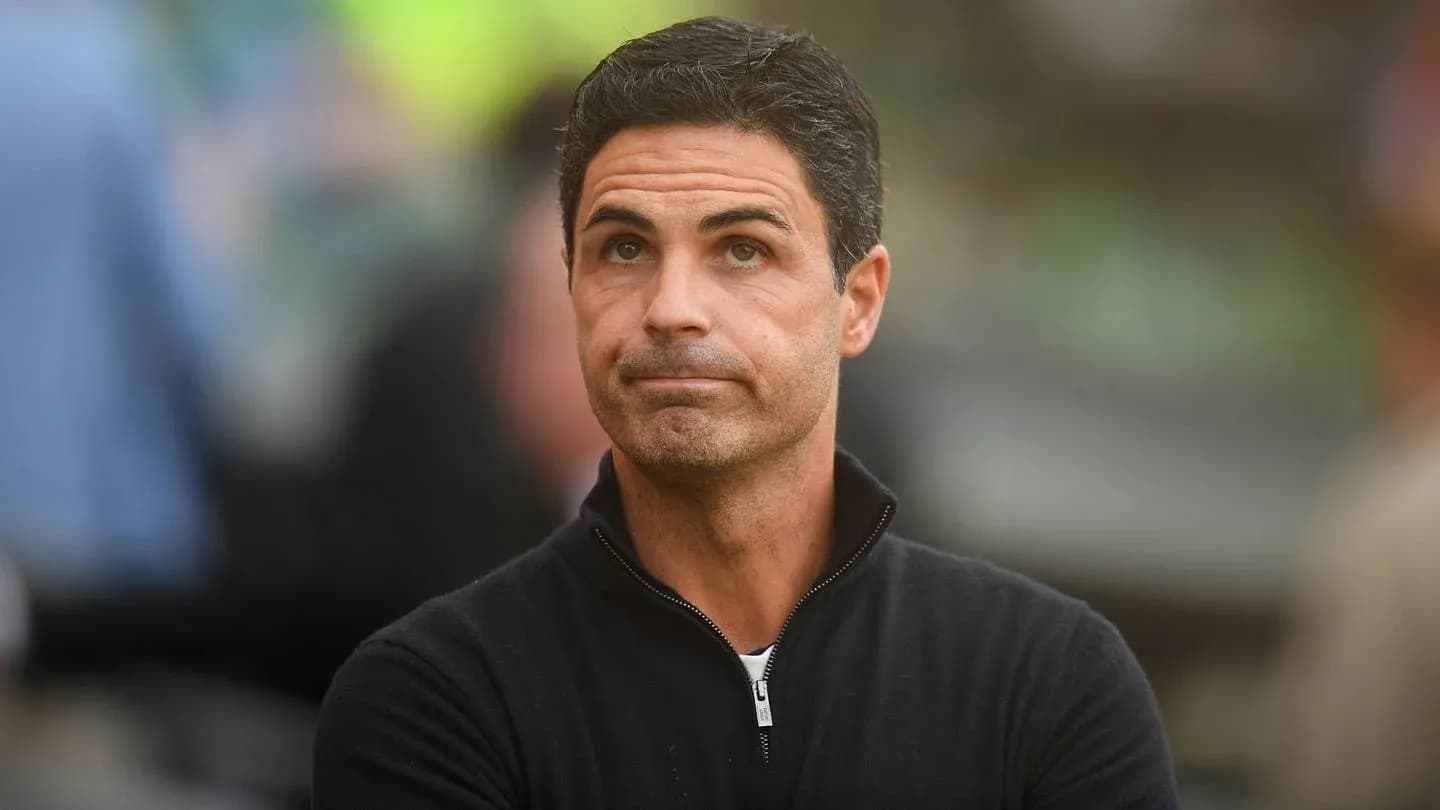
Mikel Arteta has been clear about the club’s stance after winning the title: this is not the time to stand still.
“The ambition of the club, it’s big,” he said this week. “We want to improve the squad, we want to evolve the squad, and in order to achieve that, we have obviously detected some areas that can be strengthened. That’s what we are trying to do.”
The debate is where that strengthening should actually happen.
Through the middle, Arsenal are not short of options. Gyökeres is still there, still adjusting, still a threat. Kai Havertz has grown into the role, offering movement, link play and goals. Mikel Merino has already shown he can step in as an emergency option if the system demands something different.
Out wide, the picture is less comfortable. The left flank is the obvious pressure point, especially with Gabriel Martinelli’s future uncertain. Arsenal are not short of bodies in that area, but they are short of a guaranteed, world-class starter who changes the geometry of games.
Vinícius Júnior is off the table. That dream has gone. Yet the market is not empty. Bradley Barcola could be prised away from Paris Saint-Germain, though it would take a premium. Julián Alvarez at Atlético Madrid offers a different kind of solution: a forward who can play off the left, drift inside, and also cover centrally when needed.
Those are the types of additions that reshape a starting XI rather than just add another name to a crowded depth chart.
Arteta has spoken repeatedly about how few players in world football genuinely improve his first team. That is the standard now. That is the filter every target has to pass.
Osimhen’s name carries weight, and his highlights reel is electric. But when you strip away the noise – the fee, the reputation, the long courtship – the question for Arsenal is brutally simple: does he truly belong in that tiny group of players who make this champion side better from day one?