Atalanta Dominates Borussia Dortmund 4–1 in Champions League
Atalanta produced a ruthless 4–1 dismantling of Borussia Dortmund at the New Balance Arena in Bergamo in this UEFA Champions League Round of 32 tie, seizing a commanding advantage ahead of the return leg. Raffaele Palladino’s side raced into a 2–0 half-time lead and never relinquished control of the scoreboard, punishing Dortmund’s indiscipline and defensive frailty. Despite Niko Kovac’s men controlling 56% of the ball, the Germans were repeatedly carved open and finished with nine men. The result strengthens Atalanta’s position among the competition’s form sides, while Dortmund’s already fragile continental campaign takes another heavy blow.
First-half analysis
The tone of the evening was set even before kick-off. In a remarkable prelude, Dortmund defender Nico Schlotterbeck was shown a red card for argument at -5', leaving the visitors to face the entire contest a man down. From that moment, Atalanta’s task became clearer: exploit the numerical advantage and turn pressure into goals.
They needed just five minutes. Gianluca Scamacca struck at 5', giving the hosts an early 1–0 lead and immediately validating Palladino’s attacking 3-4-2-1 setup. Dortmund, also lined up in a 3-4-2-1 under Kovac, were forced into reactive mode, with their back line reorganising after the shock dismissal.
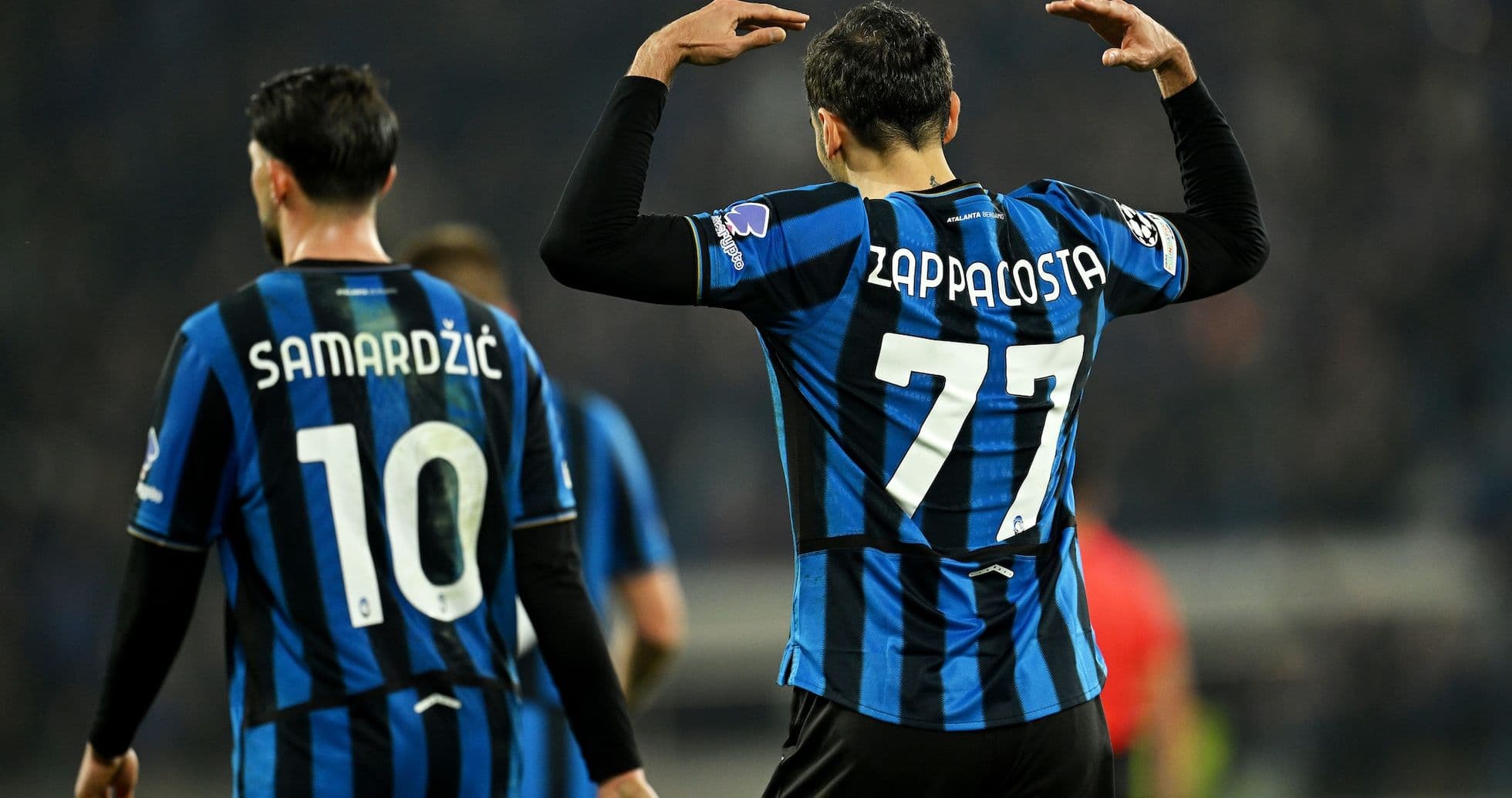
Ramy Bensebaini’s yellow card for a foul at 13' underlined Dortmund’s growing frustration as they struggled to cope with Atalanta’s movement between the lines. The hosts’ pressure was rewarded again right on the cusp of half-time: Davide Zappacosta made it 2–0 at 45', a psychologically crushing blow for a Dortmund side already stretched and short-handed. Atalanta went into the break with a deserved two-goal cushion and full control of the tie’s momentum.
Second half & tactical shifts
Kovac attempted to steady the ship after the interval, but the pattern remained difficult for Dortmund. Emre Can’s yellow card for a foul at 53' further illustrated the visitors’ problems in dealing with Atalanta’s transitions and second balls.
The hosts struck again at 57'. Mario Pašalić added a third, finishing a move supplied by Marten de Roon, whose assist crowned a strong midfield display. At 3–0, Atalanta had one foot in the last 16, while Dortmund needed a radical response.
Kovac turned to his bench on the hour, withdrawing Julian Brandt for Carney Chukwuemeka and Maximilian Beier for Fábio Silva at 60'. The like-for-like changes suggested a bid for fresh legs and more vertical threat rather than a structural overhaul. However, Silva quickly picked up a yellow card for argument at 69', symptomatic of Dortmund’s frayed composure.
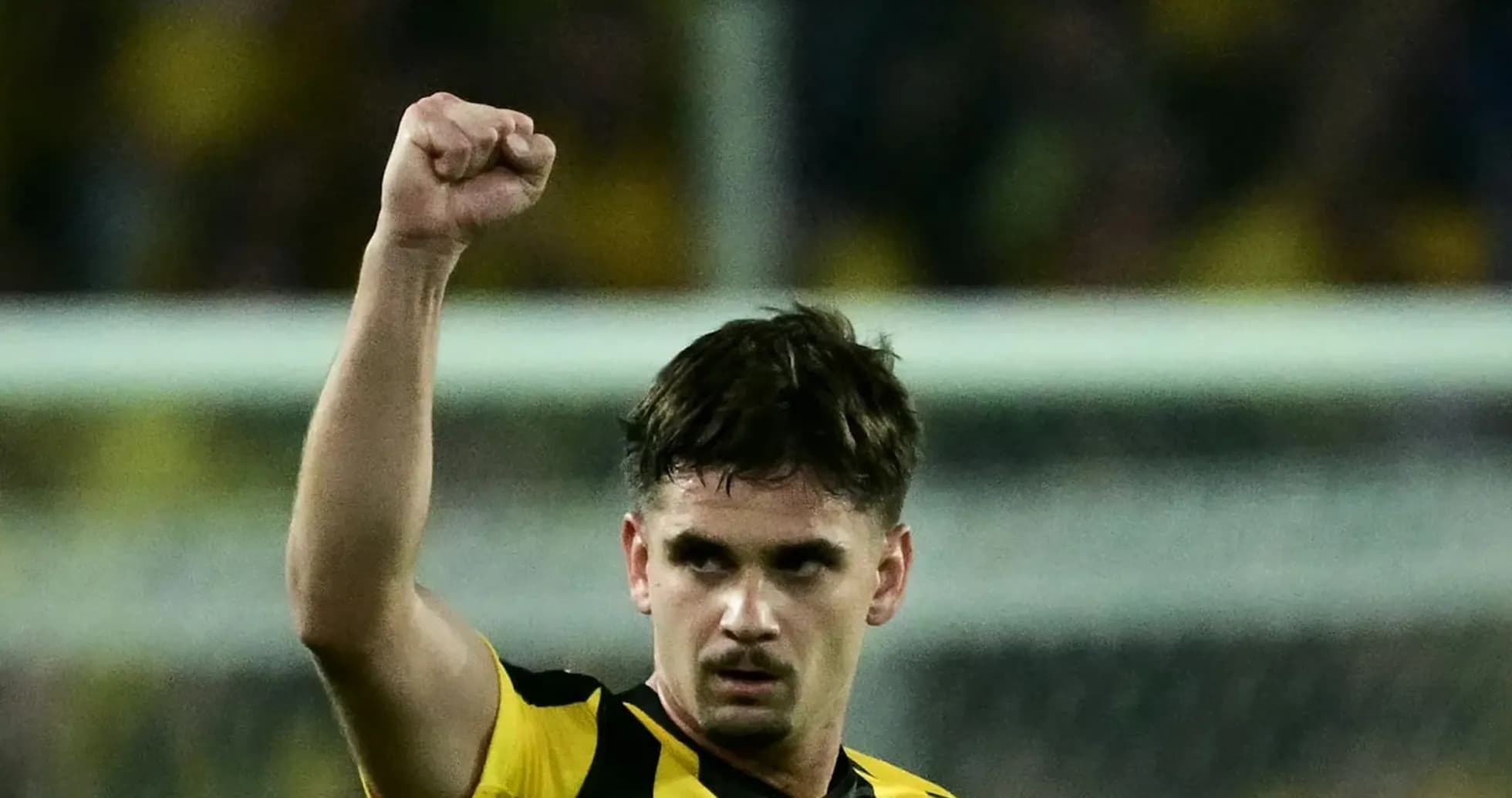
Further changes followed at 70', with Julian Ryerson replaced by Yan Couto and Jobe Bellingham making way for Karim Adeyemi. Those switches added pace and width, and Kovac was partially rewarded when Adeyemi pulled one back at 75', finishing a move created by Chukwuemeka to make it 3–1 and briefly revive Dortmund’s hopes.
Palladino responded pragmatically. Sead Kolašinac was replaced by Honest Ahanor at 72', and goalscorer Scamacca made way for Nikola Krstović at the same time, a sensible rotation of his focal point in attack. At 77', Giorgio Scalvini came off for Berat Djimsiti to reinforce the back line, and at 85' Nicola Zalewski was replaced by Kamaldeen Sulemana, injecting fresh energy on the flank.
Late drama arrived deep into stoppage time. A VAR review at 90+6' confirmed a penalty for Atalanta, with Krstović at the heart of the incident. In the ensuing chaos, Bensebaini collected a second yellow card for a foul at 90+7', which was immediately upgraded to a red, leaving Dortmund with nine men to finish a miserable night. Earlier, Lazar Samardžić had already converted a penalty at 90', capping the scoring at 4–1 and underlining Atalanta’s ruthless edge in the decisive moments.
Statistical deep dive
The numbers underline how effectively Atalanta turned fewer touches into more damage. Dortmund controlled 56% of the ball and completed more passes (515 to Atalanta’s 394), with a slightly higher pass accuracy (80% to 78%). Yet that territorial control rarely translated into sustained threat, especially once they were reduced to ten and then nine men.
Atalanta were far more incisive in the final third. They produced 14 total shots to Dortmund’s 7, hitting the target 8 times compared to the visitors’ 4. With an expected_goals figure of 2.49, Palladino’s side slightly outperformed their xG but did so through consistent pressure, particularly inside the box (12 shots from close range). Dortmund’s xG of 0.93 reflects a handful of decent chances, including Adeyemi’s goal, but not nearly enough volume to stay in the tie.
Discipline was a decisive factor. Atalanta committed 17 fouls and received just one yellow card (Isak Hien at 70'), managing their aggression relatively well. Dortmund, by contrast, committed only 10 fouls but collected four yellows and two reds, with Schlotterbeck’s early dismissal and Bensebaini’s late sending-off bookending their collapse. That loss of control, both emotional and tactical, turned a difficult assignment into an almost impossible one.
Standings & implications
In the broader Champions League picture, this result reinforces Atalanta’s upward trajectory. They came into the tie ranked 15th in the overall table with 13 points, a neutral goal difference (10 scored, 10 conceded) and strong recent form (LLWWW). Adding a three-goal margin here suggests a side peaking at the right time and well placed to reach the last 16.
For Dortmund, ranked 17th with 11 points and a previously positive goal difference of +2 (19 for, 17 against), the 4–1 defeat erodes both their buffer and their confidence. Their recent form (LLDWL) now looks increasingly like a downward spiral. With a three-goal deficit and suspension issues to manage, Kovac’s team faces a daunting task to rescue this tie in the second leg.