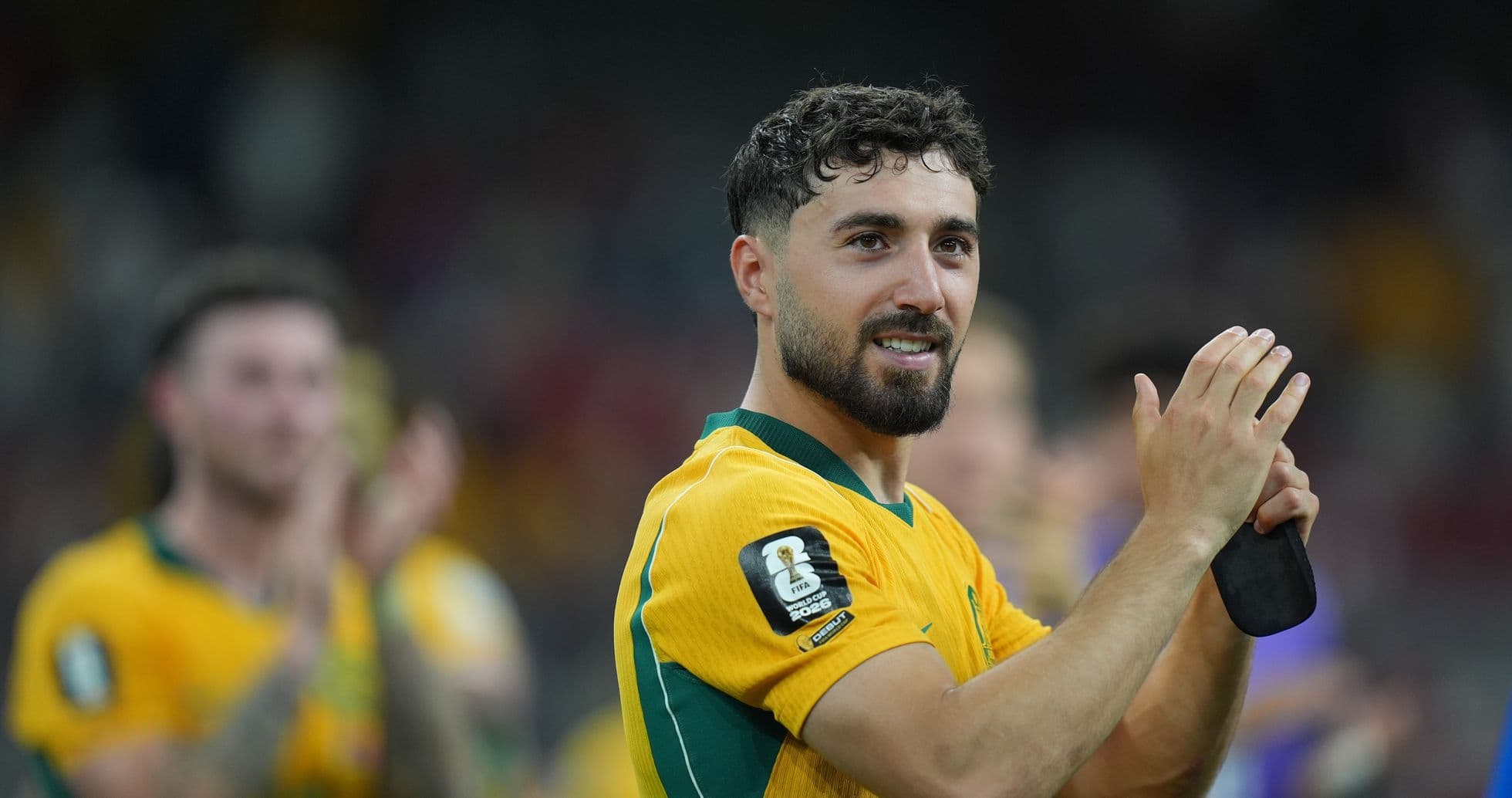
Australia’s Tactical Dilemma and World Cup Highlights
The World Cup has finally caught fire. Not just on the pitch, but in the dugouts, in the press rooms and in the minds of players who know a single mistake now lives forever.
Australia’s injury blow and a tactical dilemma
Australia’s World Cup campaign took a hit before a ball is even kicked in their decisive group clash with Paraguay. Alessandro Italiano, who had quietly become one of Tony Popovic’s most important players, is set to miss out with an injury concern.
He stepped in for Lewis Miller and never looked back. Industrious, disciplined, relentless down the right. He helped shut out Turkiye on Matchday 1, then went the full 90 against the USA. In a tournament where full-backs are often auxiliary wingers, Italiano has been Australia’s metronome on that flank.
Now Popovic has to rip up a plan that had at least given his side defensive stability.
The Socceroos paid a heavy price for their caution in Seattle. Sitting deep against the USA, they conceded twice before half-time and only came alive when Connor Metcalfe, Nestory Irankunda and Cristian Volpato were unleashed after the break. The game flipped instantly; so did the mood around the team.
Craig Foster wants that version of Australia from the first whistle against Paraguay.
Speaking to 1170 SEN Breakfast, he didn’t disguise his admiration for Popovic’s work – automatic qualification, renewed organisation, a side that’s hard to break down – but he pushed for more ambition. Foster argued the coach must inject pace early, trust the young, quick attackers and use their speed to turn half-chances into goals.
Volpato’s brief cameo against the USA clearly left a mark. Foster described it as “phenomenal” and suggested it should have made a statement in the coach’s mind. His view is simple: start Volpato and Irankunda, get ahead of Paraguay, then lean on the defensive structure that has already proved so stubborn.
The balance Popovic strikes now will define Australia’s tournament. Stay in his shell, or let the kids run?
Colombia rise, Congo cling on
Elsewhere, Group K tilted decisively in Colombia’s favour. Right-back Daniel Muñoz produced the moment that mattered, striking in the 76th minute to seal a 1-0 win and send Colombia to the top of the group with six points.
Congo’s situation is far more precarious. They are hanging on by a thread with a single point, but the door isn’t shut yet. Beat Uzbekistan on Sunday and they can still sneak through as one of the best third-placed sides. Anything less, and the World Cup becomes a what-if.
Fire and respect in Boston: Bellingham vs Queiroz
In Boston, a goalless draw produced more heat than the scoreline suggested. A frustrated 0-0, a spiky atmosphere and one flashpoint that summed up the tension.
Jude Bellingham flew into a heavy challenge on Jerome Opoku right in front of the dugouts. He escaped a card, but not the fallout. As the players walked off, Bellingham and Carlos Queiroz became embroiled in a heated exchange on the touchline.
Queiroz later explained that Bellingham had “a bad reaction with some bad names” after the tackle. The veteran coach said his first instinct had been to calm things down and check on his player’s condition, but the language used by the England star raised the temperature.
He downplayed it in the end, calling it a normal by-product of an emotional moment, a single word that “created a bit of fire” before everyone cooled off. His line lingered: “Football is not dancing in a saloon with tuxedos. It's not a show.”
Bellingham’s version carried a similar mix of honesty and respect. He admitted the tackle was “silly”, insisted he was trying to win the ball, and said he spoke to Opoku afterwards. When the opposition bench jumped up looking for a yellow, the situation escalated. Bellingham recognised Queiroz from his Manchester United days and stressed there was “nothing but a competitive edge” between them.
The match itself ended in stalemate, but the personalities left a mark.
Ghana dig in, England run out of ideas
If England’s 4-2 win over Croatia hinted at something expansive and fearless, their draw with Ghana was the cold splash of reality that often follows a big night.
For 95 minutes at Foxborough, Ghana parked the bus and locked the doors. England huffed, puffed and rarely looked like blowing anything down. The officials struggled, the game turned scrappy, and the contest descended into a physical grind that suited Ghana far more than Gareth Southgate’s side.
The result: a flat 0-0, frustration all over the pitch and a yellow card for Declan Rice that felt like an emotional release more than a tactical foul.
England still sit top of Group L on goal difference, level on four points with Ghana. Croatia’s win has lifted them to third with three points, and they now face Ghana on June 28 knowing a victory sends them through to the Round of 32. A draw would leave them sweating on a third-place route. Panama, already eliminated, will be playing only for pride when they meet England the same day.
Micah Richards didn’t sugar-coat England’s performance. He argued they simply weren’t brave enough against a deep, compact side, criticising the volume of safe passes and the lack of risk in possession. Against a low block, he insisted, you must force the issue.
Harry Kane’s night told its own story. After a brace against Croatia, he found himself handcuffed by Thomas Partey, effectively man-marked and denied his usual freedom to drop deep and arrive late in the box. Kane acknowledged that space was tight, the box well-defended and the central areas too compact to thread passes through. England improved as the game wore on, he said, as their wingers began winning one-on-one duels, but the final touch never arrived.
Wayne Rooney, watching a Queiroz-coached side do exactly what he expected, pointed to the importance of crosses. That, he argued, was where England’s best chances came from. Yet even he struck an optimistic tone, insisting there was still a strong chance to finish top and no need to drown in negativity.
Still, the comedown from Croatia to Ghana was stark. The group table says England are fine. The performance says they’ve got work to do.
New twist to World Cup penalty drama
Away from the touchlines and tactics, FIFA is preparing a change to one of football’s most nerve-shredding rituals.
Currently, two coin tosses precede a World Cup penalty shoot-out: one to choose the end, one to decide who kicks first. Arsenal fans know the sting of that system too well. In their Champions League final shootout, they lost both tosses, kicked second and had to face the PSG crowd. They lost.
To even the odds, FIFA will move to a single coin toss. The winner chooses either to kick first or to select the end. The other captain takes whichever decision is left. One toss, two crucial variables, a slightly fairer fight.
The change will apply from the Round of 32 onwards. If a match is level after 90 minutes and 30 minutes of extra time, the drama from the spot will unfold under the new rules.
Ronaldo answers the doubters, again
Cristiano Ronaldo has heard it all before. Too old. Too slow. Too big a presence to drop. At this World Cup, the noise grew louder after Portugal’s 1-1 draw with DR Congo, with questions swirling about whether Roberto Martinez was simply too wary to leave out his 41-year-old captain.
Against Uzbekistan, Ronaldo ripped up that narrative in familiar fashion.
Portugal destroyed their opponents 5-0, with Ronaldo scoring twice and all but hauling his side into the knockout stages. His brace came on the back of a remarkable 48 hours in which Lionel Messi, Kylian Mbappé and Erling Haaland all hit doubles of their own. The old master refused to let the new era dominate the headlines alone.
Ronaldo spoke of a “difficult, dark week”, of feeling almost as if he had already retired, and of clinging to his belief in hard work over reputation. He admitted the strain, then framed the performance as a return to where he believes he belongs.
Roy Keane never bought the idea that Ronaldo was finished. The former Manchester United captain called him “the man” and dismissed the doubters as people questioning genius. Comparing Ronaldo’s stature to that of Tom Brady, Keane hailed his finishing and reminded everyone of football’s simplest truth: the hardest part of the game is putting the ball in the net. Ronaldo still does.
The party, as Keane put it, has another guest.
Grief in the French camp
France’s preparations for their final Group I match against Norway have been rocked by personal tragedy. Didier Deschamps has left the camp after the death of his mother and will miss both training and Friday’s game.
The French Football Federation confirmed that Deschamps has returned home for the funeral, with assistant coach Guy Stephan taking charge of the squad until the head coach’s return. It is a stark reminder that, even at the World Cup, life cuts through the bubble.
How France respond, emotionally and tactically, will be watched closely.
American ambition meets a brutal verdict
On the other side of the Atlantic, the United States have been loud, bullish and, at times, grating in their World Cup rhetoric. Their clash with Australia was scrappy, ill-tempered and, for neutrals, barely watchable. They won, so they talked.
Now one of their own has punctured the balloon.
Tim Howard, never shy of a strong opinion, delivered a blunt assessment on the Unfiltered Soccer Podcast. Debating with Landon Donovan, he declared it “literally impossible” for the USA to win the World Cup. His reasoning was ruthless: the US would need to produce the greatest performance in their history four matches in a row, against four global heavyweights, from the Round of 16 to the final. He called it reality, not pessimism.
It cut through the noise. Ambition is one thing. Surviving four straight nights on football’s highest wire is another.
From Ronaldo’s defiance to England’s frustration, from Australia’s selection gamble to FIFA’s tinkering with fate from the spot, this World Cup is already asking hard questions. The answers, as always, will come under the harshest lights of all.