Barcelona's Decision on Marcus Rashford Explained
Barcelona’s call to walk away from Marcus Rashford was never about numbers, and it was never about a fallout with Hansi Flick.
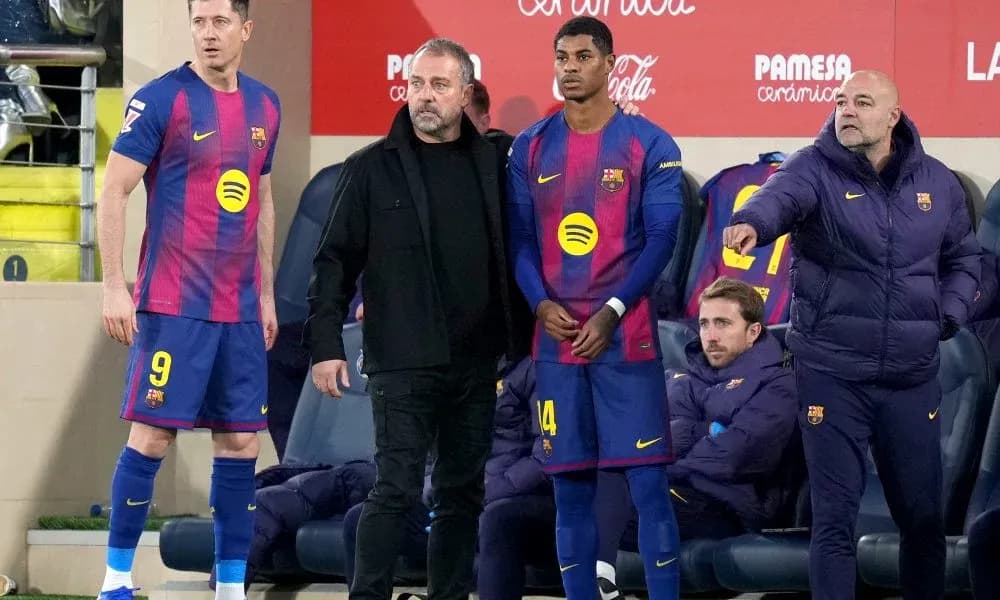
The England forward left the Camp Nou with 14 goals and 15 assists from his 2025/26 loan spell, a direct hand in 29 goals across all competitions. He helped deliver La Liga and the Spanish Super Cup. He changed games, often from the bench. On paper, that is the profile clubs usually fight to keep.
Barcelona still said no.
Rashford’s season wasn’t the problem
As reported by Fabrizio Romano, the decision not to trigger a permanent deal for Rashford did not come from disappointment in his form or attitude. Flick, in fact, rated him. The German coach respected the 26-year-old, trusted him, and appreciated the way he responded across the season.
Rashford was not a guaranteed starter, but he was a reliable weapon. When Barcelona needed goals or a different threat in the final third, he delivered. Inside the dressing room and on the training ground, his behaviour and work were seen in a positive light by the coaching staff.
That is what makes Barça’s choice so striking. They had a forward who produced, who fit into a title-winning side, and who had forged a strong relationship with the manager. Yet when it came time to decide on a long-term signing, the club turned in another direction.
Flick’s blueprint: beyond goals
The answer lies in Flick’s tactical demands rather than the highlight reel.
Rashford offered end product. Flick wanted more than that. The Barcelona boss was focused on a forward line that could constantly reshape itself, pressing aggressively and knitting together the team with and without the ball.
He was looking for a player who could slide across the entire attacking line, not just operate as a left-sided threat or a direct runner in behind. Off the ball, the requirement was just as clear: high intensity, repeated sprints, and defensive discipline to lock in Barcelona’s structure when they did not have possession.
Rashford’s numbers impressed. Flick’s vision, though, was centred on profile, not just production.
Why Anthony Gordon won the argument
This is where Anthony Gordon came in.
Inside the club, the coaching staff felt Gordon ticked more of Flick’s boxes. His ability to play on either flank, to swap sides mid-game, and to maintain a relentless defensive work rate gave him the edge in their internal debate over the future of the attack.
Gordon’s versatility and intensity off the ball were seen as closer to the template Flick wanted to build around. The choice, as Romano outlines, was not framed as “Rashford out, Gordon in” on pure output. It was a question of who better embodied the tactical identity the coach is trying to impose.
Barcelona, chasing a very specific version of themselves under Flick, sided with the winger who could stretch, press, and shuffle across the front line exactly as demanded.
Rashford leaves with trophies, numbers and credit in the bank. Gordon arrives as the embodiment of a plan. Now the season will reveal whether Flick’s bet on profile over proven production was the right one.