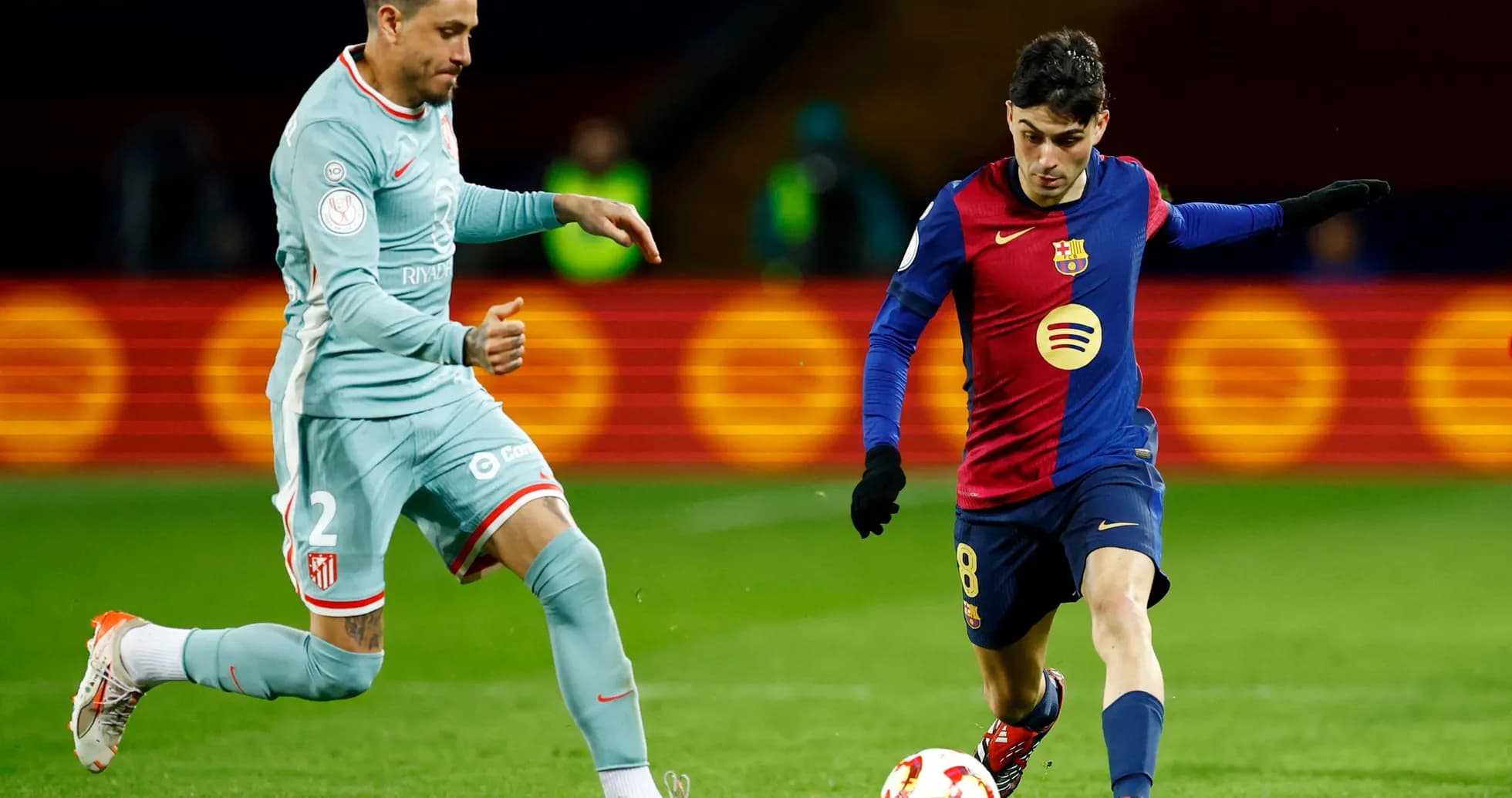
Barcelona Dominates Atletico Madrid in 2–1 Victory
On a cool night at the Riyadh Air Metropolitano, the league’s most ruthless attack dismantled one of its most imposing home fortresses. Barcelona’s 2–1 win over Atletico Madrid did more than stretch the gap between first and fourth; it underlined a structural contrast between a 2.7-goals-per-game juggernaut and a side built on controlled aggression and home dominance.
The standings data confirms this was a post‑match snapshot: both sides now on 30 games, with Atletico stuck on 57 points and Barça out in front on 76. Atletico’s overall goal difference of +20 (50 scored, 30 conceded) still speaks of balance, but the nuance is in the split: 35 of those 50 goals have come at home, where they average 2.2 per game and have won 13 of 16. This defeat was only their third at the Metropolitano in the league.
Barcelona, by contrast, are operating at a different scale. Eighty goals in 30 matches, with a perfect 15 wins from 15 at home and 10 away victories on top, make them the division’s reference point. They score 3.1 per game at home and 2.2 away, and they defend well enough – 29 conceded, 1.0 per game – to let their front line dictate terms.
That context framed the tactical identities on show. Atletico’s 4‑4‑2, which has been their most-used shape by a distance (20 league games), was again the platform: Juan Musso behind a back four of Nahuel Molina, Robin Le Normand, Clément Lenglet and Nicolás González; a hard‑running midfield line of Giuliano Simeone, Koke, Obed Vargas and Thiago Almada; Antoine Griezmann and Alejandro Baena nominally as the front two.
Across from them, Barcelona leaned into the 4‑2‑3‑1 that has underpinned 20 of their league outings. Joan García started in goal, shielded by Ronald Araújo and Pau Cubarsí centrally, with Gerard Martín and João Cancelo as full‑backs. Eric García and Pedri formed the double pivot, leaving an attacking band of Lamine Yamal, Fermín López and Marcus Rashford behind Dani Olmo.
The line‑ups were heavily shaped by absences. Atletico were without Jan Oblak, P. Barrios and M. Pubill through muscle injuries, R. Mendoza with an ankle issue, and both J. Cardoso and M. Llorente suspended for yellow‑card accumulation. The loss of Oblak strips Atletico of their long‑time reference in goal; Musso has been dropped into a defensive unit that, to date, concedes just 0.9 goals per home game, but the chemistry is still being built. The suspensions in midfield forced a reshuffle that pushed Simeone wide and increased the creative burden on Koke and Almada.
Barcelona’s injury list was shorter but high‑impact: Andreas Christensen (knee), Raphinha (thigh) and Frenkie de Jong (hamstring) all missed out. Christensen’s absence explains the trust placed in young Cubarsí alongside Araújo, while De Jong’s injury has nudged Pedri deeper, turning him from a pure No.10 into a metronome in the double pivot. Deprived of Raphinha’s vertical threat, Barça leaned even more on Lamine Yamal and Rashford to stretch Atletico laterally.
Discipline was always going to be a sub‑plot. Atletico’s season card profile shows pronounced yellow peaks between 31–45 minutes (21.31%), 16–30 (18.03%), and again in the 46–60 and 76–90 windows (both 16.39%). They live on that emotional edge, and three red cards spread across 31–45, 46–60 and 61–75 underline the risk baked into their pressing. Barcelona, meanwhile, see their yellows spike between 46–60 (25.00%) and 76–90 (22.92%), with further clusters in 31–45 and 91–105 (both 16.67%). They tend to tighten the screw – and flirt with danger – as games open up after the interval.
Within that framework, the individual matchups were decisive.
“The Hunter vs. The Shield” was embodied by Barcelona’s attacking ensemble against Atletico’s home defence. Lamine Yamal arrived as one of La Liga’s most devastating weapons: 14 goals, 9 assists and the league’s top rating, with 79 shots and 68 key passes. His dribbling volume – 231 attempts, 127 successful – is the raw material of chaos. Atletico’s back four, part of a unit that had allowed only 14 goals in 16 home matches, were tasked with neutralizing him in wide zones while also tracking the late runs of Dani Olmo and Fermín.
Olmo himself is a dual threat: 7 goals, 7 assists, 42 key passes and 44 shots, plus 29 tackles and 13 interceptions from advanced zones. His capacity to receive between the lines and then either slip a runner or shoot from the edge forces defenders to step out and creates the channels Lamine and Rashford love to exploit.
Atletico’s reply was meant to come from the boots of Griezmann and the work of Giuliano Simeone. Simeone’s season numbers – 4 goals, 6 assists, 30 key passes, 36 tackles and 17 interceptions – mark him as a true two‑way wide midfielder. His job was to disrupt Pedri and Eric García’s build‑up while offering a counter‑punch on transition. Koke, the experienced organiser, had to knit Atletico’s 4‑4‑2 into something that could withstand Barcelona’s territorial dominance and still release Almada between the lines.
The Engine Room Duel
In “The Engine Room Duel”, Pedri was the quiet dictator. With 7 assists, 50 key passes, 90% pass accuracy and 39 tackles, he is among the league’s most complete midfielders. Against an Atletico side that thrives on turning midfield into a scrap – their card spikes around half‑time and the hour mark are no accident – his ability to absorb pressure and play through the first line was the hinge on which Barcelona’s control swung.
Depth tilted the late‑game chess match further Barça’s way. From the bench, they could call on Robert Lewandowski (12 league goals), Ferran Torres (12 more) and Pablo Gavi, plus the creative unpredictability of Roony Bardghji. That is a bench stacked with game‑changing profiles. Atletico’s options were more structural than explosive: Alexander Sørloth (10 goals) offered penalty‑box presence, while defenders like José María Giménez, Dávìd Hancko and Matteo Ruggeri allowed shape shifts to a back five, but there was less pure final‑third invention among the substitutes.
The statistical prognosis before – and now after – this fixture points in the same direction. Barcelona marry the league’s most prolific attack (80 goals, flawless 6‑from‑6 record from the spot) with a defence that, while more generous away (1.4 goals conceded per game on the road), still bends more than it breaks. Atletico’s 12 clean sheets, including 7 at home, and a perfect penalty record of their own (2 scored from 2) normally give them a platform, but their reliance on home form and narrow margins was exposed by a side that can sustain pressure across 90 minutes.
Ultimately, the deciding factor was Barcelona’s superiority between the lines. Pedri and Eric García dictated tempo, Lamine Yamal and Rashford repeatedly isolated Atletico’s full‑backs, and the visitors had the bench to refresh their threat. Atletico’s defensive structure kept the scoreline respectable, but over the full 90 their inability to consistently progress through Barça’s press left Griezmann and Baena feeding on scraps.
In a clash of identities, the league leaders imposed theirs. Atletico remain formidable at the Metropolitano, yet this 2–1 defeat underlines the gap: Barcelona can dismantle even elite home defences, and right now, they are dictating not just games, but the shape of the title race.