Bayern München vs Real Madrid: A Tactical Clash in the Champions League
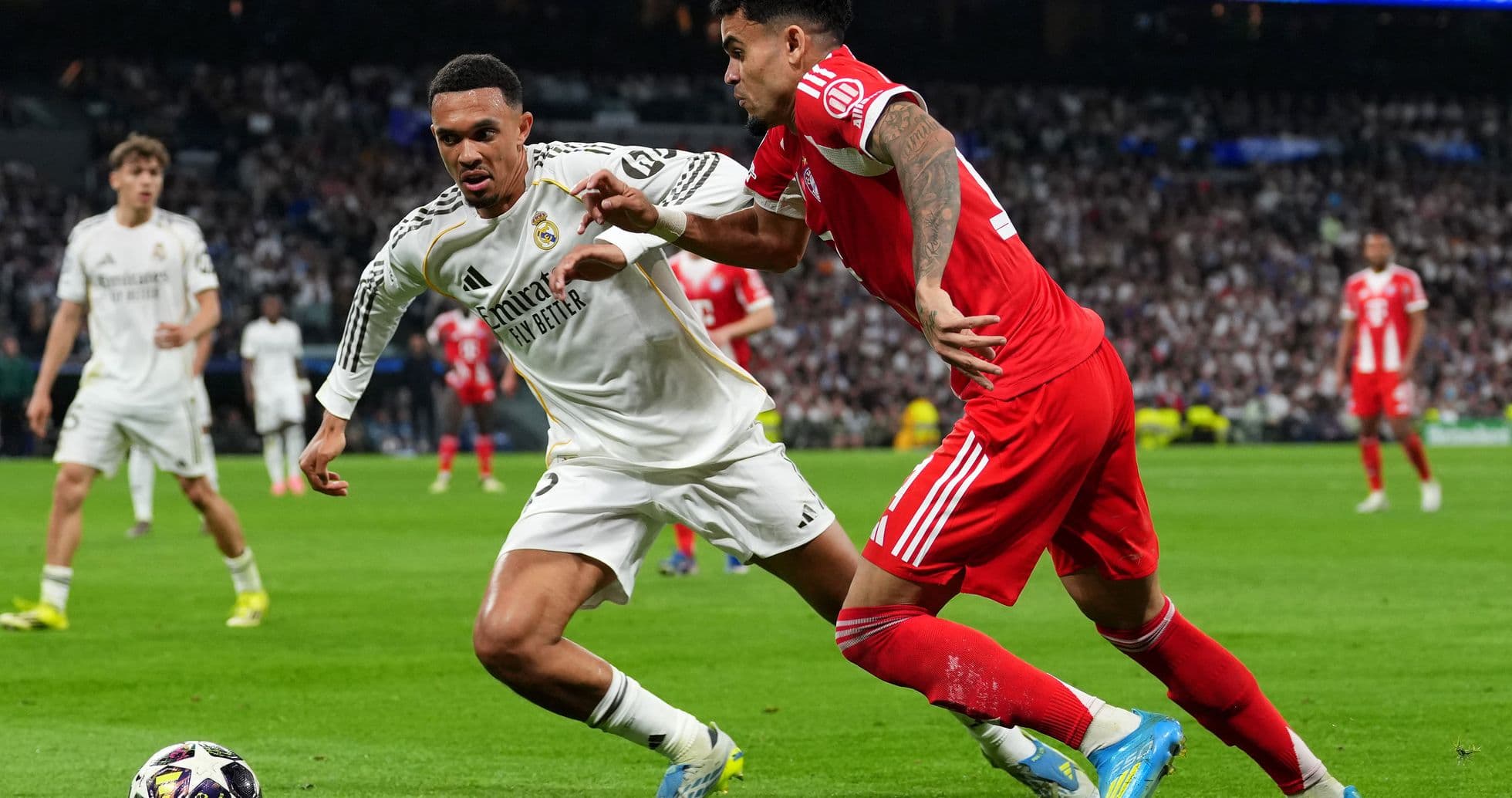
Under the Bernabéu lights, this quarter-final second leg felt like a clash of attacking ideologies as much as heavyweight institutions. Real Madrid arrived as a 2.3 goals-per-game machine in this Champions League campaign, Bayern München an even more ruthless 3.1 goals-per-game juggernaut. Over 90 minutes, Bayern’s slightly sharper edge in both structure and efficiency told, their 2-1 away win reflecting broader season-long trends rather than a one-off upset.
Madrid’s season data painted a side that lives on surges rather than control. Twelve of their 30 Champions League goals have come between 16-30 minutes, another six in each of the 46-60 and 76-90 windows – a team that can overwhelm you in bursts. But they also concede heavily in specific bands: 35.29% of their goals against arrive between 31-45 minutes, another 23.53% between 46-60. Against a Bayern side that peaks in exactly those transition moments – 23.53% of their goals between 46-60 and 20.59% between 61-75 – this tie always threatened to be decided in the middle third of each half. So it proved.
Vincent Kompany’s Bayern came in with the more complete statistical profile: 10 wins from 11 in this competition, 34 goals scored and only 11 conceded, and an away attack averaging 3.0 goals per game. They are ranked second in the Champions League standings with 21 points and a +14 goal difference, a side that rarely has to chase. Madrid, ninth in the table with 15 points and a +9 goal difference, have been more volatile: five wins, three defeats, no draws. Alvaro Arbeloa’s decision to lean into that volatility with a front-loaded 4-4-2 was a statement of intent – and a calculated risk.
The Butterfly Effect: Absences and Reconfiguration
The tactical voids were clearest in white. Without Thibaut Courtois, Ferland Mendy and Rodrygo, Madrid’s spine and left flank were reimagined. Andriy Lunin, excellent domestically, was again entrusted in goal. In front of him, Álvaro Fernández Carreras at left-back – a defender who has already collected four yellow cards this campaign and ranks among the most-booked players in the competition – was asked to manage both Luis Díaz and the forward surges of Konrad Laimer. It was a matchup loaded with disciplinary jeopardy for Madrid.
On Bayern’s side, the absences were more peripheral but still nudged Kompany’s hand. With Sven Ulreich out, Manuel Neuer’s presence was non-negotiable. The injuries to C. Kiala and W. Mike, and the inactivity of B. Ndiaye, compressed Bayern’s rotation options but did not touch the core of their XI. Crucially, the attacking trident behind Harry Kane – Michael Olise, Serge Gnabry and Luis Díaz – was intact.
Disciplinary patterns framed the risk management. Madrid’s yellow cards skew heavily towards the second half: 25% between 46-60, 17.86% between 76-90, and a significant 21.43% in 91-105, a sign of a side that often has to scramble late. Bayern’s bookings, by contrast, spike brutally late in regulation time: 39.13% of their yellows arrive between 76-90 minutes, with another 17.39% between 16-30. Both teams walk a tightrope in high-stress phases; on this night, Bayern managed that edge with slightly more composure.
The Chess Match: Hunter vs Shield, Engine vs Enforcer
This tie was always going to orbit Kylian Mbappé and Harry Kane, the Champions League’s two most prolific forwards this season. Mbappé came in as the competition’s leading scorer and top-rated player (ratingPosition 1) with 14 goals, three flawless penalties and an 8.02 average rating. Kane, ranked second, had 11 goals, 3 from 4 penalties, his single miss a reminder that even the most reliable can falter from the spot.
Arbeloa paired Mbappé with Vinícius Júnior up front in a 4-4-2 that tried to stretch Bayern’s high line horizontally. Mbappé’s 41 shots (28 on target) and 28 key passes this campaign underscore his dual threat; here, his runs between Dayot Upamecano and Jonathan Tah were designed to isolate one centre-back and force Bayern’s double pivot to drop. Vinícius, with 5 goals, 4 assists and 22 key passes, drifted left to pin Josip Stanisic and invite overlaps from Carreras.
Bayern’s “shield” was not just the back four but the structure in front of it. Joshua Kimmich and Aleksandar Pavlović formed a disciplined double pivot, tasked with screening Mbappé’s drops and cutting passing lanes into Arda Güler and Federico Valverde. Kimmich’s passing range allowed Bayern to bypass Madrid’s first line of pressure; Pavlović’s positional discipline ensured they were rarely exposed in central transitions.
The engine-room duel tilted red. For Madrid, Valverde – 4 assists, 21 key passes, 20 tackles and 4 blocked opponent attempts – tried to dictate tempo from the right half-space, shuttling wide to support Trent Alexander-Arnold and infield to press Kimmich. Güler, with 4 assists and 34 key passes, is Madrid’s creative metronome, but his workload without the ball against a Bayern side that averages 3.1 goals per match was enormous.
Opposite them, Olise arrived as the Champions League’s top assist provider (ratingPosition 1 for creators) with 6 assists and 29 key passes. He functioned as Bayern’s primary conductor between the lines, drifting inside from the right to overload Tchouameni and Pitarch. Behind him, Laimer – also among the most-booked players with four yellows – blended aggression with intelligence, contributing 20 tackles and 8 interceptions in the campaign. His tendency to step high onto Güler was a calculated gamble that often paid off, even if it carried card risk.
Out wide, Gnabry’s 5 assists and 93% passing accuracy made him the subtle connector, while Díaz, with 5 goals, 3 assists and a red card already on his record this season, walked the line between match-winner and liability. His willingness to drive at Alexander-Arnold and Carreras stretched Madrid’s back four, forcing Aurélien Tchouameni to drop into the back line more often than Arbeloa would have liked.
From the bench, Madrid had game-changers in Jude Bellingham, Brahim Díaz and Eduardo Camavinga, plus the experience of Dani Carvajal and David Alaba. Bayern’s depth was more structural: Leon Goretzka to add power in midfield, Alphonso Davies and Raphaël Guerreiro to flip the full-back profiles, and Jamal Musiala as a late-game dribbler to exploit tired legs. In a tie where Bayern have failed to keep an away clean sheet so far this campaign, those fresh legs were always going to matter in the final quarter-hour.
Statistical Verdict: Margins in the Middle Third
The numbers coming in always hinted that Bayern were better built for this exact type of high-stakes, high-tempo knockout. They had scored in every Champions League game, never failed to find the net away, and conceded only 11 in 11 matches. Madrid, for all their 30 goals and four clean sheets, had a more fragile defensive profile: 16 conceded, with clear vulnerability just before and after half-time.
The critical intersection was obvious: Bayern’s peak scoring windows (46-60 and 61-75) overlapped almost perfectly with Madrid’s soft underbelly (31-45 and 46-60). Over two legs, and again in this 2-1 at the Bernabéu, that middle-third dominance decided the tie. Bayern dictated those phases, dismantling Madrid’s shape just enough to tilt the margins.
In the end, the deciding factor was Bayern’s balance. Madrid had the competition’s most devastating individual in Mbappé and a flawless penalty record from him, but Bayern married Kane’s penalty-box gravity and Olise’s creativity to a structure that neutralized Madrid’s surges in their most dangerous time bands. In a quarter-final defined by fine details rather than chaos, the more complete statistical profile carried Bayern through.