Bayern Munich Wins Supercup: Key Performances and Tactical Insights
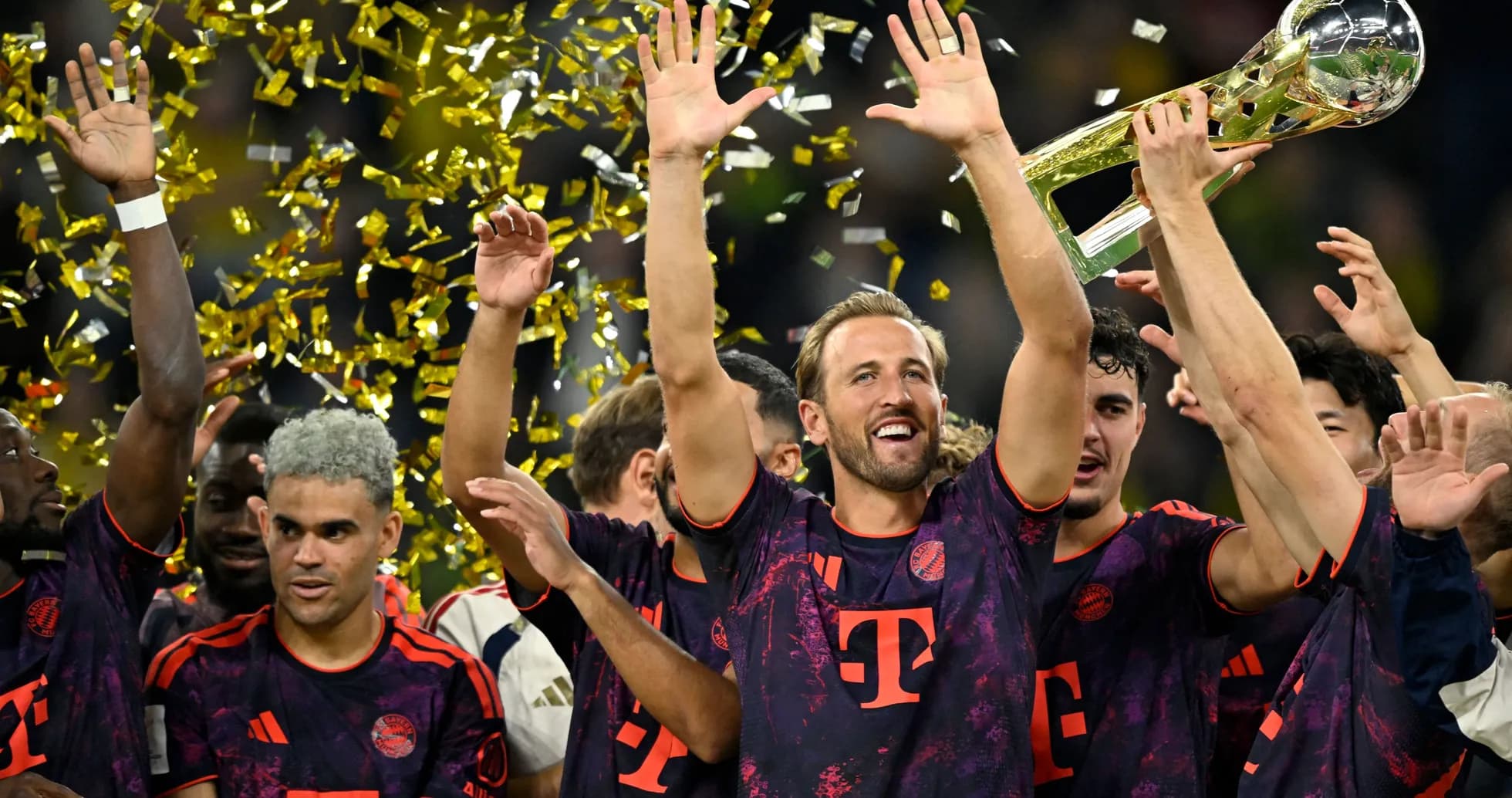
Bayern Munich have pocketed the first piece of silverware of the 2026/27 campaign – and did it in Dortmund’s backyard. A 2-1 win over Borussia Dortmund at Signal Iduna Park secured the Franz Beckenbauer Supercup, with Nathaniel Brown and Michael Olise firing the champions into a 2-0 half-time lead before Fabio Silva’s reply set up a tense finish.
It was only a curtain-raiser. It felt like more than that.
Neuer: still world-class, still a risk
Manuel Neuer has built a career on playing on the edge. That sweeping, front-foot style with the ball at his feet helped redefine the position and powered Bayern through a decade of dominance.
But the edge is getting thinner.
The clearest recent alarm was his disastrous pass to Arda Güler in Madrid last April, gifting Real a Champions League quarter-final lead. In Dortmund, the pattern resurfaced. Twice.
After 15 minutes, Neuer fizzed a loose ball into Min-jae Kim under pressure, almost presenting BVB with the opener. Kim bailed him out with sharp feet and quicker reactions. Later, with the game seemingly under control, Neuer tried to be cute again. A backpass from Kim, a feint to let Jobe Bellingham run past, a misjudged touch – suddenly Bellingham was in. Only a full-stretch, desperate intervention from Neuer prevented a late equaliser.
The problem is obvious: the veteran is creating danger as often as he is defusing it.
Neuer has already hinted this could be his final season. Bayern are preparing for that reality. Jonas Urbig is in place as heir apparent, and at 23 is expected to see more minutes this year, eased into the role rather than thrown into it. Officially, Neuer remains the man for the biggest nights. Performances like this, though, raise a question that no one at Säbener Straße can ignore much longer: how many of those nights will still belong to him?
Because one thing has not faded. On the line, his reflexes remain outrageous. Early in the second half, new BVB signing Konstantinos Karetsas smashed a close-range effort that looked destined for the net. Neuer’s reaction save – pure instinct, pure class – kept Bayern two goals clear.
He is still capable of winning matches. He is also increasingly capable of reopening them.
Brown the surprise No. 10 – and a glimpse of Bayern’s new depth
Nathaniel Brown arrived as a left-back. Bayern already knew he could play as a holding midfielder. Pre-season hinted at something more adventurous.
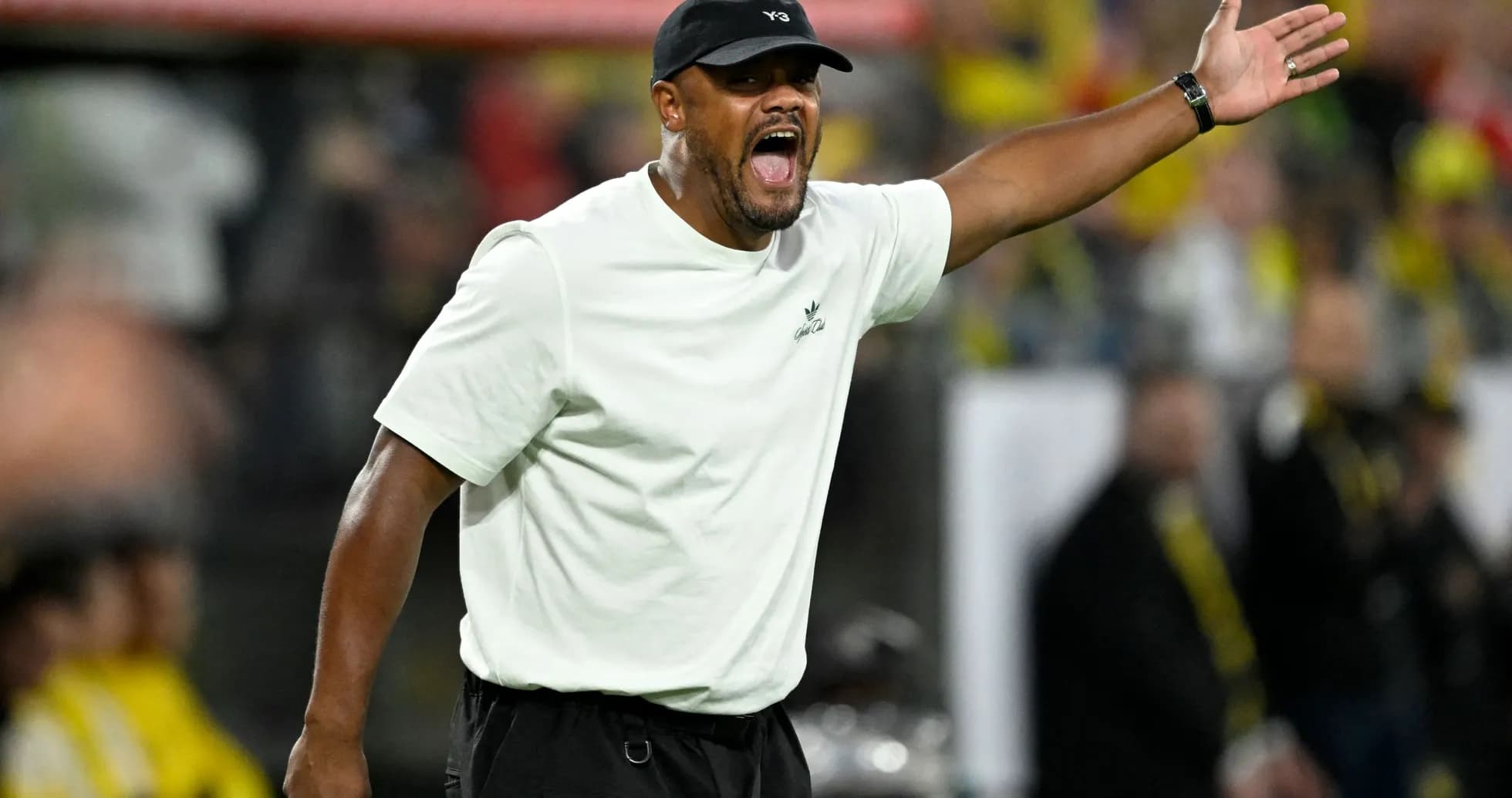
In Dortmund, Vincent Kompany went all in.
With Jamal Musiala absent due to neurological issues that had already forced him off in friendlies against Leipzig and Heidenheim, and new signing Ismael Saibari not yet ready to start, most expected Tom Bischof to operate as the No. 10. Instead, Brown lined up in the hole behind Harry Kane.
It looked bold on paper. On the pitch, it looked like a plan.
Brown drifted into pockets, linked play, and – crucially – struck first. His opener in the 28th minute, hit with the conviction of a player who has no intention of being pigeonholed as “just” a full-back, set Bayern on their way and delivered his first trophy with the club in his first serious outing.
Kompany later explained the thinking: the spaces his full-backs occupy often mirror those of a No. 10, and Brown is “unbelievably good between the spaces.” On this evidence, he has another weapon to play with.
Brown is not alone. Konrad Laimer can play either full-back role, anchor midfield as a No. 6, or push on as an 8 or even a 10. Josip Stanisic can operate on both flanks or tuck into central defence. Bayern’s squad doesn’t just look deep; it looks elastic.
For a side chasing trophies on every front, that kind of versatility is gold. And on nights like this, it wins you cups.
Kovac’s inverted wing-backs: brave, clever, and costly
On the opposite bench, Niko Kovac used the Supercup to push through an idea that has been simmering all summer.
He flipped his wing-backs.
Left-footer Daniel Svensson started on the right. Right-footer Julian Ryerson took the left. The intention was clear: drag Bayern’s back line wide, then let the wing-backs cut inside onto their stronger feet, operating more like inverted wingers.
Kovac spelled it out afterwards: he wanted the option to come inside, combine, and shoot or slide passes into the box, not just hit predictable crosses from the outside lane.
At times, it worked. In the first half, Ryerson swung a wicked, deep cross from the left with his right foot, Ramy Bensebaini glanced it in – only to see the flag go up for a marginal offside. A warning for Bayern, and a hint of what Kovac wants.
But the tweak came with a price.
One glaring moment summed it up. Bensebaini drove low from the left, the ball skidding perfectly into the path of Svensson, who had drifted infield from the right. Ideal position, wrong foot. Forced onto his weaker right, Svensson completely misjudged the finish and failed to make contact. The chance vanished. With Ryerson’s stronger right foot in that spot, the outcome might have been very different.
By half-time, Kovac had seen enough. Svensson and Ryerson switched back to their natural sides. The effect was immediate. Dortmund’s pressure grew, their runs in behind had more bite, and the wide threat finally looked like it could hurt Bayern consistently.
The 2-1 goal came straight from that more conventional setup: Svensson, now on the left, burst to the byline and cut the ball back smartly for Fabio Silva to finish. Classic full-back play, classic centre-forward movement.
Kovac’s experiment gave Dortmund variety and unpredictability. It also blunted them in key moments. The idea is intriguing; the execution, and the trade-offs, still need work.
Silva’s sharp reminder – and a transfer dilemma
Serhou Guirassy’s name has slipped out of the rumour mill in recent weeks. On the pitch, his evening looked uncomfortably familiar. He toiled, chased, tried to link play, but never really threatened. No shots of note, no real presence in the box. The kind of quiet outing that marked the more frustrating spells of last season.
After just over an hour, Kovac made the call. Guirassy off, Fabio Silva on.
The game changed.
Silva brought sharper movement around the area, dropped into spaces Guirassy hadn’t found, and attacked the box with intent. His goal – Dortmund’s lifeline at 2-1 – was a striker’s finish of real quality: peeling away just enough to find room, then finishing coldly from close range after Svensson’s cutback.
It was the sort of cameo that turns heads inside a club. It also complicates things outside it.
Several clubs are pushing for Silva, with Real Betis the most serious suitor. Dortmund are open to selling if the price is right, and the player himself is not nailed down to staying. One year after arriving, he could yet be moved on.
That was the plan. Then came this performance.
With the window entering its final stretch, Silva has forced BVB to pause. Can they really afford to lose a forward who offers that kind of impact, that kind of penalty-box sharpness, without a guaranteed replacement lined up?
On a night when Bayern lifted a trophy and Dortmund were left applauding their own reaction rather than a title, that might be the most important question of all.