Bodo/Glimt Outshines Inter in Clinical Counter-Attacking
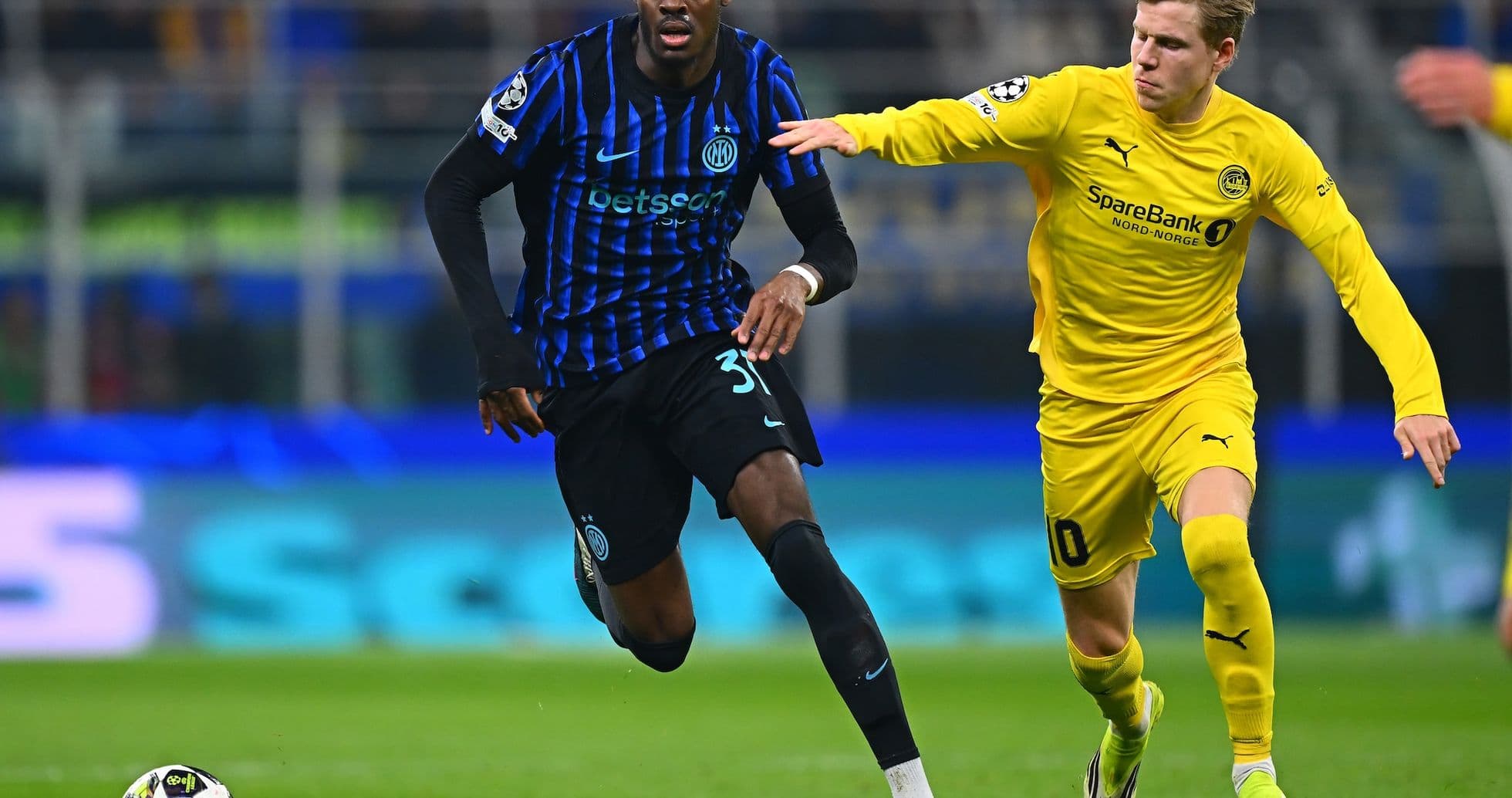
Inter imposed almost total control of the ball but not of the scoreboard. With 71% possession and 598 total passes at 87% accuracy, they dictated the tempo, circulating through their 3-5-2 to pin Bodo/Glimt deep. The Norwegian side accepted a reactive role, completing only 263 passes and holding 29% of the ball, but they controlled space rather than possession. Their compact 4-3-3 narrowed centrally, inviting Inter wide and trusting their defensive line to deal with crosses and cutbacks. From this structure, Bodo/Glimt picked their moments to break, turning limited ball time into decisive attacking sequences that flipped the match.
Offensive Efficiency
The attacking contrast was stark. Inter produced a barrage of efforts: 30 total shots, 7 on target, and 16 corners. With 26 of those shots coming from inside the box, they clearly managed to penetrate the penalty area rather than settling for hopeful long-range efforts. The xG of 2.15 underlines that they created enough chances to win on most nights, but converting only once from that volume reflects a lack of cutting edge in the final action.
Bodo/Glimt, by comparison, were the definition of ruthless. They managed just 7 total shots, with 5 on target, yet scored twice and generated 1.74 xG. That shot profile – relatively few attempts but a very high on-target ratio – suggests their counters and attacking phases were well-structured, leading to clear sights of goal rather than speculative efforts. Only 1 corner further underlines that they did not rely on sustained pressure or set-piece volume; instead, they maximized transitional moments and isolated situations in and around the box. Inter’s “sterile domination” of possession and shot count was undone by Bodo/Glimt’s superior efficiency in the key zones.
Defensive Discipline & Intensity
The match was not especially wild in terms of fouls, but the numbers hint at contrasting defensive approaches. Inter committed 11 fouls to Bodo/Glimt’s 9, suggesting some aggressive counter-pressing to prevent transitions once possession was lost. Yet with no yellow cards shown to Inter, their challenges stayed largely within control. Bodo/Glimt picked up 1 yellow, a sign of occasional tactical fouling to break Inter’s rhythm when necessary.
Goalkeeping did not decide the game statistically: Inter’s Yann Sommer made 3 saves, Bodo/Glimt’s Nikita Haikin 4. With “goals_prevented” at 0 for both, the data indicates neither keeper dramatically overperformed or underperformed versus the quality of chances faced. Instead, Bodo/Glimt’s defensive block, which allowed 30 shots but limited Inter to just 7 on target, was about shot quality suppression at the final moment – blocks (Inter had 7, Bodo/Glimt 0) and last-ditch interventions in their own box.
Bodo/Glimt’s clinical counter-attacking and chance conversion (5 shots on target from 7 attempts) trumped Inter’s possession-heavy but wasteful approach (30 shots, 1 goal, 71% possession). Inter controlled the ball; Bodo/Glimt controlled the decisive moments.