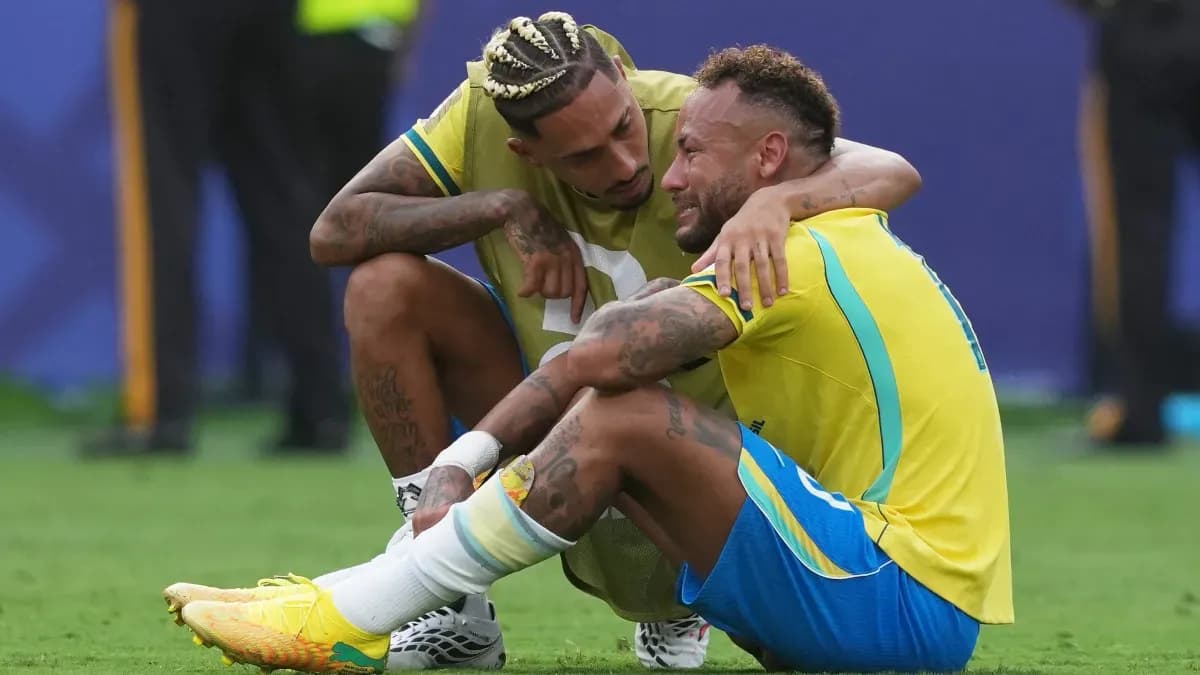
Why Brazil Fell Short at the 2026 World Cup: Ancelotti’s Side Out in Round of 16 to Norway
Fans of Brazil have grown familiar with World Cup heartbreaks over the past twenty years. Their early exit from the 2026 tournament feels like yet another setback on football’s biggest stage. The 2-1 loss to Norway, led by Erling Haaland, at MetLife Stadium ended Carlo Ancelotti's campaign abruptly in the Round of 16.
This marks the fifth time since their 2002 World Cup triumph that Brazil failed to reach the semifinals. The only recent semifinal appearance ended with that painful defeat to Germany on home soil. Here’s a look into what went wrong for Ancelotti’s team and what this means moving forward towards 2030.
Missed Opportunities Cost Brazil
The clearest issue was missed chances. Football can be cruel when shots don’t find the net. In four of their five matches, Brazil fell short of their expected goals (xG). They scored 10 goals from an xG of 12.02 overall, but removing the Haiti game—where they outscored their xG massively—the picture worsens. Without that match, it was just six goals from 10.27 xG.
Against Norway, Bruno Guimaraes missed a penalty, and Endrick wasted a one-on-one chance against the keeper. Those moments decided the contest. Going back to their opener versus Morocco, Igor Thiago struggled badly in front of goal and didn’t see further playtime. Vinicius Jr. performed well up front but lacked sufficient support.
Midfield Woes Left Guimaraes Overburdened
The midfield was a glaring weakness. Carlo Ancelotti had to adjust his approach because of it. Casemiro, who looked strong for Manchester United during the season, appeared worn down during the World Cup. At 34, he was unreliable in many areas despite still posing an aerial threat. Ancelotti even substituted him at halftime twice but kept starting him.
Lucas Paqueta was equally ineffective until injury forced him out. Bruno Guimaraes did his best but carried too much responsibility. He had to defend, maintain possession, press resistance, and create chances all on his own. That was more than anyone could manage effectively.
Defensive Failings at Critical Times
Brazil’s center-back pairing combined players from both Champions League finalists this year, raising expectations. Instead, Marquinhos and Gabriel faltered when it mattered most. Gabriel, in particular, was exposed repeatedly, especially by club rival Haaland on Norway’s first goal.
On Haaland’s second goal, defenders dropped too deep and failed to apply pressure, allowing him to score unchallenged. Defensive lapses like these were costly.
Injuries Weakened Team Depth
Losses to injury hurt Brazil’s squad depth. Raphinha’s absence was particularly damaging. His replacement, Bournemouth’s young Rayan, showed promise but couldn’t match Raphinha’s influence. At Barcelona, Raphinha has become a world-class winger, providing vital off-ball movement alongside Vinicius Jr. Without him, Brazil lost a key attacking dimension.
Ancelotti Outmaneuvered by Solbakken
In the match against Norway, Carlo Ancelotti was tactically outplayed by Stale Solbakken. Aware of Brazil’s midfield struggles, Norway deliberately accepted possession, confident Brazil would struggle to counterattack effectively.
"That was our plan, to keep the ball as much as we could and from the beginning we knew we would have the ball," Solbakken said. "We wanted to be slow. Perhaps what we did wrong in the first half was we played two or three balls into the middle where they counter-attacked against us, that's why we made the substitutions. That's why we played in the outside zones."
Brazil’s hope to control the match backfired, as Norway patiently waited for openings to feed Haaland. Eventually, Brazil faced mounting pressure to push forward and create chances, which left them vulnerable.
Though Ancelotti ranks among the world’s top managers, in this encounter he was clearly outcoached.