Caitlin Foord's Milestone as Matildas Bounce Back
The first meeting with Mexico stung. A 1-0 defeat at home, a flat performance, and a reminder that the road to the next World Cup will not be lined with easy wins. Steph Catley didn’t sugar-coat it.
“It’s disappointing, but there’s also the realisation that we’re at the very start of a journey towards the World Cup,” she said afterwards. A reset rather than a crisis.
Four days later, Australia answered.
Foord’s milestone night
On Tuesday, the Matildas came back with edge and purpose, beating Mexico 3-1 in the return friendly and taking more than just a result from the night. They took back a little pride.
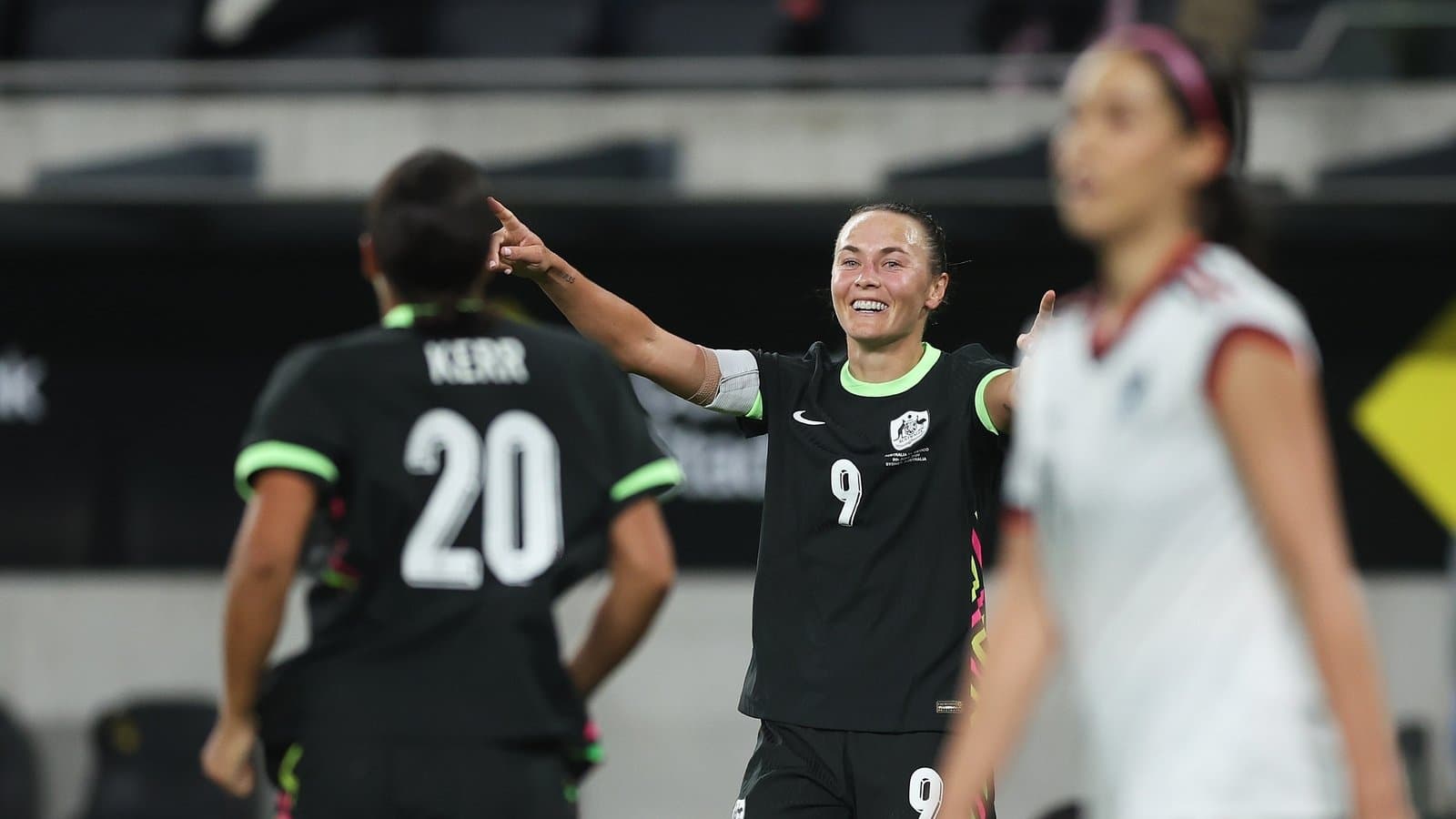
Catley again went the distance, anchoring the left side for the full 90 minutes. In front of her, Caitlin Foord wore the armband and owned the stage.
On her 150th appearance for Australia, Foord delivered the kind of captain’s moment that sticks. With Mexico chasing, she rolled her marker with sheer strength, opened her body and threaded a precise finish inside the far post for Australia’s third of the evening. One touch to turn, one to settle the contest.
That goal carried extra weight. It moved Foord into the group of third joint-highest scorers in Matildas history, now sitting on 41 goals for her country – a number that tells the story of a decade spent driving this team forward.
Afterwards, the emotion was shared, not individual.
“To reach 100 is obviously huge, and for myself, 150 as well,” Foord said, nodding to Catley’s own century milestone. “It’s nice to enjoy these moments together, and celebrate them, which we have during this series.”
From the disappointment of Saturday to the authority of Tuesday, Australia’s “start of a journey” already feels a touch more convincing.
Lionesses win, but route turns to play-offs
Across Europe, the stakes were very different. For England, it was not about pride, but passage.
At Everton’s Hill Dickinson Stadium, the Lionesses took care of their part of the job, beating Ukraine 3-0 in FIFA Women’s World Cup qualifying. Alessia Russo led the line for the full 90 minutes, Chloe Kelly stepped in from the bench on 64 minutes, and Lotte Wubben-Moy watched on as an unused substitute.
Russo did more than occupy defenders. She slipped in Georgia Stanway for England’s second goal, a sharp assist that underlined her value as both scorer and creator.
The win felt routine. The outcome of the group did not.
Despite taking 15 points from six games and winning five of them, Sarina Wiegman’s side finished second in Group C, level on points with Spain but edged out on goal difference. Automatic qualification slipped away on the margins.
“It’s nice to come back to England, play in front of all of our fans and get a win,” Russo said. “We also wanted to qualify automatically for the World Cup but now we’re going to the play-offs and that’s tough but it’s football. We had the toughest group playing Spain and we won five out of six games and have still not gone through.”
The performance reassured. The route now gets steeper. October’s play-offs will decide whether this generation’s momentum carries into the World Cup or hits a jarring pause.
Spain stroll, Sweden rally
While England wrestled with fine print, Spain simply tore through the door.
Mariona Caldentey played the first half of a 6-1 demolition of Iceland away from home, a result that piled on the goal difference and sealed World Cup qualification in emphatic fashion. Spain didn’t just edge their way through; they stamped their authority on the group.
Sweden, by contrast, must navigate the same play-off maze as England. A 2-2 draw at home to Italy told the story of their campaign in one night: slow start, furious response, points shared.
Two goals down, Sweden fought back with real bite. Smilla Holmberg and Stina Blackstenius both played the full 90 minutes, driving a spirited comeback that salvaged a draw but not the automatic spot. They finish third in Group A on eight points from six games, a tally that reflects too many slips for a side of their quality.
The recovery showed character. The table showed the cost.
North American tune-ups
Away from the pressure of qualification, the United States and Canada used the window to test and tweak.
Emily Fox went the distance for USA in Saturday’s 2-1 friendly defeat in Brazil, then started again on Wednesday, this time playing the first half of a tighter 1-0 win at the same venue. Two games, two different outcomes, and 135 more international minutes banked for one of the USA’s key defensive outlets.
Canada, meanwhile, cut loose. Olivia Smith played 63 minutes as they dismantled Costa Rica 6-0 away from home on Wednesday in a friendly that showcased their attacking depth. For Smith, it was valuable time in a side that continues to evolve around a strong core.
Next wave on the rise
The international break also offered a glimpse of the future.
In Germany’s under-23 setup, goalkeeper Anneke Borbe stepped in at half-time of a 2-2 friendly draw at home to Denmark on Monday. Forty-five minutes, a clean sheet in her spell, and another small but important step in the development pathway.
From Foord’s 150th cap to Borbe’s under-23 outing, this window stretched from established stars to emerging names. The margins between joy and frustration were just as wide: Australia’s response after defeat, England’s win without reward, Spain’s procession, Sweden’s salvage job.
The next World Cup is still on the horizon, but for many of these players and teams, the tone of that journey is already being set.