Canada's Historic World Cup Win Marred by Koné's Injury
Canada finally had its World Cup moment. A first-ever victory on football’s biggest stage, a 6–0 dismantling of Qatar in Vancouver, a Jonathan David hat trick, a crowd roaring itself hoarse on home soil.
And yet, as the final whistle went on June 18, 2026, the night belonged to something else entirely: the sickening crack of Ismaël Koné’s left leg.
A landmark win, shattered in a second
The game had long tilted Canada’s way. Qatar were already down to 10 after Homam Ahmed’s first-half dismissal, the hosts cruising through their Group B assignment, the scoreline swelling, confidence flowing.
Then Assim Madibo flew in.
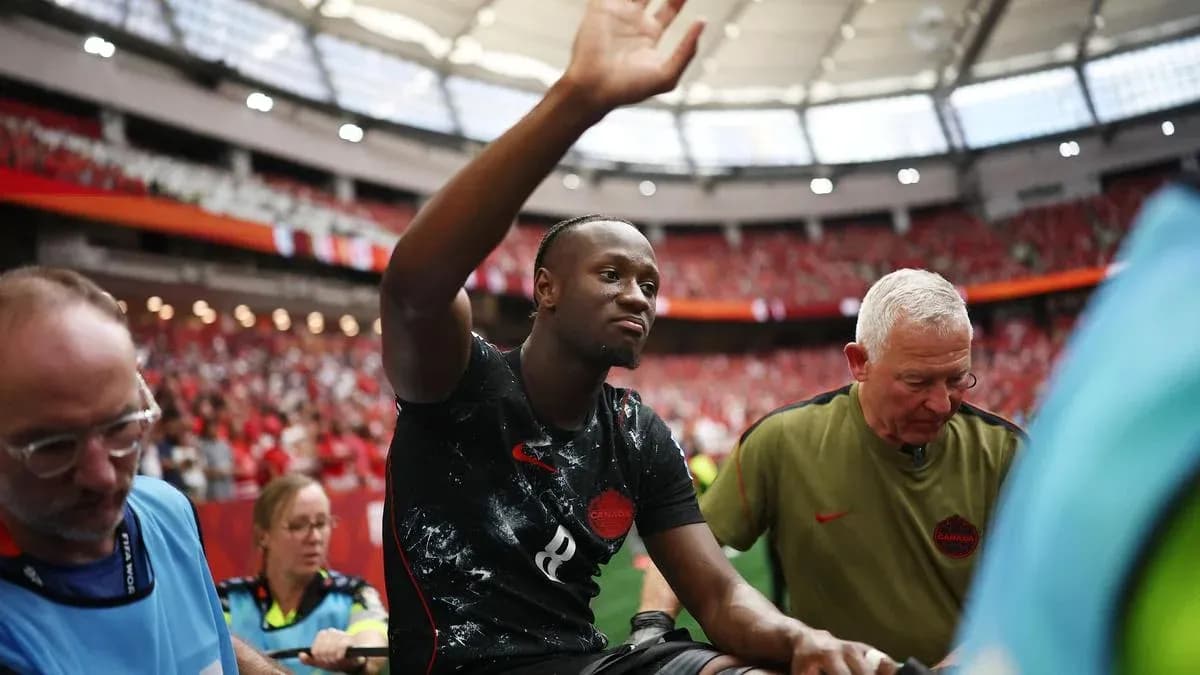
Midway through the second half, the Qatar midfielder lunged from behind at Koné. The 24-year-old went down instantly, twisting awkwardly, his face contorted in pain. Players from both sides waved frantically to the bench. Some turned away the moment they saw his leg.
“I saw his leg. I saw that something wasn't right,” captain Stephen Eustáquio said later. He was one of the first to reach his teammate, one of the first to understand the severity.
Madibo’s red card was immediate. There was no debate, no delay. As the referee reached for his pocket, Koné’s Canada teammates formed a tight ring around him, shielding him from the cameras and the crowd while medics worked. The stadium noise fell away into a low, anxious murmur.
Photos from the incident showed his lower left leg visibly misshapen. The details of the injury have not yet been disclosed, but nobody inside BC Place needed a medical report to know this was serious.
“You could hear the bones snap”
On the touchline, Canada coach Jesse Marsch had the worst possible view.
He later revealed the tackle unfolded right in front of the bench. The sound will stay with him.
You could, he said, hear the “bones snap.”
Koné was stabilized on the pitch, then stretchered off to warm applause that carried more concern than celebration. From there, he was rushed to a local hospital, where Marsch said he was preparing for surgery, surrounded by family.
“Everybody was crushed when it happened, but we had to find a way to stay focused, we knew that Ismaël wanted us to finish the job,” Marsch said. “There's a lot of thoughts that go through our heads right now, we're all thinking about him, but we're all very proud of what we are.”
Marsch added that Madibo later offered a personal apology to Koné, a gesture that underlined how out of place the challenge felt in a game already lost.
Qatar, reduced to nine men after Madibo’s dismissal, were left chasing shadows. Canada, shaken but furious, pushed on.
Saliba’s tribute and David’s fury
The response from Koné’s replacement carried all the emotion of the night.
Less than 10 minutes after coming on, Nathan Saliba arrived in the box to score Canada’s fourth goal. He didn’t celebrate in the usual way. Instead, he grabbed Koné’s jersey, held it up to the stands, and turned the goal into a tribute.
The crowd responded with a roar that sounded less like joy and more like a promise: they hadn’t forgotten who this night was supposed to belong to.
David, who finished with a World Cup hat trick to his name, could not hide his anger at the tackle that changed the tone of the evening.
“If there's a play where you cannot win the ball, there's no point,” he said. “It's just to hurt people.”
In a game Canada dominated from start to finish, that single moment became the defining flashpoint.
A historic night with a heavy cost
On paper, this was the perfect launch: 6–0, three points, a statement to the rest of Group B, and a first World Cup win finally secured. The kind of result that can ignite a host nation’s tournament.
But the mood in the mixed zone told a different story. Players spoke quietly. The scoreline felt secondary.
“We're going to miss (Koné),” Eustáquio admitted. “He has that X factor that our team really needs.”
Koné has grown into exactly that: a midfielder who links lines, breaks pressure, and adds a spark Canada cannot easily replace. His absence will reshape Marsch’s plans for the rest of the tournament, tactically and emotionally.
Canada walked off the pitch as World Cup winners for the first time in their history, yet their thoughts were already elsewhere. The team had delivered the result Koné would have wanted. Now the question hangs over the rest of their campaign:
How far can this group go without the player who so often makes them different?