From Catalonia to Paris: A Footballer's Journey
The suitcase closed faster than he expected. One week he was in Catalonia, settled in the familiar rhythm of La Liga life. The next, he was on a plane to Paris, leaving behind his language, his habits, his comfort zone.
For a 26-year-old who had grown up in that world, the move was as jarring off the pitch as it was smooth on it. Training was the easy part. The real battle came with the small, relentless details of a new life: a different city, a different culture, a different tongue. New streets to learn, new routines to build, silence where there used to be effortless conversation.
Paris, though, did not greet him as a stranger.
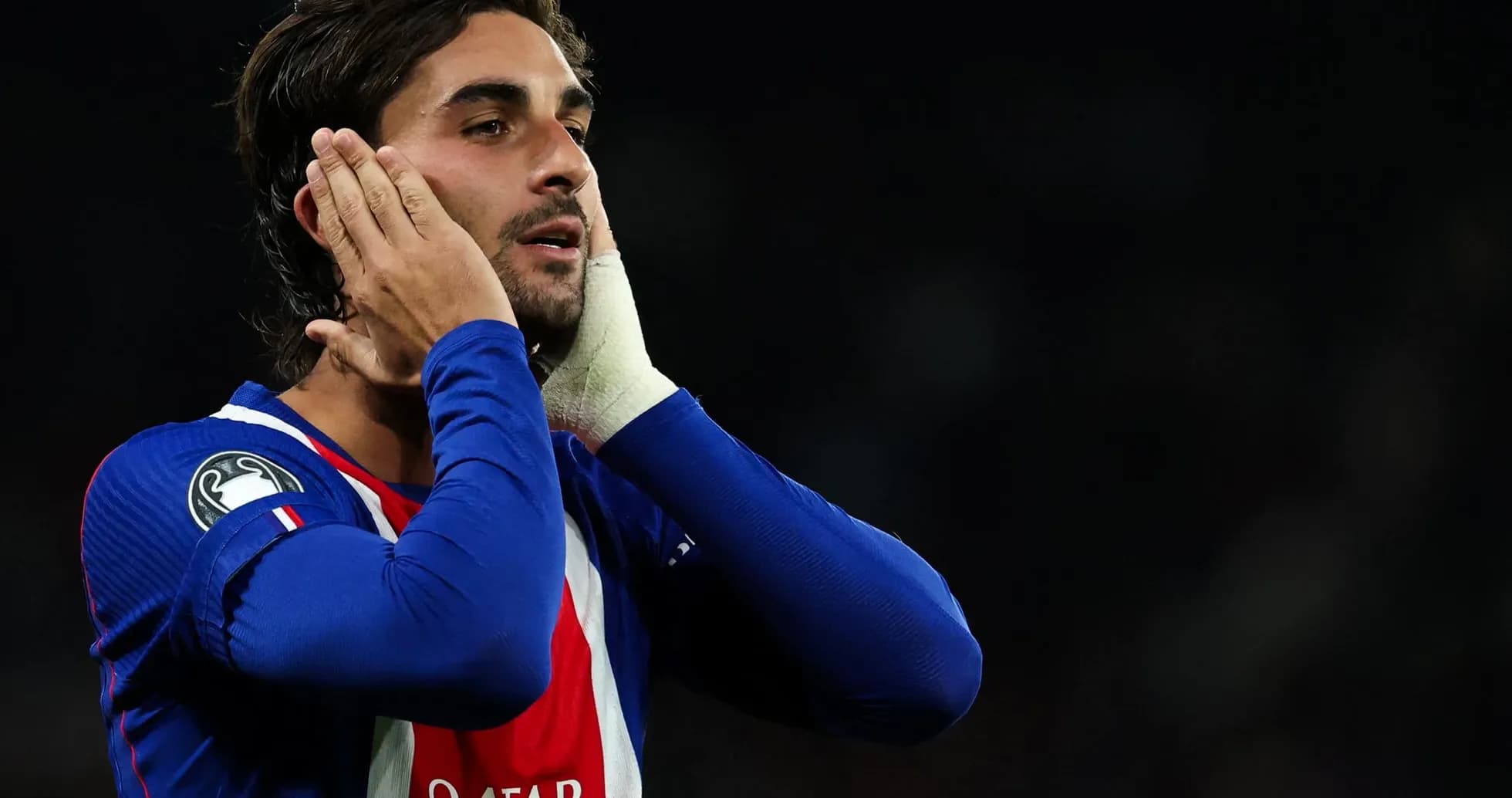
At the Parc des Princes, there were anchors waiting. Luis Enrique, the coach he sees almost as a footballing father, was already in place, ready to fold him back into a familiar tactical and emotional framework. In the dressing room, Spanish voices cut through the uncertainty: Fabian Ruiz, and Dro Fernandez, another with Barcelona roots, easing the leap from Catalonia to the French capital.
The transfer itself had been a blur. One of those deals that belongs to the modern game: sudden, ruthless, decided in hours rather than months. He summed it up with a shrug and a line that every professional understands all too well.
"It’s difficult: one day you’re here and the next you’re packing your bags," he said, still half-surprised by how quickly his world had flipped. The disruption was real, but so was his ability to laugh at it. Asked about the people he had left behind in Spain, he quipped: "The only one I can’t bring with me is Pedri."
Any turbulence off the field has been invisible once the whistle blows.
Seven goals in his first six matches. No adaptation period, no easing in. Just a forward hitting the ground at full sprint, immediately becoming one of Enrique’s sharpest tools in a side chasing everything, again, in France and in Europe. His movement has knitted seamlessly into the manager’s ideas; his finishing has given those ideas teeth.
This surge of form is not coming out of nowhere. It follows a summer that will live with him forever.
On the biggest stage of all, he delivered the smallest but most decisive detail: the winning goal in Spain’s 1-0 victory over Argentina in the World Cup final. One strike, one title, a nation lifted. That moment, combined with his relentless start in Paris, has pushed him into the elite conversation.
He now sits on the 30-man shortlist for the Ballon d'Or, part of a powerful Spanish contingent that includes Lamine Yamal, Pau Cubarsi, Marc Cucurella, Rodri and PSG team-mate Ruiz. It is recognition of a year where he has blended club efficiency with international glory.
He refuses to turn it into a personal campaign.
"Whoever’s meant to win it will win it; it’s not up to me," he said when asked about the award, refusing to name favourites or lobby for his own case. Then came the only hint of preference: "If a Spaniard wins it, so much the better."
For now, his focus stays narrower and more ruthless.
He has broken into Enrique’s starting XI with numbers that demand selection. Keeping that place will require the same edge, the same coldness in front of goal, week after week. PSG’s ambitions are unforgiving: dominate domestically, go deep in Europe, justify the tag of back-to-back European champions.
In that chase, there is little room for nostalgia about Barcelona or the life he left behind. The move is done. The bags are unpacked. The goals are flowing.
The question now is simple: can he keep striking at this pace long enough to turn a whirlwind year into an era-defining one?