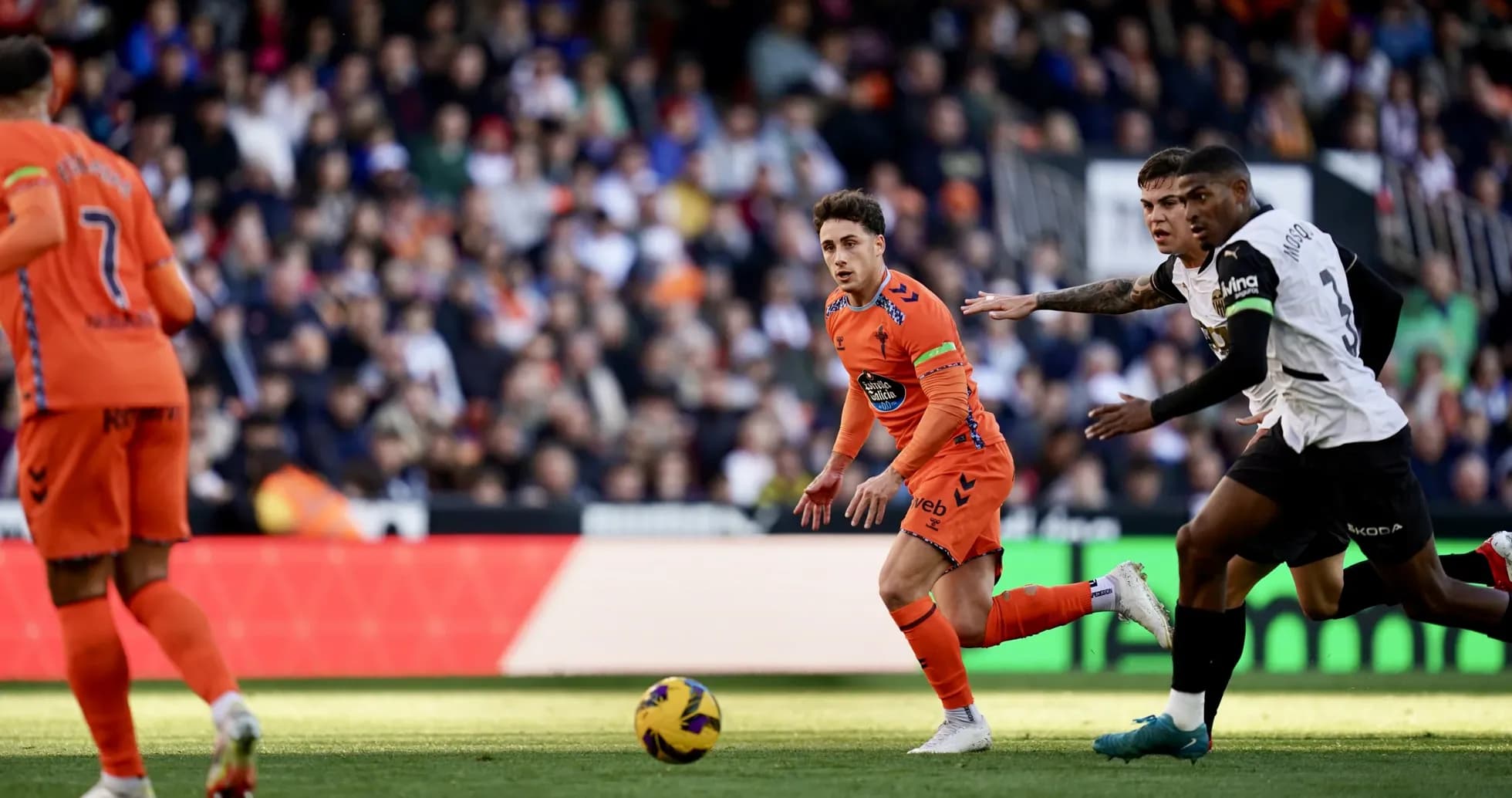
Celta Vigo Triumphs Over Valencia in 3-2 Clash
Under the afternoon sun at Estadio de Mestalla, a meeting between a mid‑table Valencia and European‑chasing Celta Vigo delivered a 3-2 away win that felt like a clash of identities as much as a swing in the La Liga table. After 30 matches, the standings and the stats paint this as a result broadly in line with each side’s season‑long DNA: Valencia’s volatility, Celta’s controlled aggression, and a tactical battle that hinged on structure, discipline and game‑changing depth.
Valencia arrived in Round 30 with 35 points and a -11 goal difference, a side whose 4-4-2 has been a recurring theme (17 league uses so far) but whose form line – DLWLWDLLDLLDWDDLDLDWWLLWLWWLWL – screams inconsistency. At Mestalla, though, they have been respectable: 6 wins, 5 draws, 4 defeats, scoring 21 and conceding 18 in 15 home outings. Celta, by contrast, came in as one of the league’s most efficient travellers: 7 away wins, just 2 defeats, 21 goals scored and 16 conceded away from Vigo, underpinned by a 3-4-3 used in 23 league matches.
On the day, those patterns largely held. Valencia’s attack, averaging 1.4 goals per home game, found a way to strike twice, but their broader defensive profile – 45 conceded overall, 1.5 per match – again proved costly against a Celta side that has quietly become a 1.5 goals‑per‑game unit with 44 scored to date. The 3-2 full‑time scoreline mirrored the season-long gap between a 14th‑placed side still looking over its shoulder and a 6th‑placed Celta with a +7 goal difference and Conference League qualification in their sights.
The Butterfly Effect: Absences and Structural Shifts
Both coaches were forced into significant rethinks by the injury list, and the ripple effects were visible in the lineups.
Carlos Corberan’s Valencia were without four defenders or defensive pieces: J. Agirrezabala (knee), J. Copete (ankle), M. Diakhaby (muscle) and D. Foulquier (knee). That pushed even more responsibility onto a back four of S. Dimitrievski behind U. Nunez, C. Tarrega, E. Comert and José Gayà. Gayà, who already sits among the league’s more heavily sanctioned defenders with six yellows and one red this season, again had to balance his forward thrusts with the knowledge that Valencia’s red‑card profile spikes early – one of their two reds this campaign came in the 16-30 minute band.
Celta’s absences were even more high‑profile. Iago Aspas, the long‑time reference point in attack, was sidelined by an Achilles tendon injury, while C. Starfelt, M. Vecino, M. Ristic and M. Roman were also out. Claudio Giraldez responded by doubling down on the 3-4-3 that has defined their season, trusting a back three of J. Rodriguez, J. Aidoo and M. Alonso, with O. Mingueza and S. Carreira providing width and H. Sotelo and I. Moriba patrolling central spaces.
Disciplinary trends framed the risk each side ran. Valencia’s yellow cards cluster heavily in the final quarter-hour of regulation – 25% of their bookings so far have come between 76-90 minutes, with another 18.33% in both the 46-60 and 61-75 bands. They often end games on a disciplinary tightrope. Celta, by contrast, spread their cautions more across the middle and late phases: 20.69% of their yellows in each of the 46-60, 61-75 and 76-90 windows, and a notable spike in the 31-45 band (15.52%). Their single red card this campaign arrived between 46-60 minutes, underlining the risk of over‑aggression just after half-time.
Narrative Matchups: The Chess Board Across the Pitch
Up front, this was “The Hunter vs. The Shield” in two directions.
For Valencia, Hugo Duro led the line in his familiar No. 9 role. With 9 league goals from 29 appearances, Duro has become their clearest cutting edge, combining penalty‑box instincts with a willingness to graft – 210 duels contested, 84 won, and 14 tackles to go with six blocked opponent attempts this season. His flawless penalty record (1 scored from 1, no misses) adds another layer of threat whenever Valencia reach the area.
His task was to dismantle a Celta defence that, away from home, has conceded just 16 in 15 matches – a tight 1.1 goals‑against average. The back three of J. Rodriguez, Aidoo and M. Alonso, screened by the energy of Moriba and Sotelo, has underpinned five away clean sheets so far. Even when they do concede, Celta tend to keep games within reach; their heaviest away defeat this season has been by a two‑goal margin (3-1).
At the other end, Celta’s attacking menace was distributed rather than star‑centric in Aspas’s absence, but the squad still carried a proven finisher in Borja Iglesias on the bench. Iglesias, ranked 9th in La Liga’s scoring charts with 11 goals and 2 assists, came into the match as Giraldez’s ultimate “game‑changer” – 10 appearances as a substitute this season, 3 penalties converted from 3 with a flawless record, and a profile built on efficiency: 22 shots on target from 34 attempts. When [IN] came on for [OUT] in the forward line – the JSON does not specify exact minute or pairing, but Iglesias’s presence among the substitutes is clear – Celta had the option to tilt the game late in their favour with a penalty‑area specialist who also contributes defensively, having blocked four opponent attempts this campaign.
The “Engine Room Duel” centred on Luis Rioja and André Almeida against Celta’s Moriba and Sotelo. Rioja, among the league’s higher‑ranked creators for assists (5 so far, with 30 key passes), offered Valencia a left‑sided outlet capable of dictating transitions. His 55 dribble attempts with 30 successes show a winger willing to take responsibility one‑on‑one, while his relatively light card count (just one yellow) allows him to press and recover without living dangerously.
Opposite him, Celta’s midfield pair were charged with neutralizing those wide threats while launching their own counters into a front three of F. Jutglà, P. Duran and H. Alvarez. With Celta averaging 1.4 goals per away game and failing to score in only two away fixtures all season, that structure has generally worked: they absorb, then exploit space, particularly once opponents tire and their own yellow‑card spikes in the 46-90 minute window begin to test referees’ patience.
Depth also tilted slightly towards the visitors. Beyond Iglesias, Giraldez could call on the creativity of F. Cervi and the energy of W. Swedberg, while Corberan’s bench leaned more on like‑for‑like options – A. Danjuma, U. Sadiq, D. Lopez and D. Raba as forward alternatives, plus Pepelu and L. Beltran to reshape midfield. With Valencia’s biggest winning margins this season topping out at 3-0 at home and 2-0 away, they rarely blow teams away; they need precise changes rather than wholesale attacking gambles.
Statistical Prognosis and What Decided It
Reading the season in the round, Celta’s 3-2 win felt like the logical extension of their profile. They are a side that tends to dictate away matches in key moments, scoring enough (44 goals so far, 1.5 per game) to offset a defence that, while not elite, is solid enough to avoid collapses. Their form line – LDDDDDLDDWWLWLWWDWWWLDLDWWLDLW – shows long unbeaten stretches and a knack for staying in games.
Valencia, meanwhile, remain defined by narrow margins. Their eight clean sheets (four at Mestalla, four away) show they can be compact, and their penalty record – five scored from five attempts with no misses – indicates clinical set‑piece execution. But conceding 45 goals to date, with home and away averages both above one per game, leaves them constantly chasing.
The decisive factors here were Celta’s structural coherence in the 3-4-3, their superior away resilience, and the threat profile off the bench – particularly the possibility of introducing a proven finisher like Borja Iglesias against a defence that has already shipped six in one away game this season. Overlay that with Valencia’s tendency to pick up cards late – 25% of their yellows between 76-90 minutes – and you get a picture of a side increasingly stretched just as Celta’s away efficiency comes to the fore.
At Mestalla, that intersection of fatigue, discipline and finishing quality ultimately dictated the outcome. Celta exploited the cracks, Valencia could not fully neutralize the visitors’ layered attack, and a 3-2 scoreline slotted neatly into the statistical story both teams have been writing all campaign.