Celtic Fans Oppose Robbie Keane's Potential Appointment
The pushback started with graffiti on the brick and steel around Celtic Park. Then came the banners. Now it has a signature list running into dozens of names and stretching across the club’s global support.
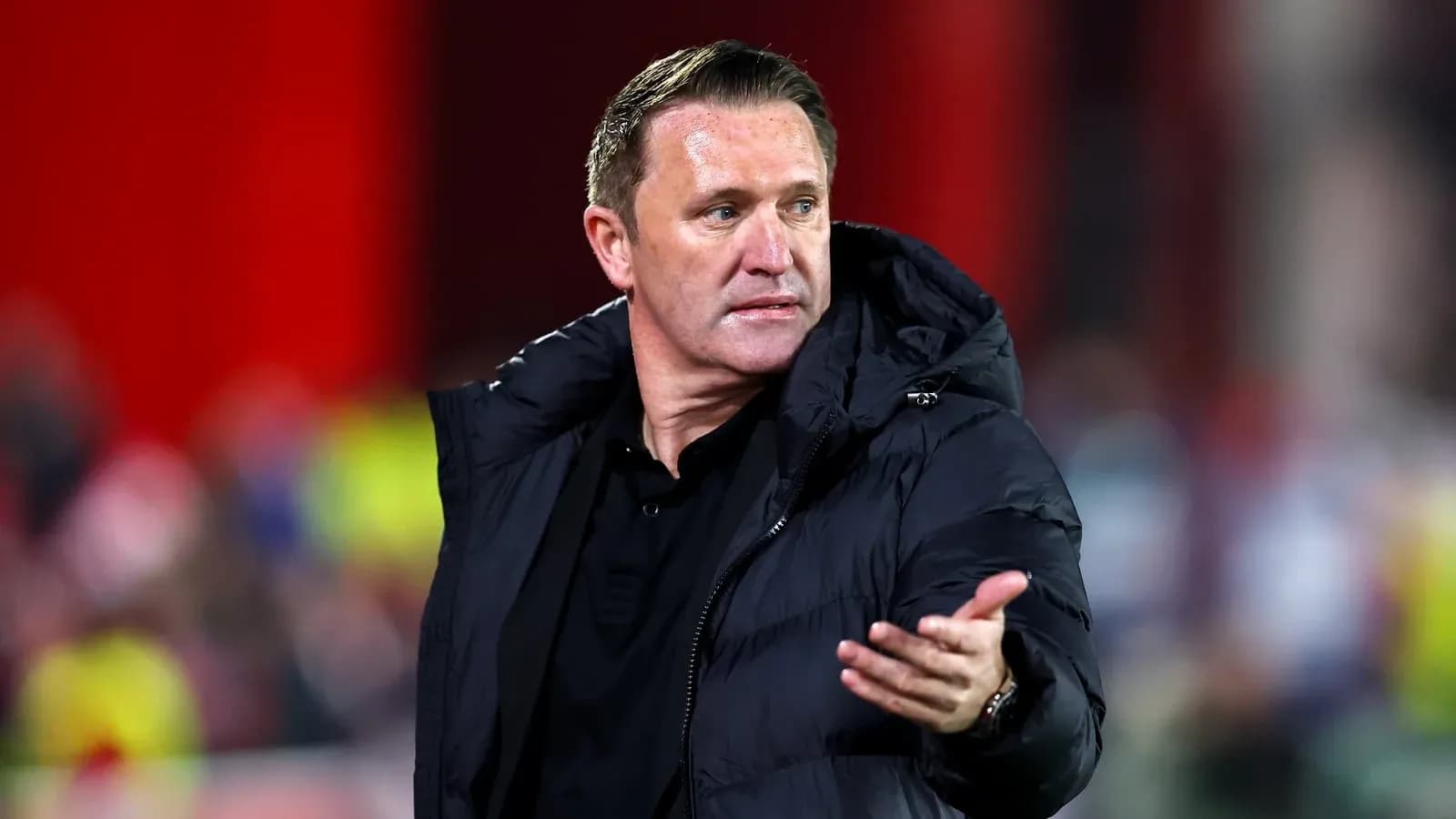
Robbie Keane may be among the frontrunners to become the next Celtic manager, but a significant and organised section of the fanbase is making it clear they do not want him anywhere near the dugout.
From hero on loan to lightning rod
Keane’s relationship with Celtic is complicated. On the pitch, it was once simple. In 2010 he arrived on loan and did what Robbie Keane always did: scored goals, lit up games, played to the gallery. For many, that short spell at Celtic Park felt like a dream cameo from a star who understood the club’s romance.
Now his name sits at the centre of a bitter argument about identity, politics and what Celtic should stand for.
The 43-year-old – the Republic of Ireland’s record goalscorer – is in talks with principal shareholder Dermot Desmond, with reports placing him firmly on the shortlist to replace Brendan Rodgers. His recent managerial CV carries weight: league titles in Israel with Maccabi Tel Aviv and in Hungary, and a domestic double with Maccabi before his resignation in the summer of 2024.
But it is that very spell in Israel that has turned large parts of the support against him.
A statement, 67 signatures and a clear line in the sand
The opposition has now been formalised. A statement first circulated online by a group calling itself Celtic Fans for the Liberation of Palestine has gathered momentum, and the North Curve Celtic account on X has published a list of 67 supporters’ groups that have endorsed it.
The roll call is not fringe. It includes the Green Brigade and Bhoys Celtic ultras – the most visible and vocal elements of the matchday atmosphere – alongside long-established organisations such as Glasgow University Celtic Supporters Club (CSC) and Craigneuk Tommy Gemmell CSC. Several well-known fan media outlets, including podcasts The Cynic and eTims, have also attached their names.
Their message is blunt. The statement argues that Celtic fans have “a long and proud history of solidarity with the Palestinian people” and describes Keane’s decision to manage Maccabi Tel Aviv “during the genocide in Gaza” as “impossible to ignore”.
It goes further, framing the issue in the context of the club’s origins.
“Celtic was founded by a community shaped by the legacy of genocide, displacement and famine,” it reads. “Our club’s roots lie in solidarity with those who suffered injustice and oppression. We cannot forget where we came from, nor turn our backs on those facing genocide today.”
The signatories insist that appointing Keane would be “deeply divisive among the support” at a time when the club “requires unity and collective purpose”, and brand the potential move “a predictable and uninspiring choice at a moment when greater ambition is needed”.
Their demand is simple: “We urge the Celtic board to listen to supporters’ concerns and reconsider this appointment.”
Gaza, Maccabi and a faultline in the fanbase
Keane accepted the Maccabi Tel Aviv job in June 2023, months before the Hamas-led attacks on 7 October and Israel’s subsequent bombardment of Gaza. The war has since dominated global politics and protest, and Celtic’s support has been among the most vocal in European football on Palestinian solidarity.
Last October, an independent UN commission concluded that Israel had committed genocide against Palestinians in Gaza. That language – “genocide” – runs through the fans’ statement and underpins the anger directed at Keane’s decision to remain in his post as the conflict escalated.
The Irishman has previously explained why he stayed. He spoke about responsibility to his backroom staff, including an analyst who had left a 12-year stint at Middlesbrough to follow him to Israel.
“I have a duty of care,” Keane said. Walking away mid-season, he argued, would have left those who trusted him exposed. Instead, he chose to see out the campaign, then resigned despite what he described as a lucrative remaining contract of “another year, possibly two more years”.
For many Celtic supporters, that justification does not wash. The distance between Tel Aviv and Gaza – “less than 40 miles away,” as the statement stresses – has become a symbol of what they see as a moral line crossed.
“To choose to manage a club in Israel while, less than 40 miles away, the same country was using indiscriminate weapons of mass murder against defenceless people is unconscionable,” the fans’ document declares.
A club’s soul under debate
Celtic has long wrestled with its political identity and how far it should bleed into football decisions. Palestinian flags have become a regular feature in the stands. UEFA fines have followed. Club statements have tried to walk a tightrope between institutional neutrality and a support that often leans in a very different direction.
The Keane debate brings that tension into the heart of football operations. This is not about a third kit or a banner. It is about the man who would lead the team, front the club, and embody its image at home and abroad.
For the board, Keane offers a familiar profile: a big name, a former player, a marketable figure with top-level pedigree and recent trophies on his CV. For a vocal slice of the fanbase, he represents the opposite of what they believe Celtic should be.
The pressure is no longer abstract. It is painted on walls outside the stadium, draped across railings, written into a statement backed by dozens of organised groups. Any move to appoint Keane now would be made in full knowledge of the backlash waiting on the other side.
Celtic’s hierarchy must decide whether to push ahead with a candidate they clearly rate, or step away from a deal that has become a test of how much the club is willing to bend to its supporters’ sense of conscience.
The next manager will inherit a talented squad and the expectation of domestic dominance. The question, as the protests grow louder, is whether he will also inherit a civil war in the stands.