Champions League 2026/27: A New Format and Rising Challenges
The scars from Budapest are still fresh. A Champions League final lost on penalties to Paris Saint-Germain will do that to a club. But the picture has already shifted. A first Premier League title since 2004 now sits in the cabinet, and with it comes another crack at Europe’s biggest prize.
For the fourth straight season, they are back at the top table. This time, with the sense that unfinished business is driving everything.
A new Champions League, now familiar – and unforgiving
The 2026/27 campaign keeps the revamped Champions League format that has already reshaped the competition. The traditional eight groups are gone. In their place: a 36-team league phase, a sprawling schedule that rewards depth, consistency and nerve.
Each side plays eight games, all against different opponents – four at home, four away. No return fixtures, no chance to immediately correct a bad night. Every date on the calendar matters.
Finish in the top eight and the path is clear: straight into the last 16. Slip into ninth to 24th and the journey becomes a tightrope, with a two-legged play-off standing between those clubs and the knockout rounds.
The new system has already suited them once. In 2025/26, they didn’t just top the league phase – they stormed it, winning all eight matches, the first team to run the table in this format. That sets a standard. It also paints a target on their back.
Two extra league-phase places again go to the countries whose clubs performed best in Europe last season. England and Spain led the way in 2024/25, so both the Premier League and La Liga send five clubs this time. The depth is brutal. The margin for error, slimmer than ever.
The field: Europe’s heavyweights and the rising threats
The cast for 2026/27 is almost complete. Twenty-nine of the 36 teams are already confirmed, a who’s who of European football with a few intriguing new faces.
England sends five: Liverpool, Manchester City, Manchester United and Aston Villa join the champions after finishing in the Premier League’s top five. No qualifiers, no back door. All five walked in through the front.
Spain matches that firepower. Real Madrid, Barcelona, Atletico Madrid, Villarreal and Real Betis all arrive via La Liga, making Spain’s block of clubs as dangerous as any in the competition.
Italy and Germany each provide four. From Serie A come Napoli, Inter Milan, AS Roma and Como – the latter a name that jumps off the page, the kind of story this new format can elevate. From the Bundesliga, Bayern Munich, Borussia Dortmund, RB Leipzig and Stuttgart step in, a mix of serial contenders and ambitious chasers.
France’s contingent is led by the defending European champions, Paris Saint-Germain, backed up by Lens and Lille. The Netherlands offers two familiar forces: Eredivisie winners PSV and runners-up Feyenoord.
Porto and Sporting Lisbon carry Portugal’s hopes. Galatasaray return as champions of Turkiye. Slavia Prague (Czechia), Shakhtar (Ukraine) and Club Brugge (Belgium) arrive as domestic winners who wrapped up their places months ago.
Seven more clubs will fight their way through the qualifiers, a process that draws in champions from 42 nations via the ‘champions path’, plus sides who finished second, third or fourth in their leagues. Five of those seven will emerge from the champions path, two from the non-champions route. The qualifying campaign ends on August 26, one day before the league-phase draw.
By then, the picture will be complete. Every pot filled, every possibility real.
Pots, rules and the looming draw
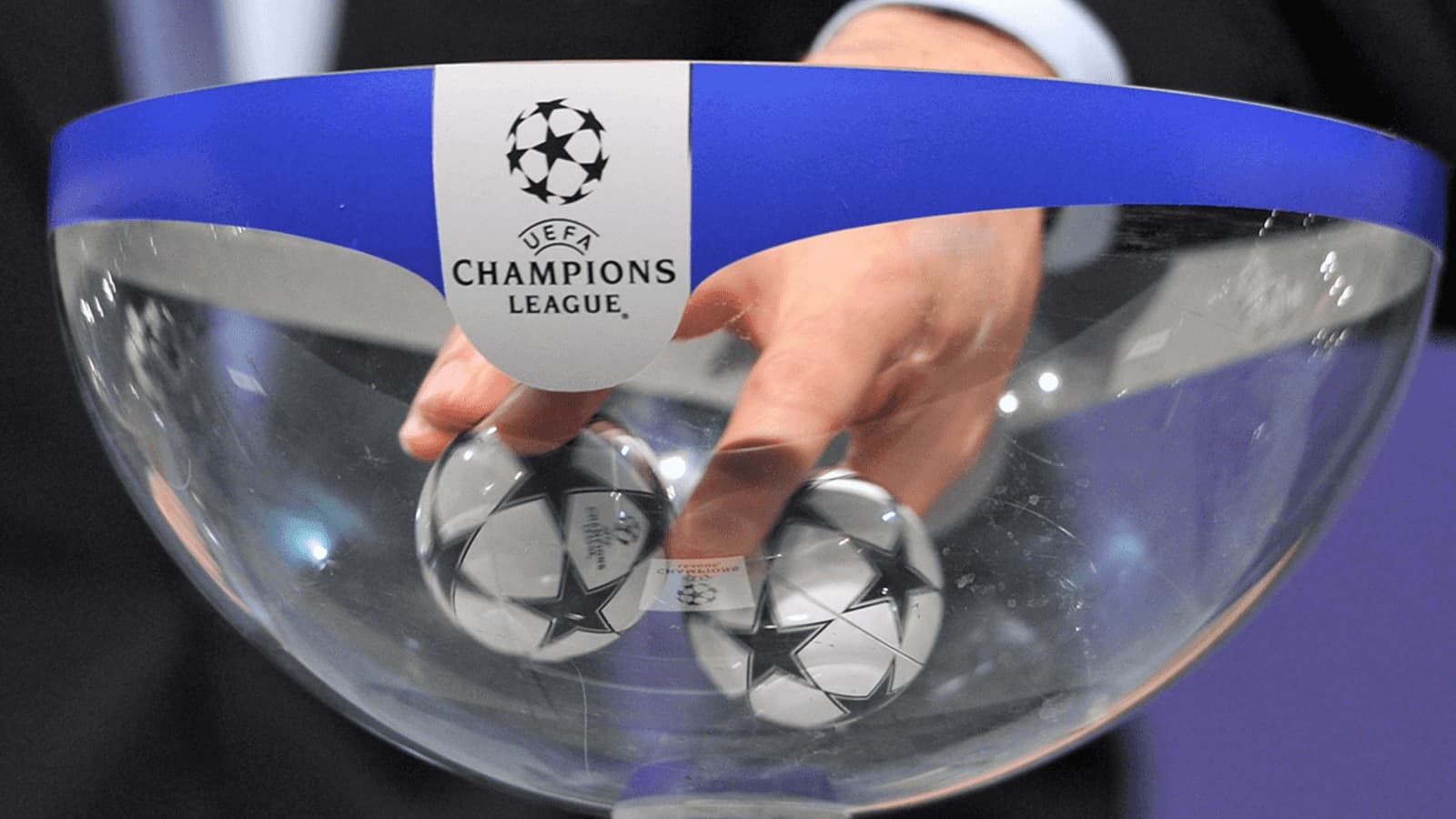
The draw itself comes with strict parameters, and they matter. For a start, domestic clashes are off the table in the league phase. That means no Liverpool, no Manchester City, no Manchester United, no Aston Villa at this stage. The early drama will come from elsewhere.
UEFA club coefficients shape the four pots. The champions are locked into pot 1, where the heavyweights gather. Joining them are Paris Saint-Germain, Bayern Munich, Real Madrid, Liverpool, Inter Milan, Manchester City, Barcelona and Atletico Madrid. It’s a collection of recent winners, perennial contenders and clubs who expect to be in the latter stages every season.
Pot 2 is no comfort zone either. Borussia Dortmund, AS Roma, Sporting CP, Porto, Club Brugge, Real Betis, PSV Eindhoven, Aston Villa and Manchester United all sit there – clubs capable of turning any league-phase night into a trap.
Pot 3 brings Feyenoord, Lille, Napoli, RB Leipzig, Villarreal, Shakhtar Donetsk and Galatasaray. None of them arrive as tourists. All of them are good enough to wreck a campaign.
Pot 4, for now, features Como and Lens, with Slavia Prague, Stuttgart and the seven qualifiers still waiting to be assigned to either pot 3 or pot 4 once the final coefficient picture is clear.
The rules tighten the draw further. They will face two teams from each pot, one at home and one away. They cannot be drawn against more than two clubs from the same country. The result is a puzzle that can throw up almost any combination – a gauntlet of superclubs, awkward away days and unfamiliar opponents who play the game of their lives.
On August 27, 2026, the curtain lifts. Eight opponents, eight fixtures, one roadmap to the knockouts.
A season mapped out in high-pressure nights
The calendar is already etched in ink. The league phase opens across three days: September 8–10. From there, the rhythm of the season builds.
October brings two intense blocks, on the 13–14 and 20–21. November follows with matchdays on the 3–4 and 24–25. December 8–9 closes out the calendar year’s European action, before the competition resumes in the new year on January 19–20 and January 27.
Once the dust settles on the league phase, the next step comes quickly. On January 29, 2027, UEFA conducts the draw for the knockout play-offs – the two-legged ties that will decide which of the teams placed ninth to 24th reach the last 16. Those games fall on February 16–17 and 23–24.
Then comes the real cut. The draw for the round of 16, quarter-finals, semi-finals and final is scheduled for February 26, 2026 – a date set long before the ball rolls, a reminder of how far ahead the competition now plans.
The round of 16 matches will be played on March 9–10 and 16–17. The quarter-finals land on April 6–7 and 13–14. The semi-finals follow on April 27–28 and May 4–5.
And then, the destination: the Wanda Metropolitano in Madrid, on Saturday, June 5, 2027. A stadium that has already staged one modern classic of a Champions League final, ready to host another.
They came within a penalty shootout of lifting the trophy last time. They’ve since reclaimed their domestic throne. The format is settled, the field is loading, the dates are fixed.
Now the question hangs over the coming season: is this the campaign when all of that pain finally turns into a parade?