Champions League Final: PSG Triumphs but Emirates Shines
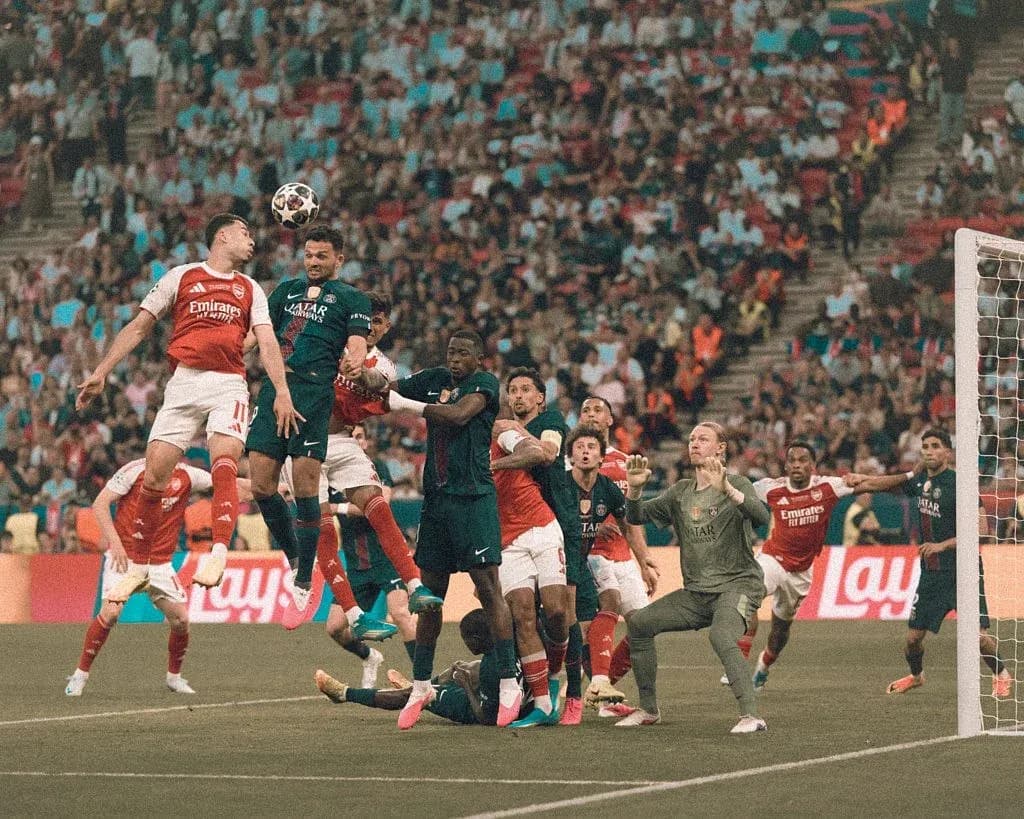
On a warm night in Budapest, PSG kept their hands on the UEFA Champions League trophy, edging Arsenal 4-3 on penalties after a tense 1-1 draw at Puskás Aréna. The football, though, was only half the story.
The other half happened in living rooms, on phones, in pubs, and on streams the broadcasters never saw a penny from.
A final watched in the shadows
Across four key markets – the UK, France, Hungary and the United States – the final drew a combined audience of 33.7 million. A strong number for a club game, a global event in all but name.
But the headline figure came from one country and one uncomfortable truth.
In the UK, 16.2 million people watched via illegal streams. Not highlights, not clips the morning after. Live. That single pool of unauthorised viewers outstripped the 12.9 million people who watched legally across all four measured markets combined.
The final was not available free-to-air in Britain. Faced with a paywall on one of the biggest nights of the club season, millions simply went elsewhere. They didn’t switch off; they switched platform.
The UK delivered the largest total audience at 19.4 million. Of those, only 3.0 million tuned in through TNT Sports and HBO Max, with another 0.2 million estimated to have watched out of home. The rest – the vast majority – slipped through the cracks of official distribution.
France, with PSG defending their crown, contributed 9.5 million viewers across M6 and Canal+. In the US, where football’s profile has been sharpened by a World Cup summer, 4.8 million watched via CBS, Univision and Paramount+.
In London and Paris, the final spilled out into the streets. YouGov Profiles data suggests just under 500,000 Arsenal and PSG fans watched from bars and pubs in the two capitals, while 61,035 spectators packed inside Puskás Aréna itself. A modern final: part stadium spectacle, part city-wide screening, part underground stream.
Arsenal lose the trophy, but Emirates wins the screen
On the pitch, Arsenal walked past the trophy. Off it, their shirt sponsor walked away with the bigger win.
YouGov Sport’s Brand Exposure analysis shows Emirates enjoyed 2 hours and 52 minutes of on-screen time on Arsenal’s shirts, earning a Brand Impact Score (BIS) of 3.54. PSG’s front-of-shirt sponsor, Qatar Airways, registered 1 hour and 54 minutes and a BIS of 3.25.
That gap tells its own story. Arsenal’s players spent more time at the heart of the broadcast: attacking, defending, reacting, being replayed. Close-ups lingered. Replays rolled. The red shirt stayed in the frame.
Emirates also edged Qatar Airways on the finer points that matter in sponsorship science. A slightly larger logo. Stronger positioning on screen. More moments where the branding appeared alone, unchallenged by visual clutter. Longer average exposure each time it appeared.
Add those elements together and the result is clear: a higher BIS for Emirates (3.54 vs 3.22 for Qatar Airways), a more powerful presence every time viewers glanced at the screen. The champions lifted the cup, but the runners-up delivered the more valuable shirt.
For brands weighing up multi-million-pound front-of-shirt deals, that is not a footnote. It is the point. A dramatic performance from a losing side can, and in this case did, generate greater commercial return than victory itself.
Forty-two billion impressions: a final that wouldn’t switch off
The final didn’t stop when the last penalty hit the net. It detonated across digital platforms.
Across just 48 hours, from 30 to 31 May, the match drove more than 40,500 social media posts, 13,700 videos and 24,500 online articles. The result: 42 billion potential impressions, 1 billion video views and 10 billion in potential readership.
PSG dominated the digital noise. The club’s official channels alone generated 8.6 billion impressions and 418.6 million video views. Arsenal’s accounts, by comparison, produced 3.7 billion impressions and 49.7 million video views.
The difference? Output and scale. PSG pushed out more content, and it travelled further. The club’s victory extended beyond the pitch, turning a shootout win into a global content wave.
When fans become brand advocates
The value for sponsors didn’t stop with logo counts or exposure time.
Using YouGov BrandIndex, Recommendation levels for Emirates among Arsenal supporters in the UK and for Qatar Airways among PSG supporters in France were set against those of the general population. In both cases, club fans were far more likely to recommend the shirt sponsor than non-fans.
That gap underlines the strength of the bond between club and brand. Shirt deals aren’t just about visibility; they are about belonging.
Around the time of the final, Emirates recorded an increase in Recommendation among Arsenal supporters. Multiple factors can shape brand perception, but the timing matters. A run to a Champions League final, a night of high drama, and nearly three hours of strong on-screen presence gave Emirates a powerful platform.
Qatar Airways, for its part, maintained consistently strong Recommendation levels among PSG supporters throughout the measured period. The connection was already solid – and stayed that way through another Champions League triumph.
Through YouGov Sport’s BIS-X framework, those shifts in sentiment are folded back into sponsorship value. Exposure is no longer just a number of minutes on screen; it is weighted by how fans actually feel about the brand. Positive perception amplifies the commercial return.
In this final, the stronger uplift in Recommendation among Arsenal fans suggests Emirates may have gained on two fronts: more visibility and louder advocacy.
Beyond “who watched?”
The 2026 Champions League final offered a blunt lesson to rights holders, clubs and sponsors.
Audience size still matters. But it is no longer enough.
Illegal streams in the UK showed how demand for elite football will find a way, even when official access is restricted. Brand Exposure data revealed that the losing team’s sponsor can outgun the winner’s in pure impact. Social metrics turned a two-hour match into a 48-hour global media event. Fan sentiment data then put a value on how deeply those brands actually resonated.
Modern sponsorship cannot be judged by one metric, or even one screen. It lives in broadcasts and bars, on timelines and in group chats, in how long a logo stays in shot and how warmly a fan speaks about the name on the shirt.
The question for clubs and brands now is stark: in a fractured media world, are they counting viewers – or are they truly measuring what those viewers are worth?