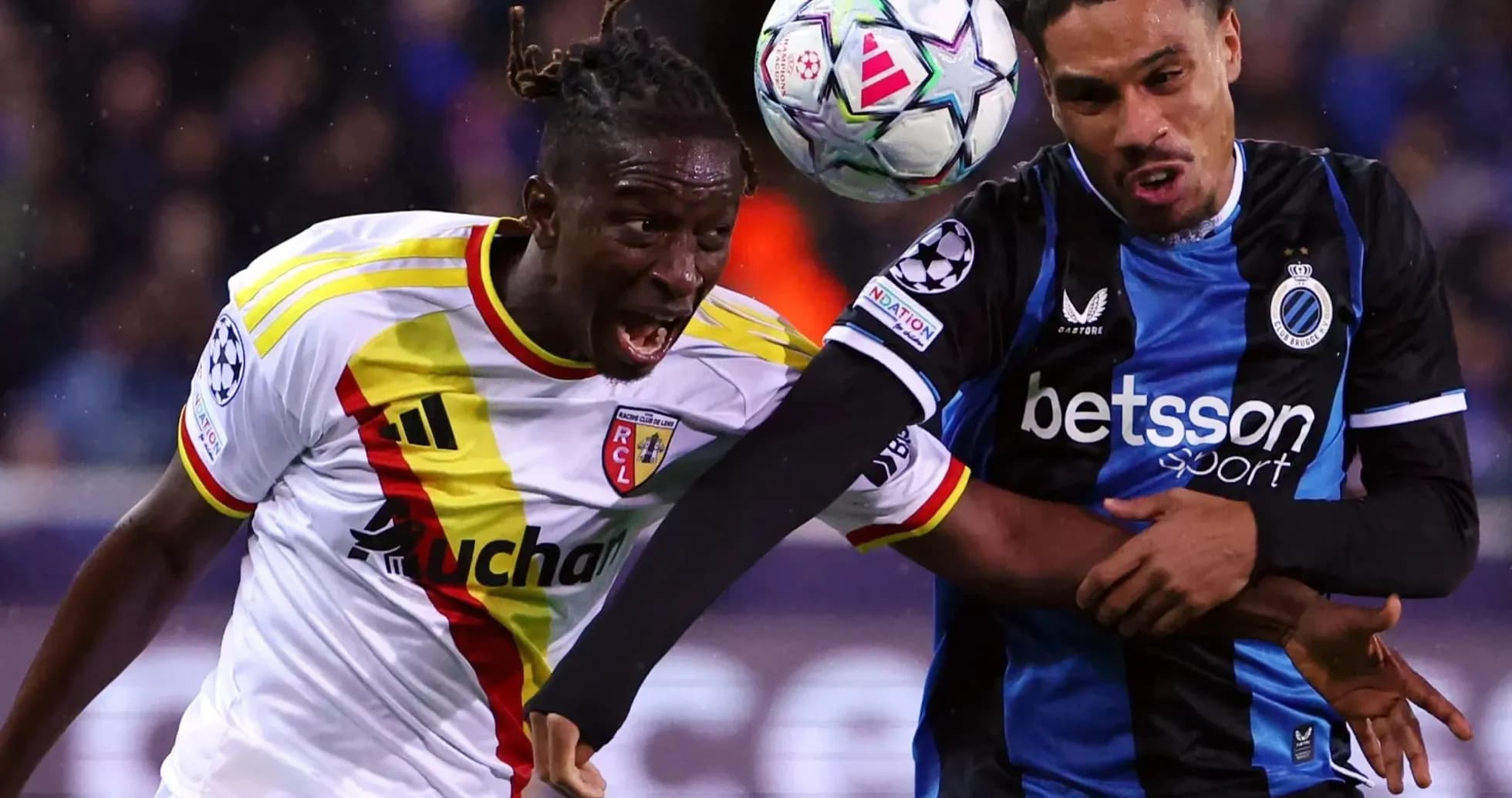
Club Brugge Dominates Lens 3–0 in Champions League Clash
Under the Bruges floodlights, with Luis Miguel Branco Godinho in charge and the Jan Breydel Stadium still humming from a 3–0 home win, Club Brugge KV and Lens walk off having told a very clear story about where these two squads stand in the Champions League league stage.
For Club Brugge, this result fits neatly into a growing continental identity. Following this result, they sit 11th in the overall table with 6 points from 3 matches, shaped by an attacking profile that has been consistent from the opening whistle of the campaign: 9 goals in total, 5 of them at home and 4 on their travels. The numbers confirm what the eye sees. At home, they average 2.5 goals scored and 1.5 conceded; away, that jumps to 4.0 scored and 3.0 conceded. Overall, 3.0 goals for and 2.0 against per match paints Brugge as a side that embraces chaos but increasingly bends it to their will.
Lens, by contrast, leave Belgium with their vulnerabilities exposed. They are 27th in the standings with 3 points from 3 games, having scored 3 and conceded 7 overall. On their travels, they have managed 3 goals but shipped 5, averaging 1.5 scored and 2.5 conceded away from home. They arrived with a 3-4-2-1 that has been their constant shape in this campaign, but the structure alone could not paper over a defensive record that has already seen them lose 3–0 away once this season and 0–2 at home.
Tactical Overview
The tactical voids that shaped this contest began before kick-off. Club Brugge were again without J. Ordonez, missing with a foot injury, reducing I. Leko’s options in defensive rotation. Yet the core of their back line remained intact, allowing him to lean fully into his preferred 4-2-3-1. For Lens, the absences were far more disruptive. M. Diarra and I. Jourdren were off the roster, but it was the injury list that really bit: I. Ganiou (knee), M. Nawrocki (knee), A. Sima (muscle) and J. Gradit (muscle) all unavailable. That is a significant chunk of defensive and structural depth removed from a squad already conceding 2.3 goals per match overall.
On the pitch, the shapes told the story. Brugge’s 4-2-3-1 was built around a clear spine: Y. Sommer in goal, a back four of K. Sabbe, J. Spileers, B. Mechele and J. Seys, with F. Potts and H. Vanaken anchoring midfield. Ahead of them, the line of three – Carlos Forbs, F. Lemaréchal and Jan Virgili – floated around the central reference point, N. Tresoldi. The structure allowed Brugge to create triangles between full-backs, double pivot and attacking midfielders, constantly pulling at the seams of Lens’ back three.
Lens’ 3-4-2-1, with R. Risser behind R. Aguilar, S. Baidoo and M. Udol, asked a lot of its wing-backs, especially Saud Abdulhamid on the right and M. Skóraś on the left. A midfield box of M. Cuisance and A. Haidara behind J. Kadile and T. Hazard was meant to secure central zones and feed F. Ivanović up front. But the absence of some of their more established defensive pieces meant that the back line lacked a commanding organiser against a side that thrives on vertical runs and second-ball pressure.
Key Player Battles
The “Hunter vs Shield” duel was always going to centre on N. Tresoldi. Heading into this game, Tresoldi had already scored 4 goals in this Champions League season, placing him high in the competition’s scoring charts with an overall rating of 7.43 across 3 appearances. He is not just a finisher: 11 total shots, 7 on target, 32 duels contested with 18 won, and 7 fouls drawn show a forward who lives in the thick of the battle. Importantly, from the spot he had scored 2 penalties from 2, with no misses. Against a Lens defence conceding 2.5 goals per match away and yet to keep a single clean sheet in any venue, this was a mismatch on paper that played out brutally on grass.
Behind Tresoldi, the “Engine Room” confrontation pitted H. Vanaken and F. Potts against A. Haidara and M. Cuisance. Vanaken’s role as tempo-setter and late-arriving threat dovetailed with Potts’ more disciplined screening, giving Brugge the platform to keep their attacking four high and aggressive. For Lens, Haidara was forced into constant fire-fighting duty, shuttling laterally to plug gaps as Aguilar and Udol were dragged wide by Brugge’s wingers and overlapping full-backs. With the visitors already prone to conceding in the middle and late phases of matches, the strain told as Brugge’s pressure built.
Disciplinary Trends
Discipline has been another quiet thread in Brugge’s story. Across the campaign, their yellow cards cluster most heavily between 61–75 minutes (44.44%) and 76–90 minutes (22.22%), evidence of a side that defends aggressively once they are ahead and games become stretched. Lens, meanwhile, see 40.00% of their bookings between 61–75 and another 40.00% between 76–90, a sign of late-game chasing and tactical fouling rather than controlled game management. In a match where Brugge led from half-time and never looked back, those trends were only reinforced.
Statistical Overview
From a statistical prognosis standpoint, the broader patterns are stark. Brugge’s goal difference overall is +3 (9 scored, 6 conceded), built on a high-output attack that has yet to fail to score, either at home or on their travels. They have converted both of their penalties this campaign, with no misses. Lens sit at -4 overall (3 scored, 7 conceded), with 2 matches in which they have failed to score and no clean sheets at all. Their best result to date remains a 2–3 away win, but their heaviest defeats – 3–0 away and 0–2 at home – are becoming the more representative sample.
This 3–0 in Bruges does more than add three points to the table. It crystallises the identities of both squads. Club Brugge look like a play-off calibre side, capable of leveraging a fluid 4-2-3-1, a prolific central striker in Tresoldi and a midfield that can both create and contain. Lens, stretched by injuries and thin margins, must find defensive stability fast if they are to turn their adventurous 3-4-2-1 into something more than a canvas for opponents’ attacking showcases.