Crystal Palace vs Everton: Key Survival Stakes in 2026
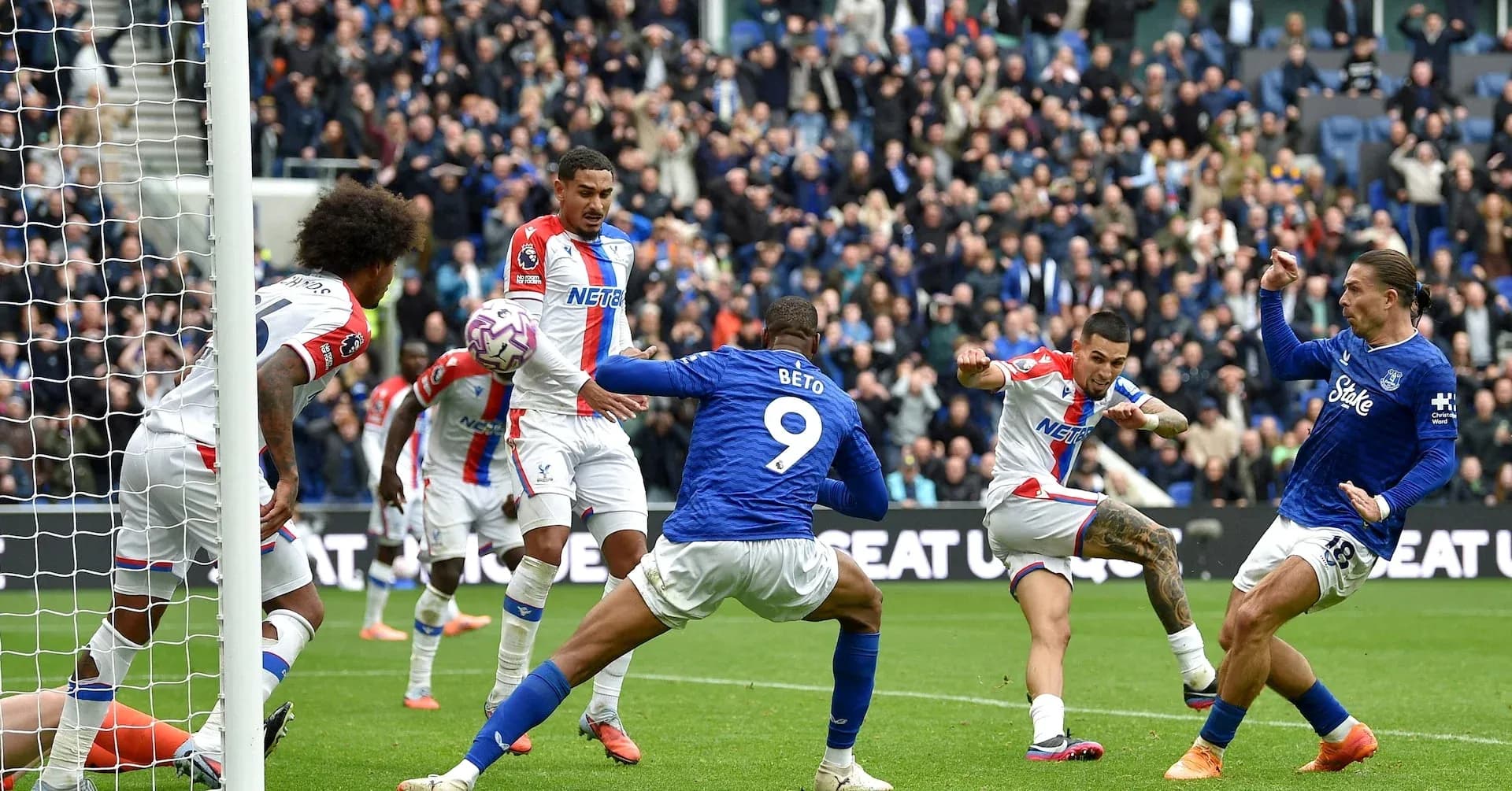
In 2026 at Selhurst Park, this Regular Season - 36 fixture pitches 15th-placed Crystal Palace against 10th-placed Everton in a late-league-phase game with clear survival and positioning stakes. In the league phase, Palace sit on 43 points with a -6 goal difference from 36 scored and 42 conceded, needing a result to remove any lingering relegation risk and stabilise mid-table. Everton, on 48 points with a 0 goal difference from 44 goals for and 44 against in the league phase, are pushing for a top-half finish and an outside shot at climbing further if results elsewhere go their way.
Head-to-Head Tactical Summary
The recent head-to-head pattern has tilted towards Everton, with Crystal Palace repeatedly starting well but failing to convert that into wins.
- On 5 October 2025 in the Premier League (Regular Season - 7) at Hill Dickinson Stadium, Everton beat Crystal Palace 2-1. Palace led 1-0 at half-time before Everton overturned it to 2-1 by full-time.
- On 15 February 2025 in the Premier League (Regular Season - 25) at Selhurst Park, Everton again won 2-1. Everton were 1-0 up at half-time and held on to edge it 2-1.
- On 28 September 2024 in the Premier League (Regular Season - 6) at Goodison Park, Everton defeated Palace 2-1. Palace led 1-0 at half-time, but Everton turned it around to 2-1.
- On 19 February 2024 in the Premier League (Regular Season - 25) at Goodison Park, the sides drew 1-1 after a 0-0 first half, indicating a tighter, more controlled contest.
- On 17 January 2024 in the FA Cup 3rd Round Replays at Goodison Park, Everton won 1-0, leading 1-0 at half-time and maintaining that margin.
Across these five meetings, Everton have four wins (three in Liverpool, one in London) and one draw, consistently finding ways to overturn or protect narrow margins, while Palace’s recurring 1-0 half-time leads in several fixtures have not translated into control over the full 90 minutes.
Global Season Picture
- League Phase Performance: In the league phase, Crystal Palace are 15th with 43 points, scoring 36 and conceding 42. Everton are 10th with 48 points, scoring 44 and conceding 44. Palace’s negative goal difference (-6) reflects a slightly leaky defence relative to a modest attack (36 for, 42 against), whereas Everton’s perfectly balanced tally (44 for, 44 against) points to a more open, risk-reward profile.
- All-Competition Metrics: Across all phases of the competition, Palace average 1.1 goals for and 1.2 goals against per match (36 scored, 42 conceded over 34 fixtures), with 12 clean sheets but also 11 matches without scoring, underlining an inconsistent attack and only moderately solid defence. Their use of a back three (3-4-2-1 in 30 matches, 3-4-3 in 4) supports a wing-back-driven system that can be compact but often leaves them relying on fine margins. Everton across all phases average 1.3 goals for and 1.3 against per match (44 scored, 44 conceded over 35 fixtures), with 11 clean sheets and 9 matches failing to score, suggesting a slightly more productive but equally vulnerable profile. Their predominant 4-2-3-1 base (21 matches) indicates a more conventional structure, capable of creating numbers between the lines but at the cost of occasional defensive exposure. Discipline-wise, both sides accumulate yellow cards steadily across all phases, with Everton particularly spiky late in games (22.39% of yellows in minutes 76-90), hinting at physical, high-intensity finishes.
- Form Trajectory: In the league phase, Palace’s form string of LLDWD indicates a downward curve: back-to-back losses, a draw, a win, then another defeat. Momentum is fragile, with no extended unbeaten run and an inability to stack victories. Everton’s league-phase form of DLLDW shows similar inconsistency: a defeat, followed by two matches without a win (loss and draw), then a win, then another loss. Both teams arrive without strong upward momentum, but Everton’s season-wide record (13 wins from 35 in the league phase) suggests a slightly higher ceiling in individual matches than Palace’s 11 wins from 34.
Tactical Efficiency
Across all phases of the competition, Crystal Palace’s output of 1.1 goals scored versus 1.2 conceded per match points to an attack that rarely overwhelms opponents and a defence that is only marginally more permissive than their own attacking threat. Their 12 clean sheets show that when the structure is intact, they can be compact, but 11 games without scoring underline how often their offensive mechanisms stall.
Everton’s 1.3 goals scored and 1.3 conceded per match across all phases reflect a more expansive, higher-variance approach. They create and allow more, which fits with the head-to-head record where they have repeatedly overturned deficits against Palace. The clean sheet count (11) is comparable to Palace, but Everton’s slightly higher scoring rate makes them more efficient at turning balanced games into wins.
Without explicit numeric “Attack/Defense Index” values from the comparison block, the relative picture is clear: Everton’s attack index is effectively stronger than Palace’s (1.3 vs 1.1 goals per match across all phases), while the defensive indices are similar (1.2 conceded for Palace vs 1.3 for Everton across all phases). That means Everton tend to rely on outscoring opponents rather than controlling them, whereas Palace’s structure is geared to keep matches tight but often leaves them short of firepower to convert control into points.
The Verdict: Seasonal Impact
This fixture’s seasonal impact is primarily about security for Palace and positioning for Everton.
For Crystal Palace, anything less than a positive result keeps them uncomfortably close to the relegation conversation despite sitting 15th on 43 points in the league phase. A win would likely push them decisively clear of the bottom cluster, validating their back-three approach across all phases and easing pressure heading into the final rounds. A draw would be acceptable but would extend a pattern of marginal returns, while another defeat would lock in the current downward form trend (already LLDWD), raising questions about their attacking ceiling and leaving them vulnerable if teams below them surge late.
For Everton, victory at Selhurst Park would strengthen their hold on the top half and keep them in contention to climb further, leveraging their current 10th place and 48 points in the league phase. Given their balanced goals record (44 for, 44 against) and strong recent head-to-head dominance, three points here would be a statement that they are more than mid-table survivors and can consistently impose their higher-variance attacking style away from home. Dropped points, however, would reinforce the narrative of inconsistency seen in their DLLDW league-phase form, likely capping their realistic ambitions at a modest top-half finish.
In summary, this match is a classic late-league-phase hinge: for Palace, a potential safety lock and proof of concept for their system; for Everton, a chance to convert statistical superiority across all phases into tangible upward movement in the table. The result will go a long way to defining whether both clubs end 2026 merely safe, or with a sense of progression and platform for the following year.