Eddie Howe Faces Crucial Summer of Decisions for Newcastle United
Eddie Howe walked alone at first.
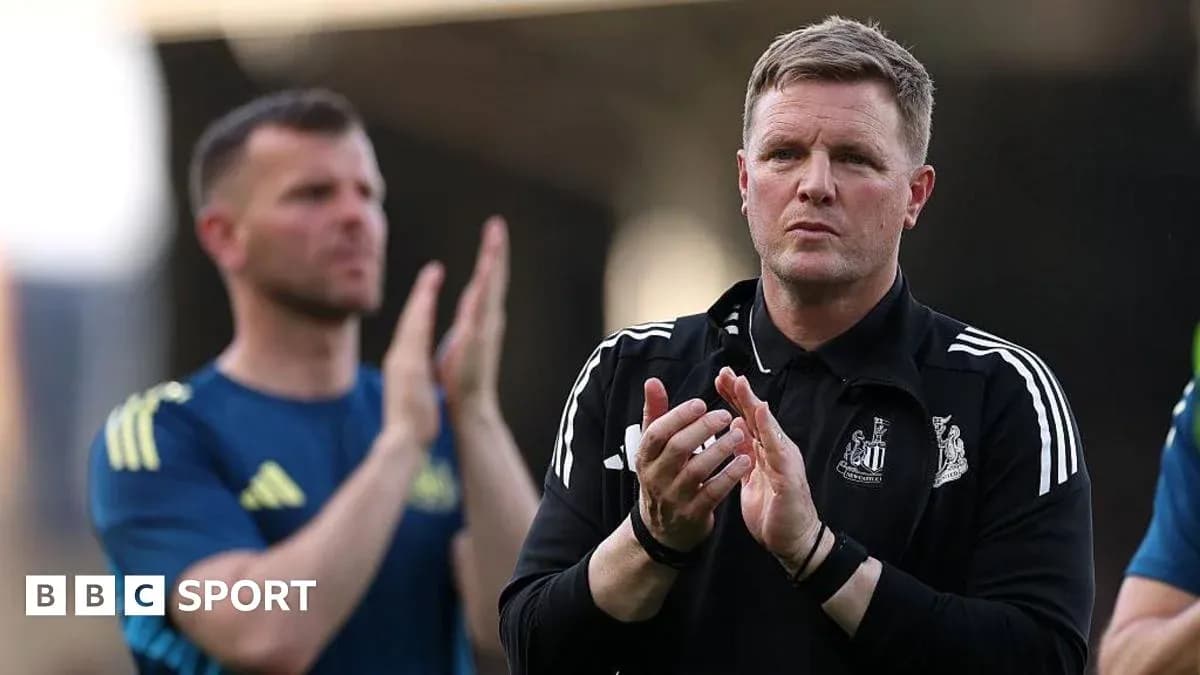
Newcastle United’s head coach stepped out for the traditional lap of appreciation at St James’ Park after the final home game of the season, and for a few seconds it looked like a solitary march. Then the sound hit him.
“Eddie Howe’s black and white army.”
The chant rolled around the old ground again and again after the 1-1 draw with West Ham on 17 May. Players, staff, families followed behind, but the focus stayed on the man in front. The same chorus had greeted Champions League qualification in 2023 and 2025. This time it felt different. Louder. More defiant. A fanbase clinging to a manager they still believe in after his hardest year yet.
Newcastle had taken seven points from their final three home games. It felt like something was stirring again, a flicker of momentum at the end of a season that had drained just about everyone.
There was still one match left. And it had one more bruise to leave.
From defiance to another gut punch
Fulham away on the final day should have been a clean finish. Instead, it turned into a familiar story.
Newcastle, flat and fragile, slipped to a 2-0 defeat, their 17th league loss of the campaign. When the players and staff walked towards the away end at full-time, heads were bowed. The applause from the travelling fans was there, but so was the feeling.
Groundhog Day.
“There have been a lot of bruises this season,” Howe admitted afterwards. That barely covered it.
By then, the club’s hierarchy had already started picking over the wreckage. Earlier in May, owners, executives and senior figures gathered for their annual summit in Northumberland. This was no end-of-season jolly. It was a post-mortem.
“We are in a moment right now and they want to understand why, what we are doing about it and how to fix it,” said one senior source.
Emotion stayed out of the room. Data, analysis and hard truths came in. The conclusion was clear: this version of Newcastle has run its course. Big changes are coming. The squad that walks out on opening day next season will look very different.
Summer of decisions
The headline issue is obvious. Newcastle are prepared to sell, but only “on our terms”. Bayern Munich and the club remain apart in their valuation of Anthony Gordon, yet the winger still looks one of the likeliest to depart.
His sale, and others, would fund a rebuild that is no longer optional. At bare minimum, Newcastle expect to need a goalkeeper, a full-back, a midfielder and at least two forwards. That is just to plug gaps, never mind raising standards.
Howe has grown “frustrated” with recurring on-pitch problems he has not been able to fix. He insists the club are now “very clear” on what is required after a 12th-placed finish that fell well below internal expectations.
He has seen what a single smart window can do. Other clubs have leapt up the table with targeted recruitment. Newcastle believe they have to do the same, and fast.
Sporting director Ross Wilson will lead the rebuild. Howe, crucially, remains central to both the diagnosis and the solution. That should not shock anyone. This is the coach who ended a 70-year wait for a major domestic trophy by lifting the Carabao Cup only last season.
But nobody inside the club pretends this year has been acceptable. Standards have slipped. So has certainty. Just as supporters never quite knew what Newcastle side would turn up, they could not be sure which version of Howe they would see either, as he scrambled for a formula that stuck.
The bar now needs to be reset after his worst domestic campaign in charge.
“It’s something we need to address and we need to address it very quickly,” he said.
From ruthless to brittle
Newcastle’s edge has gone. That is the starkest difference.
In 2024-25, they were the team that finished. No side in the league threw away fewer points from winning positions than Newcastle’s seven. Alexander Isak would score first, or drag them back into a game, and a drilled, organised unit would squeeze the life out of opponents.
This season, that identity disintegrated.
Newcastle surrendered 27 points from winning positions – more than anyone else in the division. They conceded 21 goals in the final 15 minutes of matches, another unwanted league-high. Leads melted. Nerves frayed. A fierce side became flaky.
The demands of a heavy schedule played their part. Unlike Europa League winners Aston Villa, who dropped out of both domestic cups earlier, Howe’s side tried to fight on multiple fronts for most of the season and never quite handled the load.
There were flashes of evolution late on. Tactical tweaks. Slightly fresher legs. But even when the calendar eased and players had more time on the training ground and in the recovery room, the shift never fully took hold.
Inside the dressing room, the word used over and over was “slog”. For many, it was their first taste of a 58-game season with real stakes from August to spring.
“Bloody hell, it’s not easy,” said a source close to one regular.
The staff felt it too. Wins could not be savoured. Every high carried the fear of an immediate swing back the other way. Newcastle never produced the kind of defining surge that had previously carried them into Europe. Instead, they lived on the knife-edge of one-goal games: 71% of their league defeats were by a single goal.
Howe’s task now is brutally simple: drag his team back onto the right side of those margins.
A fanbase ready to judge
For season-ticket holder Liam Phillips, the answer is blunt.
“He badly needs a good start next season,” he said. “If Newcastle are not in the top six or seven in the first few games, I think the crowd will quickly turn.
“There has been a patience and understanding this season but if the team start badly after spending more money in the transfer market, I don’t think people will be quite as forgiving.”
The room for error has shrunk. Last summer’s window was turbulent and costly. Newcastle missed out on several first-choice targets, most of their signings arrived late, and they operated without a chief executive or sporting director. In the end, they buckled on deadline day and sold Isak after holding firm for so long.
Other clubs – Brentford, Bournemouth – have sold key players and rebuilt with sharp, joined-up recruitment. Newcastle, despite a net spend north of £100m that Howe helped shape, have not seen enough in return.
Only Malick Thiaw can be called an unqualified success.
The schedule between September and March left little space for full-blooded training. New signings learned Howe’s demands more from analysis sessions than from work on the grass. Jacob Ramsey, for instance, had only a short spell of full-intensity training before the fixture list clogged up. Even in that glimpse, the midfielder was jolted by the sheer volume of high-intensity running in Howe’s drills, despite coming from Unai Emery’s demanding regime at Aston Villa.
That is the adjustment most new arrivals face at Newcastle. The club hope last summer’s intake will be stronger for having lived through it.
They need to be. Howe has made a career out of outperforming bigger wage bills. This time, his side finished in the bottom half and watched rivals celebrate.
Sunderland, their fiercest rivals, beat them home and away and secured European football in a season when eight spots were available. Newcastle missed out entirely. The boom-and-bust cycle – Champions League one year, mid-table and empty hands the next – cannot continue.
Howe’s next test
When Howe first transformed Newcastle, he did so with space to think. Long, clear weeks between games allowed him to drill detail, build structure and sharpen edges. He will not always get that luxury again, but he has to recreate its effects.
“Every experience makes you stronger and makes you appreciate the good times,” he said. “We will all try and come back a better team.”
The lap of appreciation in May showed the bond is still there. The supporters sang his name even as the season fell short of everything they had come to expect. That kind of backing does not last forever.
This summer, Newcastle will find out whether they can turn loyalty into a launchpad, or whether this campaign was not just a stumble, but the start of a slide.