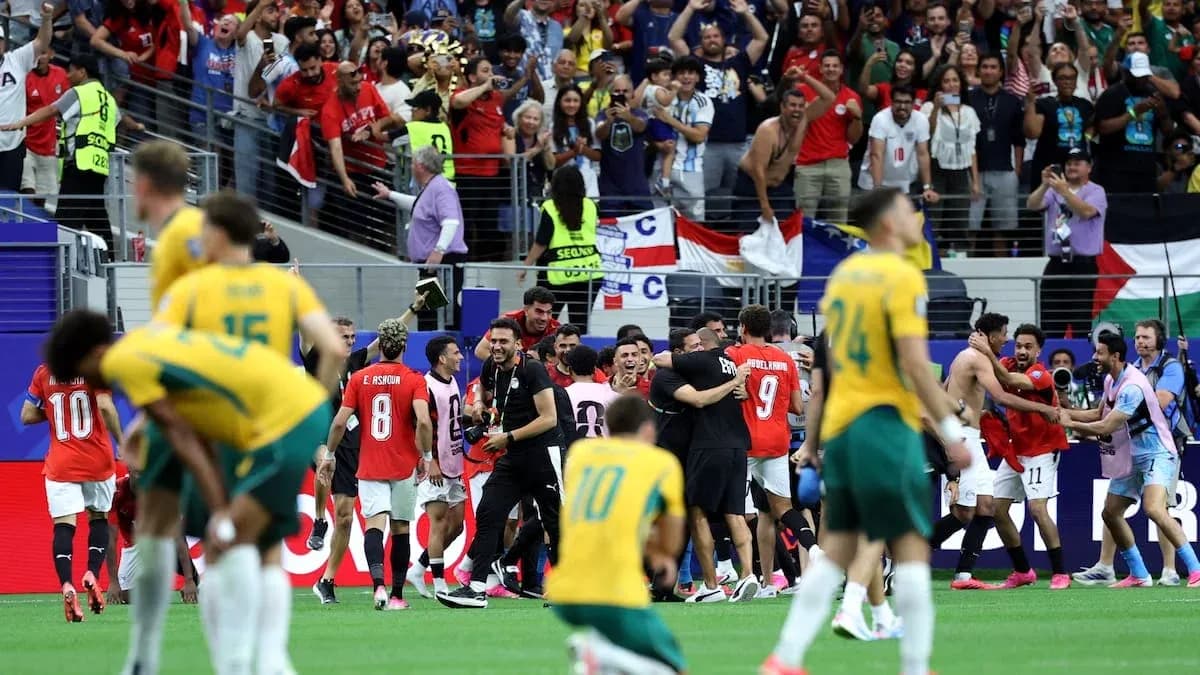
Egypt Triumphs Over Australia in Dramatic Penalty Shootout
In the end, it came down to a bar, a blaze and a superstar who finally found his moment.
Under the roof of the Dallas Cowboys’ vast arena, with 70,000 voices bouncing off the steel and glass, Egypt held their nerve from the spot to break new ground and break Australian hearts. Mohamed Salah, quiet and compromised for most of the night, walked away in tears of joy. Lucas Herrington, 18 years old and barely out of youth football, walked away knowing his penalty had crashed against the bar and opened the door for history in red.
Popovic’s gamble and a brutal start to the shootout
Tony Popovic played his card right at the end. For the shootout, he hauled off his starting keeper and turned to Mathew Ryan, the veteran, the man who has seen just about everything in green and gold. It was a last throw, a coach trusting experience when the margins shrank to a single kick.
The setting could hardly have been more hostile. The penalties went towards the bank of Egypt supporters, whistles pouring down in waves. Harry Souttar stepped up first for Australia and smashed his effort over the bar. Advantage gone in an instant. The Socceroos were chasing from the very first kick.
From there, five penalties in a row found the net. Salah, hamstring still a concern and influence limited in open play, rolled his spot-kick in with a calmness that seemed to mock the occasion. Australia clung on, each successful kick keeping the contest alive until Herrington strode forward. His strike thundered against the bar and flew out. One swing of a teenager’s boot, one cruel ricochet.
Abdelmaguid took the responsibility for Egypt’s next. One clean finish later, Egypt were through, Salah was in tears, and Australia were left staring at the turf, wondering how close this campaign had come to something extraordinary.
Egypt strike first as Australia stumble
The game had tilted Egypt’s way early. Emam Ashour, already in form at this tournament, ghosted in at the back post after 13 minutes and buried a header from Karim Hafez’s cross. It was his second goal of the competition, a sharp, decisive finish that punished Nestory Irankunda’s lapse in tracking his runner.
That header did more than change the scoreline. It changed the entire mood. Australia, a side that had only managed two goals in the group stage, suddenly had to chase. In a stadium cooled by air conditioning but crackling with tension, the onus fell on a team that had struggled to create.
They nearly found an answer early. With less than five minutes gone, Cristian Volpato, the late convert from Italy to Australia on the eve of the World Cup, rattled the top of the crossbar. It was a warning shot, a glimpse of what he might bring. Yet it remained only that — a glimpse.
Egypt, who had finally broken their World Cup duck in the group phase with a 3-1 win over New Zealand, did not look entirely comfortable. There were nerves at the back, loose touches, hesitant clearances. Still, they had the lead, and Hossam Hassan’s side were content to let Australia wrestle with their own limitations.
The Socceroos’ first effort on target arrived ten minutes before the break, Aziz Behich driving a tame shot straight at Mostafa Shoubir. The moment carried a neat piece of symmetry: Shoubir’s father, Ahmed, had kept goal for Egypt at the 1990 World Cup. This time, the son barely needed to move.
Salah, 34 years old and carrying the weight of a hamstring strain from Egypt’s previous game, remained on the fringes. His first half drifted by in scrappy touches and half-runs, the match more about bruises and battles than flowing football.
It ended with another setback for Australia. Jordan Bos, one of the quickest players in the tournament and a constant outlet down the flank, was left in a heap after a fierce, flying challenge from Rabia. Bos could not continue and was replaced at half-time by Kai Trewin. For a side already short on cutting edge, losing that pace was a serious blow.
A wild swing after the break
Seconds into the second half, Egypt should have slammed the door. Omar Marmoush, the Manchester City attacker, slid the ball wide from close range when it looked easier to score. A second goal there might have killed the contest.
Instead, the miss kept Australia alive — and the match began to turn.
Egypt’s coach had warned about Australia’s physical edge, and the equaliser came from exactly that source. Under pressure from the Socceroos’ aerial assault, Mohamed Hany rose to deal with an in-swinging free-kick and only succeeded in glancing the ball into his own net. It was his second own goal of the tournament, a brutal statistic for any defender to carry.
Suddenly, the dynamic flipped. Egypt, who had looked composed with a lead, started to feel the weight of the occasion. Australia, emboldened by the gift, pushed higher, snapped into challenges, and turned the match into the kind of scrap that suited them.
Salah still hovered on the edge of things, a famous name more than a constant threat. Yet when Egypt finally surged again in stoppage time, he was involved in the build-up as Ramy forced Patrick Beach into an outstanding save. The Australian stopper sprang across his goal, clawing the effort away to drag the tie into extra time.
Extra time, exhaustion, and the long walk to the spot
By the end of normal time, Egypt had the legs. They finished stronger, snapping into duels, pinning Australia back. Early in extra time, Salah cut inside onto his weaker right foot and lashed a shot high over the bar. It was another reminder that, for all his pedigree, he was still wrestling with his body and the rhythm of the game.
The longer extra time went on, the more inevitable penalties felt. Both sides knew what was at stake. Neither had ever won a knockout match at a men’s World Cup. One group would leave with a first, cherished step into new territory. The other would leave with regrets.
Tackles slowed. Cramp set in. Coaches prowled the touchline, already thinking about penalty takers, about who still had the nerve and the legs. When the whistle finally blew, there was almost a sense of relief. No more running. Just kicks, courage and the thin line between glory and grief.
Popovic made his move, turning to Ryan. Egypt trusted Shoubir. The rest was played out from 12 yards, with the noise of the Egypt fans swirling and the Australian end holding its breath.
Souttar’s miss, Salah’s composure, Herrington’s bar, Abdelmaguid’s finish. Four moments that carved a fault line through the night.
Egypt walked across it and into a new chapter. Australia, so close to their own piece of history, will spend a long time replaying those few decisive steps to the spot.