England's Squad Selection Controversy and Ronaldo's Reality Check
The international break has done what it always does in the modern age: turned football into content, and content into farce. England’s squad is being picked by committee, Cristiano Ronaldo is apparently being “blasted” for being treated like a normal footballer, and an “unwritten rule” of Match of the Day has been “broken” because Mark Chapman didn’t try to be clever.
Welcome to the discourse.
England, But With Arsenal’s Back Four
It starts, as these things so often do, with England and a thought experiment that has wandered off into parody.
“If Tuchel could bring in the Gunners’ back four of Jurrien Timber, William Saliba, Gabriel and Riccardo Calafiori, England would win the World Cup because their midfield and attack is so strong,” writes Charlie Wyett in The Sun.
Why stop there? If we’re in fantasy mode, England can have David Raya behind them, Kylian Mbappé and Lionel Messi rotating off the bench with Djed Spence as the secret weapon. At some point this stops being tactical analysis and becomes Football Manager with no save file.
Wyett’s broader point is that England finally look like a side playing “without the handbrake on”, but that the defence will drag them under. The full-backs, specifically.
“The full-back situation is a mess,” he argues, suggesting the situation “could have been partially corrected by replacing the crocked Tino Livramento with a like-for-like replacement.”
Livramento, a player who would have been somewhere between 23rd and 26th in the pecking order, is apparently the hinge on which the campaign swings. His absence is framed as a structural flaw, not the mild inconvenience of losing a backup who might not play.
Instead, Thomas Tuchel has brought in Trevoh Chalobah, a centre-back. The conclusion?
“Therefore, England do not have a fully fit, in-form, natural full-back.”
That line works only if you ignore the full-backs who actually started the win over Croatia. Reece James’s fitness can be debated, sure, but pretending England have no functioning full-backs at all is a stretch that would make a hamstring wince.
Then there’s Nico O’Reilly.
“Nico O’Reilly has been playing well but he is a midfielder who is being squeezed in at the back,” Wyett writes.
Except O’Reilly is Manchester City’s starting left-back. Pep Guardiola has seen enough to trust him there in a title-chasing side. If that counts as “squeezed in”, most players in Europe will happily be squeezed.
And if the argument is that only “natural full-backs” count, then that fantasy back four of Timber, Saliba, Gabriel and Calafiori suddenly looks a lot less pure. Between them, they contain precisely zero natural full-backs in the traditional sense.
Luke Shaw: Ridiculous, But Not a Surprise
Wyett also calls it “ridiculous” that Tuchel did not pick Luke Shaw after a good season at left-back for Manchester United.
Then comes the caveat.
“He has not featured for the Three Lions since the Euro 2024 final. So, his omission was not a surprise.”
If leaving him out was “not a surprise”, it’s hard to sell it as “ridiculous”. You can’t have both. Either it’s a wild snub, or it’s a predictable call based on recent usage and fitness. The rhetoric is doing more work than the reality.
Ronaldo, ‘Blasted’ for Being One of the Lads
The Ronaldo machine never sleeps. Even when he’s not scoring, he’s generating headlines.
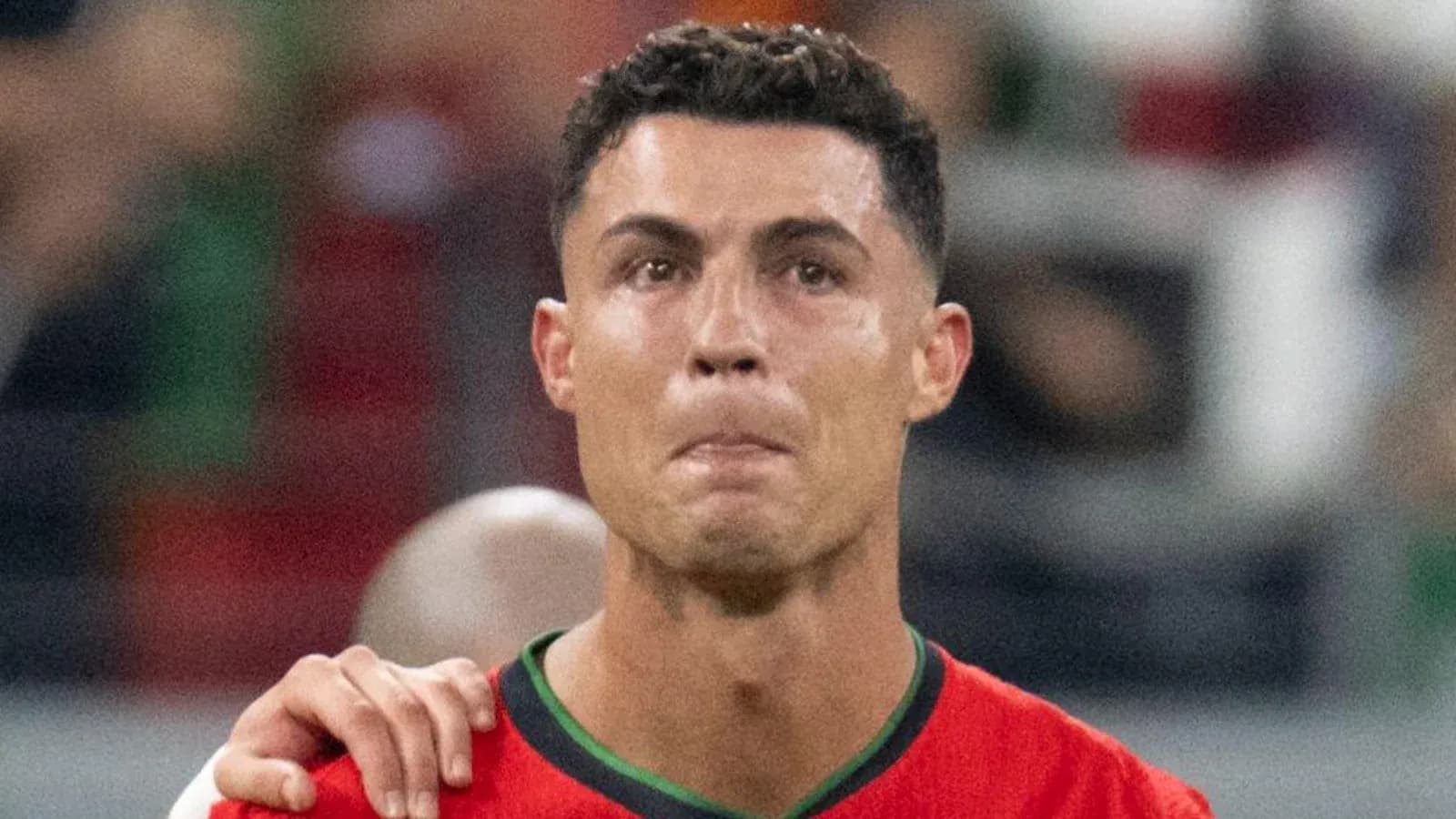
“JUST ANOTHER PLAYER: Portugal World Cup star sparks storm with brutal comments on Ronaldo.” “‘He’s just another player’ – Cristiano Ronaldo blasted by Portugal World Cup team-mate after DR Congo horror show.”
You brace for impact. A dressing-room takedown. A teammate finally snapping at the cult of Cristiano.
Instead, you get Joao Neves, measured and respectful:
“We know what Cristiano has done for us, for our national team, and for the world of football. But at this moment, he and we know that he is no different. He is just another player here to help. He is no different from the others. He is here to contribute, just like all of us.”
That’s it. That’s the “brutal” blast. A young midfielder saying the captain is treated like everyone else in the current squad while still acknowledging his legacy.
In any sane world, that’s exactly what you’d want to hear from a modern national team: respect for history, commitment to the collective. In the headline economy, it becomes a “storm”. A few fan accounts kick off on social media and suddenly we’re in crisis territory.
Ronaldo hasn’t been “torched”. He’s been normalised. That, it seems, is the real offence.
Budget Flights and Selective Outrage
Cole Palmer has been praised in The Sun as a “humble star” for flying with Jet2. The same act, different player, very different tone.
Raheem Sterling, earning big money at the time, once flew with easyJet and was accused of “penny pinching” and having “slummed it on the budget airline”. The wage figure – “rakes in a staggering £200,000 a week” – was rolled out to frame the decision as somehow shameful.
Palmer does it and he’s grounded, relatable, salt of the earth. Sterling does it and he’s tight-fisted and beneath his station.
The flights are the same. The coverage is not. The contrast doesn’t need spelling out; it hangs there, obvious and ugly.
The MOTD ‘Rule’ That Never Was
Then to the BBC, where Mark Chapman has apparently broken an “unwritten MOTD rule”.
“BBC host Mark Chapman makes feelings perfectly clear after World Cup clash as he breaks unwritten MOTD rule,” The Sun’s website declares.
You’d think he’d gone off on a rant, or dropped something that would have the compliance team scrambling. Instead, after Czechia’s draw with South Africa, Chapman signed off with:
“Sometimes a game does not deserve a really clever closing link. Goodbye.”
That’s it. No tirade. No meltdown. Just a presenter acknowledging a drab match and refusing to dress it up.
The supposed “unwritten rule” at the BBC is that there should always be a clever link at the end of the coverage. As if “good broadcasting” is some sort of mystical code rather than, you know, the job.
The irony? That line *is* clever. It undercuts the expectation, nods to the format and gets out of the way. It’s the sort of dry, self-aware sign-off that MOTD has thrived on for decades.
Emma Hayes and the ‘Tiny Blackboard’
Emma Hayes, now part of the BBC’s tournament coverage, has inevitably become a lightning rod. This time, the outrage is over… a set and a prop.
“Hayes was forced to do her tactical analysis on a tiny blackboard on a set that looked like a little kitchen, sparking outrage online,” reports The Sun.
“Forced” is doing a lot of heavy lifting there. As if producers marched her to a child’s easel and demanded she diagram a mid-block. The “tiny blackboard” line reads like a parody of itself, as though anything short of a 3D interactive wall is an insult.
It’s not exactly Michael Scott proudly unveiling his 21-inch plasma, but you’d think Hayes had been asked to explain pressing triggers with fridge magnets.
The real story isn’t the size of the board or the faux-kitchen backdrop. It’s that one of the sharpest tactical minds in the game is now speaking directly to a prime-time audience. If the biggest complaint is the décor, the analysis is probably doing just fine.
This is where football lives now: in the gaps between what’s said and how it’s sold. A backup full-back becomes a crisis, a respectful line about Ronaldo turns into a “blast”, a budget flight reveals your soul, and a simple “Goodbye” apparently rips up the rulebook.
The games will return soon enough. The question is whether the noise will quieten when the ball starts moving again, or whether this is simply what the sport has become: 90 minutes of football, and a week of drama about everything around it.