European Football's Evolution: From Maradona to Modern Giants
On a warm September night in 1987, Diego Maradona walked into the old Santiago Bernabéu with Napoli and a continent watched. This was the European Cup at its rawest: champions only, no safety net, no second chances for giants who stumbled.
Real Madrid, powered by La Quinta del Buitre, did not stumble. They won 2-0 in the first leg, then went to the San Paolo and took a 1-1 draw. Napoli were out before the competition had even begun to take shape. One of the favourites gone, the romance intact, the jeopardy absolute.
Silvio Berlusconi hated it.
The AC Milan owner did not buy into European football to see heavyweight clubs vanish in September. He wanted the best against the best, repeatedly, with his own team protected from the roulette of a bad night. So he began pushing an idea that felt outlandish at the time: a European super league, a closed shop of giants guaranteed a seat at the table.
That specific vision never landed. But the pressure did. Uefa blinked. Five years later, the Champions League arrived, a rebrand that quietly rewired the competition. Group stages, multiple lives, more matches, more television, more money. Less risk for the elite.
Even that, it turns out, was only a staging post.
First came the expansion to allow more than one club per country. Then two. Then three and four. Now, in some cases, five. The richest leagues packed the draw, the same names circling each other year after year. And now we arrive at the Swiss model, the latest twist that takes Berlusconi’s logic to its end point: an extended league phase, more guaranteed fixtures between the richest clubs, less danger of an early exit.
Gabriel Hanot, the French journalist who first dreamed up a pure, knockout European Cup, would surely be in despair at what his idea has become. The old clarity has gone. The jeopardy has been priced out.
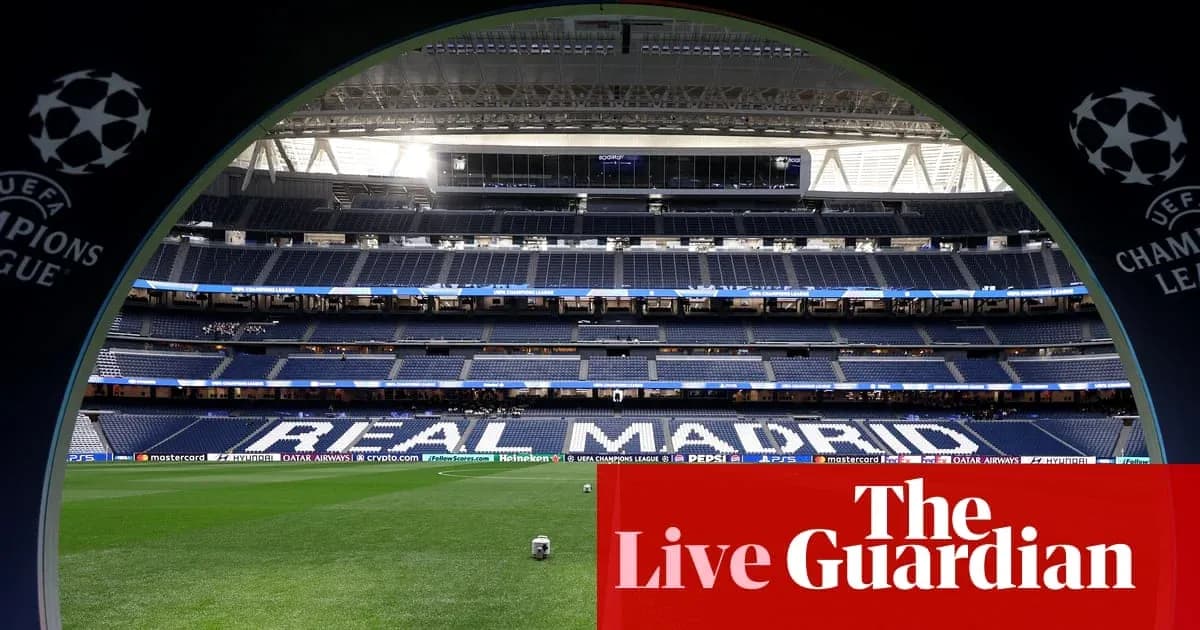
And yet, here we are, unable to look away from Real Madrid v Internazionale.
Because this is the paradox. The product has never been more commercial, the structure never more bloated, but the football remains intoxicating. Real Madrid, serial winners and eternal villains or heroes depending on your persuasion, against Inter, a club that still carries the shadow of José Mourinho’s treble.
Mourinho himself is back under the spotlight again, handed what feels like another last chance to prove he can still bend the biggest nights to his will. Across from him, on the Inter bench, Cristian Chivu – once his player, now a head coach in his own right, charged with reviving a club where his mentor scaled his highest peak.
The narratives write themselves. Does Mourinho still have the old magic? Can Chivu step out from the long shadow of 2010 and build something of his own? This is exactly the kind of tie Berlusconi once demanded the continent should see more often. He has long gone from the scene. The idea lives on.
And the night does not belong to Madrid alone.
In Dortmund, an 18-year-old midfielder is starting to bend the Westfalen to his rhythm. Konstantinos Karetsas has burst into the season, all energy and intent, and Villarreal must now walk into that yellow wall and try to quieten him. The stadium will shake, as it always does, and somewhere inside that noise a teenager will try to prove he belongs at this level.
Elsewhere, the storylines stack up. Porto host Manchester City, a club that now treats these group stages as a prelude to the real thing but still has to navigate hostile nights in old European arenas. Lille face Real Betis, a meeting that may not scream glamour but carries its own tension, its own stakes for clubs trying to cling to the Champions League’s top table before the format shifts again.
What any of it means in the grand scheme is less clear than ever. The new system scatters fixtures across a sprawling league phase, diluting the old simplicity of “win or go home”. The table will take time to take shape. The maths will be complicated. The drama might arrive later.
But context has rarely mattered less to the spectacle. Millions will still tune in, eyes fixed on the screen, drawn by the colours, the noise, the possibility that something extraordinary might happen in any given minute. The architecture may be cynical. The football rarely is.
And while Europe’s heavyweights go to work, the domestic calendar refuses to stand aside. The League Cup rumbles into life again tonight, kick-offs spread across 7.45pm and 8pm BST, a different kind of theatre. Rotated squads, teenagers getting their first taste of senior pressure, managers quietly desperate to avoid a slip that invites questions they do not need.
It all collides on the same evening: the old European Cup’s distant echo, the Champions League’s bloated present, and the League Cup’s stubborn, chaotic charm.
No one quite knows where this new era of European football leads. But as Real Madrid face Inter, Dortmund unleash Karetsas, Porto test City and Lille stare down Betis, one thing is certain: the games will keep coming, the stakes will keep rising, and the sport will have to decide how much jeopardy it is willing to sacrifice for nights like these.