France's World Cup Ambitions: The Legacy of Didier Deschamps
France do not just arrive in North America as contenders. They arrive as a looming presence. World champions in 2018, beaten finalists in 2022 – a team that has lived at the sharp end of international football for the best part of a decade and shows no sign of stepping back.
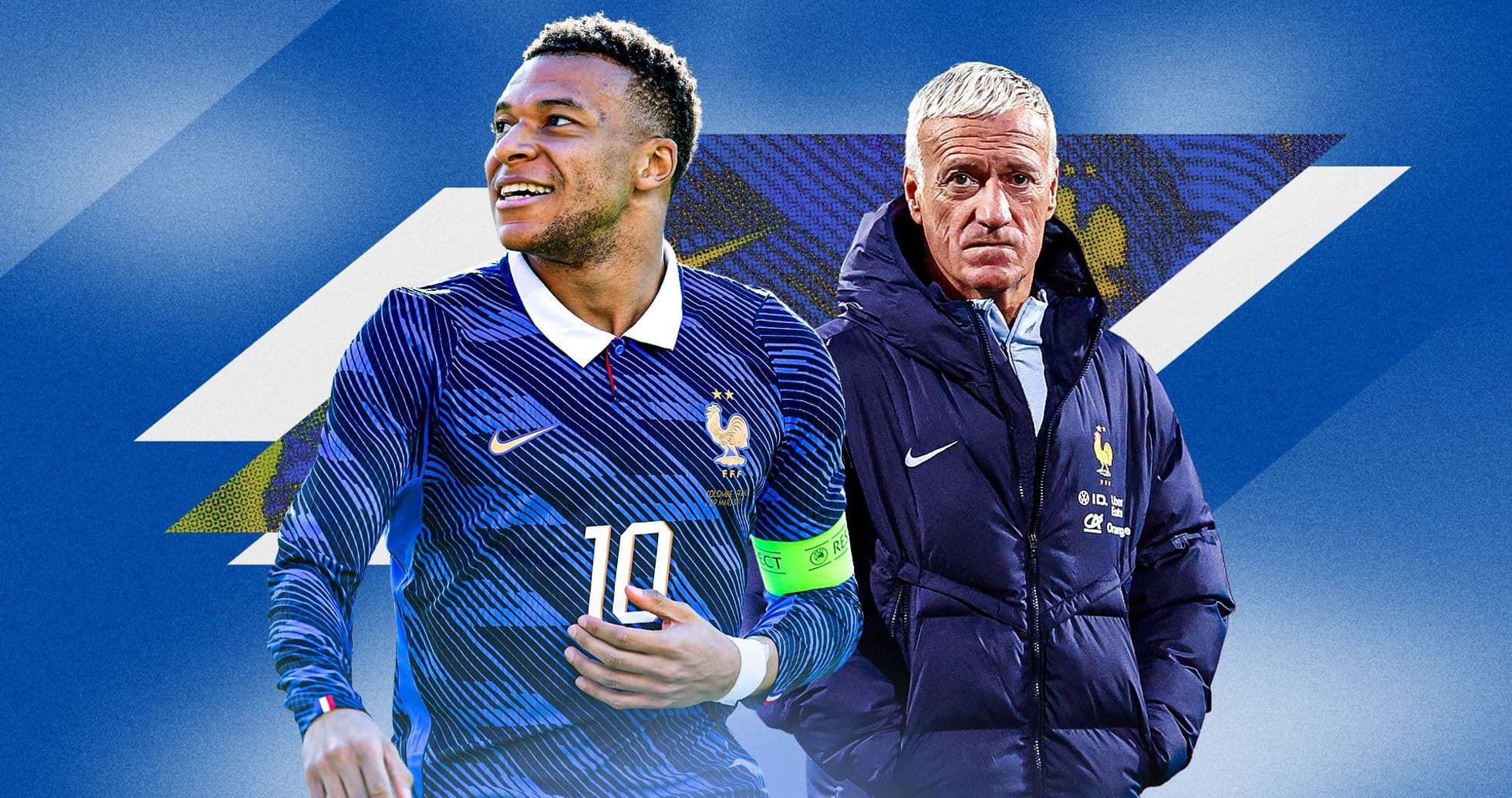
Look at the front line and the picture becomes even clearer. Kylian Mbappé, the captain and standard-bearer, remains a ruthless finisher and a constant threat in behind. Around him, the supporting cast is frightening. Michael Olise has exploded at Bayern Munich. Désiré Doué and Ousmane Dembélé have been central to Luis Enrique’s vibrant Paris Saint-Germain, adding pace, flair and incision from wide areas.
Stack that against any national team on the planet and France’s attacking depth holds up. In truth, it probably surpasses them. Deschamps can change the profile of his front four without any real drop in quality: pure speed, tight-space dribblers, creators between the lines, penalty-box predators – it is all there.
The doubts lie further back.
The defence has wobbled too often, and the fitness of William Saliba has become a nagging concern. When Saliba anchors the back line, France look assured, able to squeeze up the pitch and suffocate opponents. When he is missing or short of sharpness, gaps appear, and even average sides have found joy running at them. For all the fireworks up front, that vulnerability could yet shape their tournament.
Then there is the dressing room.
This is a squad rich in talent and ego, with strong personalities and complex histories. Keeping that room aligned has never been straightforward. France know all about internal fractures and how quickly they can derail a campaign. Deschamps has spent years managing that delicate balance. If he gets it right one more time, if the stars pull in the same direction, it will take something special to stop them walking out in the final in New Jersey.
Deschamps’ Last Dance
Whatever happens this summer, one thing is fixed: this is the end of an era.
Didier Deschamps’ contract runs out in July and will not be renewed. After nearly 15 years in charge, he is heading for the exit, leaving behind a body of work that demands respect, even from his harshest critics.
He has never been universally loved. His style of play, often pragmatic and risk-averse, has been attacked at home and abroad. His leadership has been questioned, his man-management dissected. Yet the record is undeniable. Since taking over in 2012, Deschamps has rebuilt a national team that looked spent after Laurent Blanc’s spell and turned it into a machine for reaching the biggest stages.
- World Cup winners in 2018, outclassing Croatia in Moscow.
- UEFA Nations League champions in 2021 after beating Spain in Milan.
- Finalists at Euro 2016, losing to Portugal in extra time on home soil.
- Finalists again at the 2022 World Cup, edged by Argentina on penalties after one of the most gripping matches the competition has ever seen.
This tournament is his farewell tour with Les Bleus. There will be no second act. No extension. Just one last shot at adding another major trophy to an already formidable legacy.
Olise, the Rising Star in Mbappé’s Shadow
Naturally, the spotlight will fall on Mbappé. He is the captain, the number 10, the face of the project. But there is a growing sense that France’s most decisive figure this summer could be Michael Olise.
At Bayern, Olise has moved from promise to production. For the second straight Bundesliga season he hit double figures in both goals and assists, a rare blend of volume and variety. His impact in the Champions League has matched that level, with numbers that place him among Europe’s most efficient attackers.
One night in Bergamo crystallised his rise. Bayern shredded Atalanta 6-1, and Olise ran the show: two goals, one assist, and a performance dripping with confidence and control. He drifted between the lines, beat defenders off the dribble, and picked passes at speed. It felt like a statement, the kind that echoes into international tournaments.
He carried that form into France’s final warm-up game, hitting a hat-trick against Northern Ireland and underlining just how dangerous he has become. At 24, he is entering the sweet spot of his career, with the numbers, the swagger and the consistency to dominate games rather than just decorate them.
If he translates his Bayern form to the international stage, Olise will not just complement Mbappé. He could rival him as France’s true MVP – and force the rest of the world to redraw their list of the game’s elite attackers.
Akliouche, the Wild Card
Beyond the headline names, one more player demands attention: Maghnes Akliouche.
Deschamps brought him into the senior squad during qualifying, and the Monaco product wasted no time making an impression. A goal against Azerbaijan, an assist against Iceland – small samples, but the signs were clear. He belongs.
Akliouche comes from Monaco’s famed academy, a production line that has shaped European football for decades. Last season was his real breakout: seven goals and twelve assists across Ligue 1 and the Champions League, the numbers of a player turning potential into end product.
He operates primarily as a right-sided attacking midfielder in a 4-2-3-1, but that undersells his range. He can slide inside as a central playmaker, link midfield and attack, or drift into half-spaces to overload defences. Crucially, he is not the stereotypical slight, purely technical winger. At 24, he combines physical presence with sharp technique, a profile that modern coaches covet: strong enough to hold off challenges, skilled enough to unpick tight blocks.
He is unlikely to start many games. On paper, he sits behind bigger names. On the pitch, though, he offers something different – a fresh angle, a new tempo. In the final half-hour of tight knockout matches, when legs tire and patterns break, that kind of player can tilt a tournament.
France have the pedigree, the firepower and a coach chasing one last triumph. They also have emerging talents like Olise and Akliouche ready to bend the script. The question now is not whether they can go deep. It is whether anyone can stop this generation from delivering one more defining chapter before Deschamps walks away.