Gabriel's Tug-of-War: United's Uncertain Future
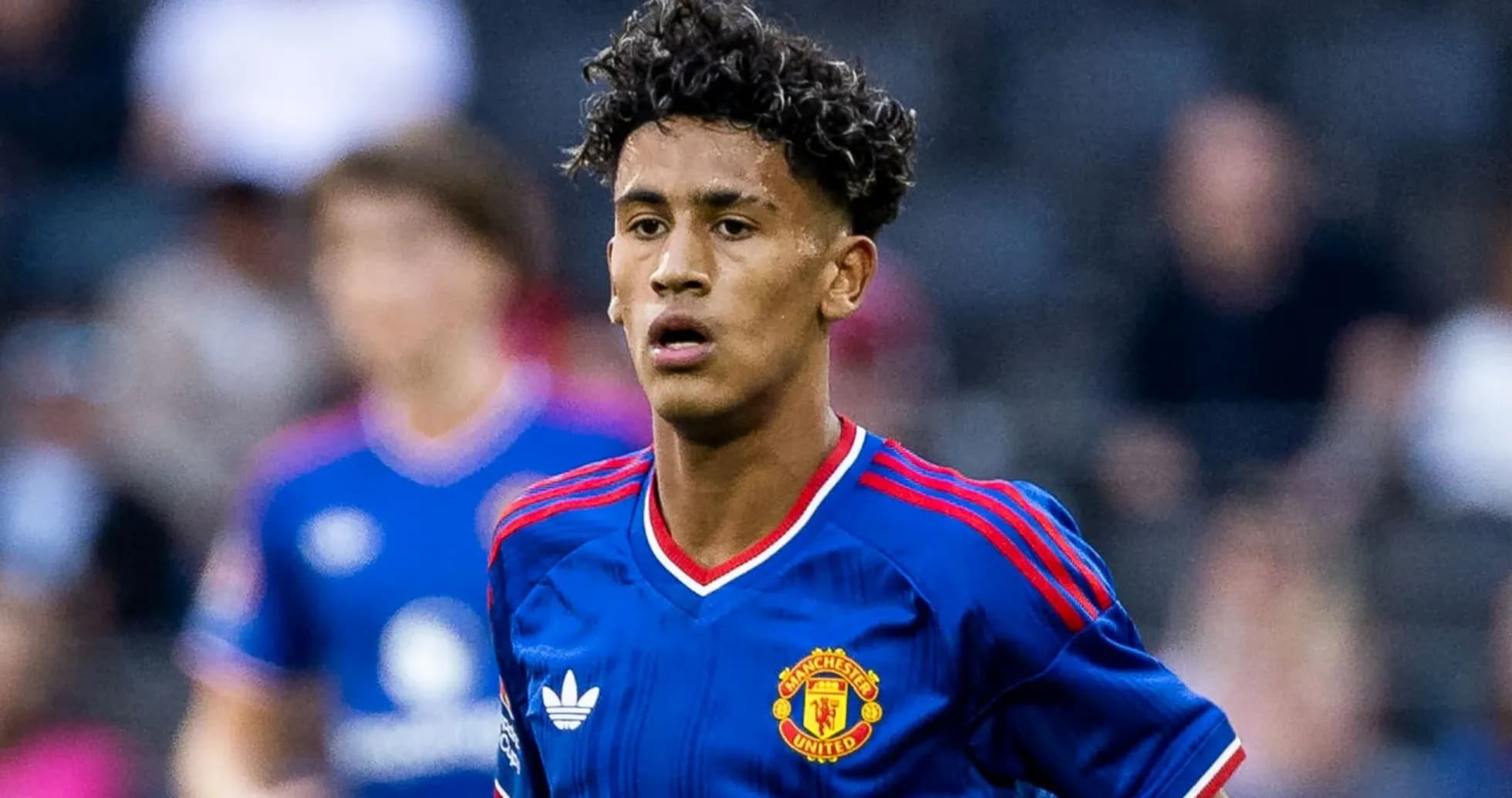
Manchester United are fighting to keep hold of a teenager who hasn’t even sat his GCSEs – and some of Europe’s biggest clubs are circling like hawks.
Real Madrid, Barcelona, Paris Saint-Germain and Bayern Munich all want Gabriel. United, for now, are refusing to even entertain the idea. Senior figures are working overtime behind the scenes to change the youngster’s mind.
For Sir Jim Ratcliffe, already the target of protests in his short spell fronting United’s football operation, this is dangerous territory. Lose a talent being talked about as once-in-a-generation, and the pressure will be relentless.
A loophole, a passport, and a looming deadline
Gabriel is contracted until next summer, but the situation is far from straightforward. He’s not on a full-time scholar deal, and crucially, he’ll technically be free to leave when he turns 16 on October 16 – if he holds a European passport.
United are scrambling to get clarity on that front. His father, Joe O’Cearuill, is a former professional who represented Ireland twice, and his mother has Greek Cypriot roots. Under post-Brexit rules, that dual-nationality route matters. It could allow Gabriel to leave England for a European Union club before he turns 18.
United already fended off Manchester City last year to keep him. This time, the battle looks far more complicated. And the signs are not encouraging.
Gabriel was due to train with the first team on Saturday. He didn’t show. He hasn’t been seen at Carrington this week either. For a club desperate to convince him he belongs in their future, his absence is deafening.
Michael Carrick had planned to name him in the squad for Wednesday’s Carabao Cup third-round tie against Brighton at Old Trafford. Had he stepped onto the pitch, Gabriel would have become the youngest player ever to appear for United’s senior side. That landmark is now off the table.
The prodigy United can’t afford to lose
United’s academy has not produced a genuine global superstar since Marcus Rashford. Gabriel has carried the hopes of the system almost from the moment he arrived as an 11-year-old.
He’s a two-footed forward, blessed with balance and agility, able to slalom out of tight spaces and punish teams the moment he sees a gap. Labeling him “the next Messi” is lazy and unhelpful, but stylistically he leans closer to Neymar – a slippery, inventive attacker who thrives on chaos. He even wears the same Nike boot model as the Brazilian, having signed a lucrative extension with the brand in March 2025.
The numbers back up the hype. Last season, at just 14, he broke into United’s Under-18s – another record – and scored 20 goals in 21 league games. That haul won him the inaugural Premier League U18s Player of the Year award, and he also became the youngest ever recipient of United’s Jimmy Murphy Young Player of the Year prize.
He didn’t stop there. In August, he stepped up to the U21s and lit up his debut against Ipswich, producing two assists and a deft chip in a 5-0 win. A week later, he scored again as United thrashed Leicester City 4-1.
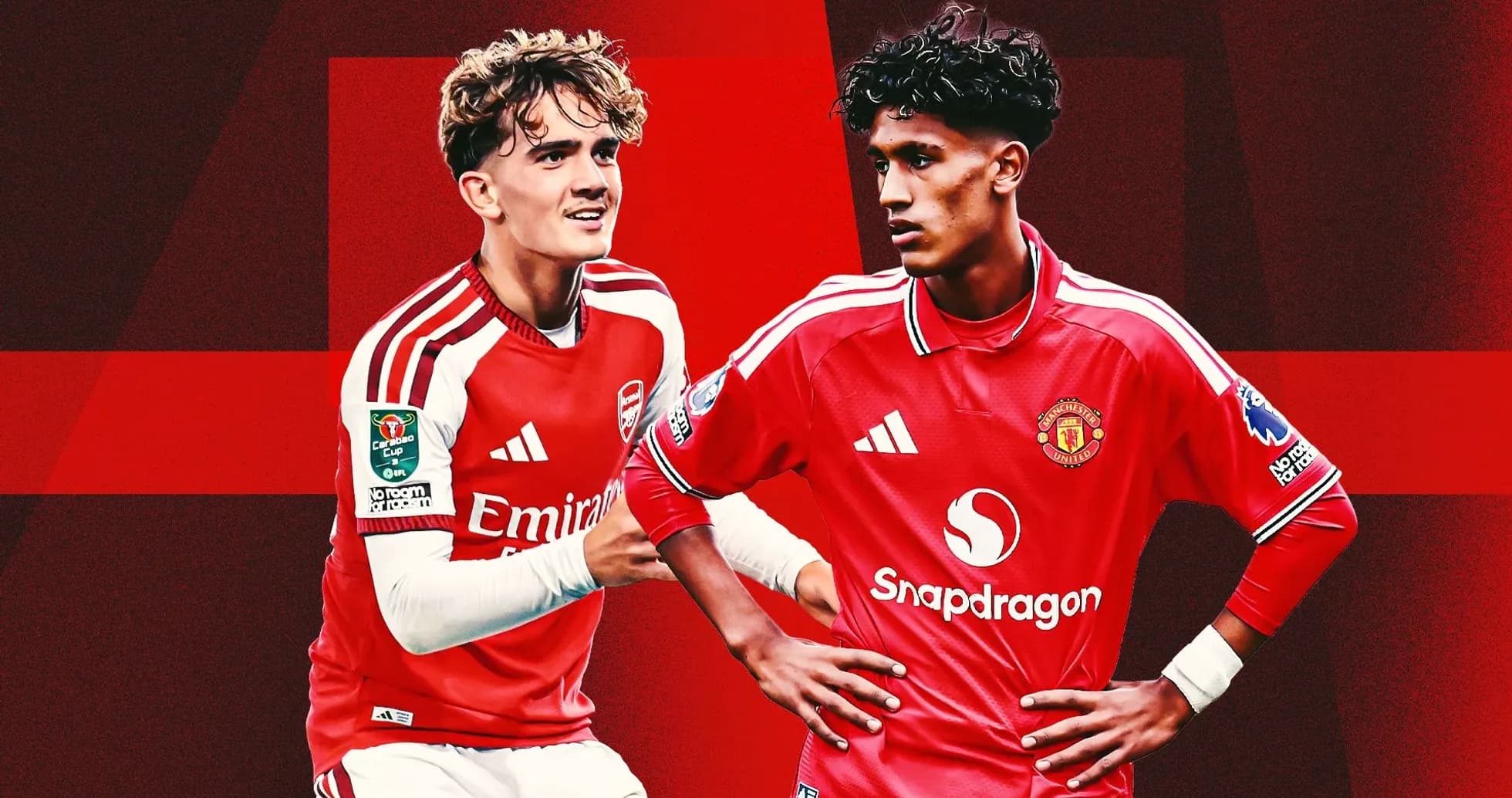
This is not a normal 15-year-old. It’s no surprise the clamour for Carrick to unleash him has grown louder, especially with United short on ideas in the final third and Max Dowman exploding at Arsenal.
Dowman, Nwaneri and the dangerous lure of shortcuts
English football has already seen what happens when a club fully leans into the “if you’re good enough, you’re old enough” mantra.
Ethan Nwaneri broke Premier League history in September 2022 when he came on for Arsenal against Brentford aged 15 years and 181 days. His rise hasn’t been linear – loans to Marseille and Borussia Dortmund have stalled his momentum at times – but he already has over 50 senior appearances for Arsenal and remains only 19.
Arsenal doubled down on youth again with Dowman. Thrown on by Mikel Arteta against Leeds in August 2025, he became the second-youngest Premier League player ever. By March, he had broken James Vaughan’s long-standing record as the league’s youngest goalscorer, producing a stunning solo strike against Everton at 16 years and 139 days.
He then became the youngest title winner in May, and this week matched Wayne Rooney’s feat as only the second 16-year-old to score a brace for a Premier League club in a major competition, firing Arsenal to a 4-2 Carabao Cup win over Ipswich.
Fourteen senior games already, a blend of flair and physical power that Arteta simply cannot ignore. The Arsenal manager has even uttered Messi’s name in the same breath as Dowman’s, but he’s drip-feeding the teenager’s minutes, choosing his moments carefully.
“We have to look after him. He's 16 years old. You don't see that in this league,” Arteta said after the Ipswich game, stressing the physical and mental demands of English football and the need to place Dowman in the right context every time he plays.
United’s dilemma: frail squad, fragile body
Gabriel is not Dowman physically. He’s slight, often the smallest player on the pitch. His bravery and tenacity narrow the gap, but they don’t erase the risk. Throwing him into the Premier League too early could go badly wrong – especially if he hits the ground running.
If Gabriel made an instant impact, the pressure on Carrick to pick him every week would be ferocious. That’s a heavy load on a developing frame. Arteta can rotate Dowman because Arsenal’s squad is deep, balanced and winning. He can hide him when needed, then reintroduce him without panic.
United don’t have that luxury. Their performances swing wildly. If Carrick eased Gabriel out after a brief burst, he’d be accused of being too cautious while the team struggles. If Gabriel came in and failed to dominate, the narrative would flip: overrated, overhyped, not ready.
So far, Carrick’s caution looks measured rather than timid. Former United academy graduate Danny Simpson, who broke through under Sir Alex Ferguson, believes the manager has handled the situation well.
Speaking to GOAL via Free Bets, Simpson drew a sharp contrast between Dowman’s environment and Gabriel’s.
He pointed out that as a youngster at United, he could come on for 10 minutes in games that were already 2-0 or 3-0 up, often alongside a “second XI” strong enough to win the league. Dowman, he argued, is entering a similar setup at Arsenal – a side “flying in confidence, full of top, top talent, winning games.”
United right now are nothing like that. The safety net isn’t there.
“I know we all want to see Gabriel play and it's exciting, but it's just a very different situation to Max Dowman at Arsenal,” Simpson said. His view is simple: let Gabriel train, stay around the group, and trust that his moment will arrive.
Yamal, La Liga and the mirage of the fast track
That logic is harder to sell to a teenager watching his peers light up Europe.
Even if Gabriel accepts that his circumstances differ from Dowman’s, he only has to glance at Lamine Yamal’s rise at Barcelona to feel restless.
Yamal debuted at 15 years, nine months and 16 days in 2023. Like Gabriel, he was skinny, vulnerable to heavy tackles. His speed, sharp decision-making and technical quality allowed him to survive – and thrive.
La Liga’s rhythm helped. The game there leans more towards control and positioning than the relentless, high-speed transitions that define the Premier League. It’s a more forgiving environment for pure technicians. Drop Yamal into England at the same age, and his path might have been far rougher.
Gabriel may look at Barca or Real Madrid and see a shortcut to superstardom. On the surface, it makes sense. In reality, timing is everything.
When Yamal broke through, Barcelona were marching towards the La Liga title under Xavi but had crashed out of the Champions League at the group stage. Raphinha, O’usmane Dembele and Ferran Torres were not at their current levels. There was space for a fearless teenager to disrupt the hierarchy.
Now the picture is very different. Barca can call on Yamal, a peak Raphinha, Anthony Gordon, Karim Adeyemi and Gabriel Jesus in attack. Across Spain, Jose Mourinho’s Real Madrid are stacked too: Kylian Mbappe, Vinicius Junior, Jude Bellingham, Yan Diomande and more.
At any of those clubs, Gabriel would still be waiting in line. The route to regular football is clearer at United than at any of the giants chasing him, even if it doesn’t feel that way to a 15-year-old in a hurry.
Entitlement, history and a brutal truth
United cannot allow themselves to be held hostage by a child who is still 18 months from his GCSEs, no matter how gifted he is. Carrick and the academy staff have guided Gabriel carefully so far. They will continue to do so if he decides to stay and reset. If not, there is little value in dragging out a saga that overshadows a season they are desperate to salvage.
The sense around the club is that Gabriel, whether nudged by those close to him or emboldened by outside attention, is acting with a dangerous sense of entitlement.
That attitude jars with United’s history. George Best, Sir Bobby Charlton, Ryan Giggs, David Beckham, Paul Scholes, Gary Neville – none of them were handed anything. They fought for their chance, met brutal standards on and off the pitch, and earned the right to be called legends.
Former manager Ruben Amorim, heavily criticised during his short reign and sacked in January, still landed on a truth that cuts through the noise.
“There is a feeling of entitlement we have in our club,” he said near the end. Difficult moments, he argued, can be good for young players. They don’t always need praise and protection. They need resilience. “Let's stay. Let's fight. Let's overcome. That is the way we can solve things.”
Amorim got a lot wrong. On this, he was right.
With his current mindset, Gabriel is unlikely to transform United’s fortunes any time soon. The fundamental lesson for every academy prospect is simple and unforgiving: no one is bigger than the club.
If that message doesn’t land, United may soon discover whether they are prepared to let a prodigy walk away – and watch him try to build his personal brand under someone else’s badge.