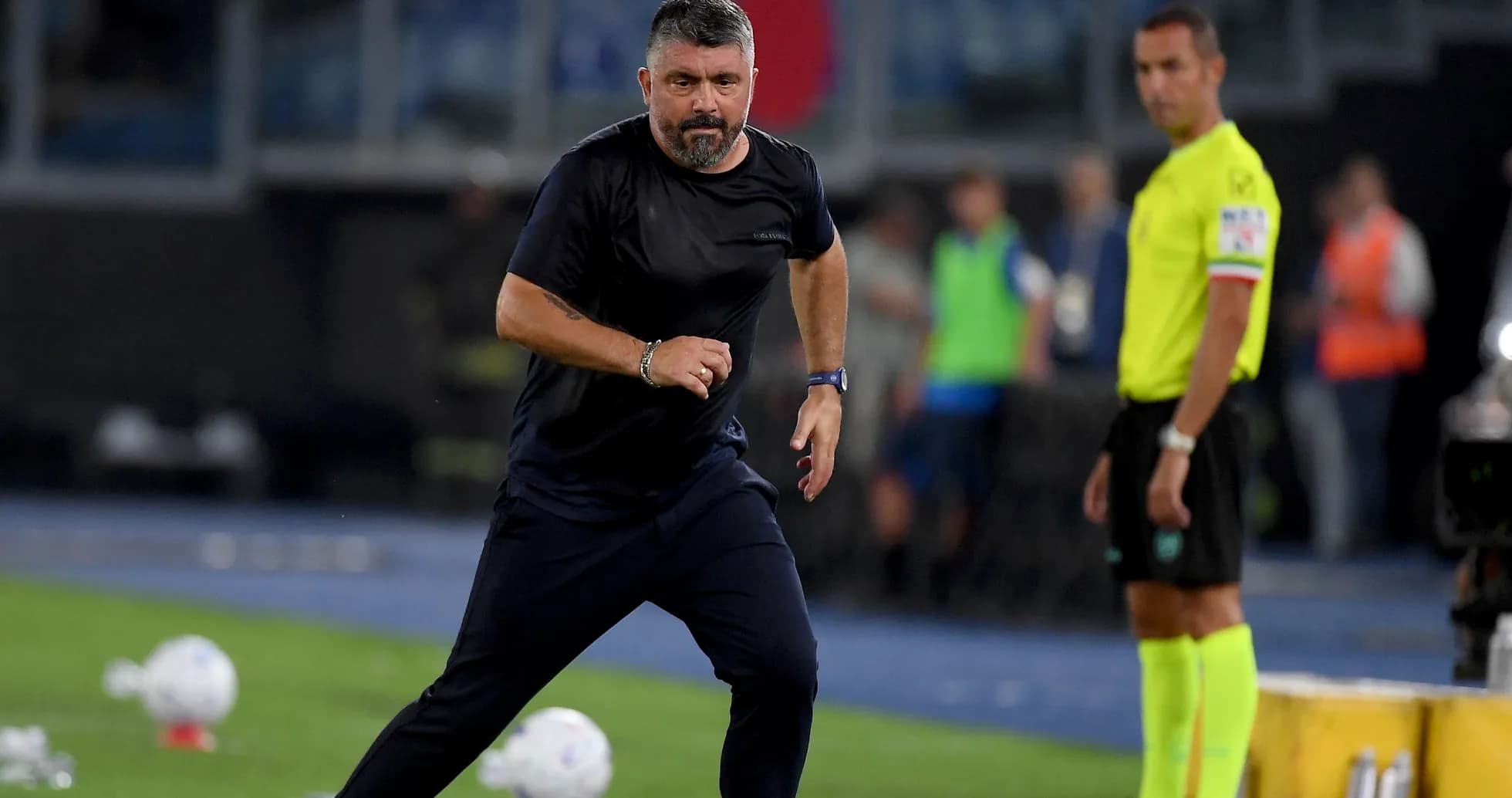
Gattuso Reflects on Scars After Italy Exit
Gennaro Gattuso does not hide from his scars. He wears them.
Days after steering Lazio to a gritty 1-0 win at Bologna to open their Serie A campaign, the former Italy boss laid bare the pain that still lingers from his spell in charge of the Azzurri – and the failure that will follow him for the rest of his career.
“A wound that will remain for as long as I live”
Gattuso walked away from the Italy job in April, just after a bruising playoff defeat to Bosnia-Herzegovina slammed the door on the 2026 World Cup. Another World Cup missed. A third in a row for the men’s national team. For a country that still measures itself by summers on the biggest stage, it cut deep.
Speaking after Lazio’s victory in Bologna, the 2006 World Cup winner didn’t try to soften it.
“I had 10 wonderful months,” he said. “The lads I coached gave me their all. And it's a wound that will remain for as long as I live, because it was a deep wound.”
No excuses. No deflection. Just the blunt honesty that has always defined him, from his days snarling in midfield to his current life on the touchline.
Mancini returns to pick up the pieces
Once Gattuso stepped aside, the Italian Football Federation turned back to a familiar face. In July, they reappointed Roberto Mancini, the man who had already reshaped the national team once before.
Mancini’s first cycle, from 2018 to 2023, delivered one of the modern high points of Italian football: the Euro 2020 triumph, a run built on bold selections, fluid football, and a restored sense of identity. But it also carried a dark stain of its own – failure to reach the 2022 World Cup.
Now he returns to a bench still warm from Gattuso’s brief but intense spell, tasked with repairing a bruised footballing psyche all over again.
Gattuso, though, has no bitterness, only backing.
“I'd say he is a great coach with a wealth of experience,” he said. “He's a great manager; he's someone who has already won with the national team, and I obviously wish him all the best from the bottom of my heart.”
The message was clear: the job is Mancini’s now, and Italy needs him.
A tangled search: Pirlo, Ancelotti, Guardiola, Conte
Mancini’s comeback was not the federation’s first idea.
When Gattuso resigned, the Italian FA cast its net wide. Andrea Pirlo quickly emerged as the leading candidate, a high-profile, symbolic choice in line with the federation’s desire for a modern, progressive figure. Before that, they had even sounded out Carlo Ancelotti and Pep Guardiola, ambitious moves that ultimately went nowhere.
Pirlo, for a moment, looked close. Then the deal fell apart.
Complications around an existing sponsorship agreement with a betting firm blocked the path, and the talks collapsed. With that, the search swung again.
From the league’s side, there was another preference altogether. Lega Serie A president Ezio Maria Simonelli revealed that the clubs strongly favoured a second spell for Antonio Conte, a coach whose intensity and tactical rigour have long appealed to Italian football’s more hardline instincts.
The federation, though, chose a different road. They went back to Mancini, banking on his experience, his previous success with the Azzurri, and his ability to stabilise a shaken national project.
Gattuso turns the page, Italy looks ahead
While the debate rumbled on around the national team, Gattuso moved quickly. In June, he signed with Lazio, channelling his energy back into the week-to-week grind of club football.
His focus is now on Rome, on building a side that reflects his edge and intensity. But his words show that the national team chapter will never fully close for him. That missed World Cup will always sit there, etched into his story.
For Italian football, the gaze has to shift forward. Simonelli has called for unity around Mancini, urging the entire football community to line up behind the returning coach as the Azzurri try to climb out of this prolonged period of underachievement.
There is no time to dwell. The next test is already on the horizon.
Mancini’s Italy will face Belgium on September 25 in the UEFA Nations League, a competition that now carries more weight than its name suggests. It is not just about points or rankings. It is about restoring belief, rebuilding pride, and proving that Italy still belongs at the summit of the international game.
The scar Gattuso speaks of will not fade. The question is whether Mancini’s second act can finally stop Italian football from opening new ones.