Graham Potter's Remarkable Turnaround with Sweden at the World Cup
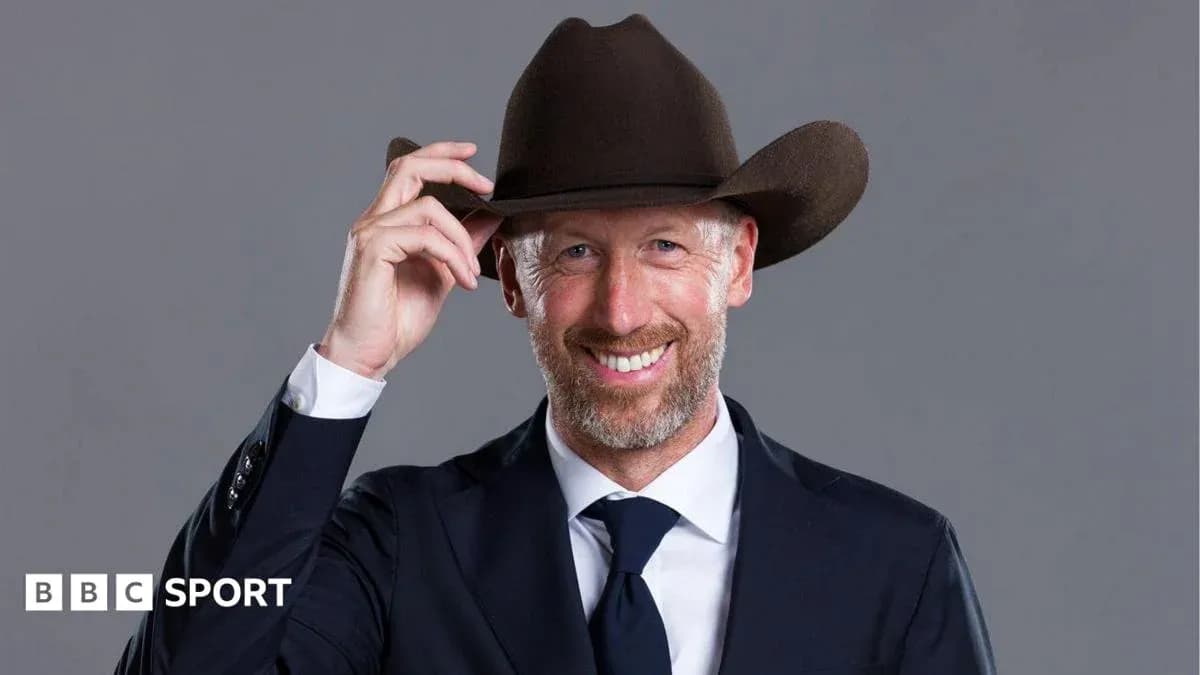
Graham Potter walked onto Sweden’s training pitch in Texas last week wearing a Stetson. A joke, on the surface. A manager leaning into the World Cup’s American backdrop, playing the part.
For some, it also looked like a man in the last-chance saloon.
Two sackings in 15 months, first at Chelsea, then at West Ham. A reputation dented, a career that had soared at Brighton suddenly stalling at the sharp end of the Premier League. The narrative around him was clear enough: bright ideas, big clubs, brutal endings.
Then came Monterrey.
At Estadio Monterrey in Mexico, the cowboy hat stayed in the suitcase and a very serious Sweden side walked out instead. Tunisia were torn apart, 5-1, as Potter’s team ripped into their Group F opener with the kind of ruthless clarity that has been missing from his recent club work.
This was not supposed to be his stage this summer. Potter began the season as West Ham head coach, only to be dismissed in late September after winning just six of 23 Premier League games. Before that, Chelsea had swallowed him whole. The job looked too big, the expectations too unforgiving, and the genial, thoughtful coach from Solihull turned prickly under the glare.
Now, in yellow and blue, he looks like himself again.
From qualifying wreckage to World Cup statement
The scale of this turnaround is stark. Sweden scored four goals in their entire World Cup qualifying group, most of it under Jon Dahl Tomasson. Automatic qualification slipped away, then disappeared. By the time Potter took over in October, the damage was done. Sweden finished bottom of a group containing Switzerland, Kosovo and Slovenia, without a single win in six games.
Their route to the World Cup came not from form, but from the maths of the Uefa Nations League. Ranked 34th, they were handed a play-off path. That slim opening was all Potter needed.
Sweden beat Ukraine. Then Poland. A team that had looked flat and directionless suddenly had an identity again, and a ticket to the World Cup.
Still, few would have confidently predicted this kind of start. Five goals in one game, more than in the whole qualifying group. Tunisia, ranked 56th in the world, were overwhelmed by Sweden’s intensity, their movement, and a front line that looks as expensive as it does dangerous.
Potter, asked afterwards if he imagined this when he took the job, did not pretend otherwise.
"You never know, that's the truth," he said after the 5-1 win. "You never know how things are going to go. We were optimistic because we felt confident in the work.
"But until the game is played you don't know for sure. That's the beauty of sport. We are delighted with how we performed tonight and it's a great start for us."
A manager back where it all began
For Potter, this is more than just another job. It is a return to the country that shaped him.
He made his name at Ostersunds FK, dragging the club from the fourth tier to the Allsvenskan, winning the domestic cup and taking them into Europe. Those seven years in Sweden did more than pad out a CV. They changed him.
"I feel very Swedish when I'm working," he told BBC Sport before the tournament. "I even look a bit Swedish. Two of my children were born in Sweden. I had seven unforgettable years at Ostersunds, with memories that will stay with me for life.
"I came from the fourth tier of Swedish football, which is quite low, and worked my way up through the system to the Allsvenskan.
"You almost become Swedish in a coaching sense because of the experiences you have. I think it has definitely helped.
"Now I'm working for the Swedish FA as head coach of the national team, so I feel very Swedish."
His Instagram feed in recent months has been full of lakes, forests, Nordic literature, cultural events with his family. The tourist snapshots are pleasant enough, but they sit alongside something more serious: a manager rebuilding, planning, plotting a way to make Sweden relevant again on the biggest stage.
On the evidence of Monterrey, the work has been meticulous.
Isak, Gyokeres and a £125m threat
The biggest single boost has been the full fitness of Alexander Isak. The Liverpool striker, valued at £125m, gives Sweden a focal point they simply did not have during the bleakness of qualifying.
Against Tunisia, his partnership with Arsenal’s Viktor Gyokeres crackled from the start. The two forwards dovetailed, dragged defenders out of position and, crucially, fed each other. Each assisted the other’s goal, a small detail that will please Potter as much as the scoreline.
This is not a budget frontline trying to punch above its weight. It is a high-end, high-value attack, leading a nation back into the World Cup after missing Qatar 2022. If Isak and Gyokeres stay fit and in sync, they can trouble any defence in this tournament.
Behind them, though, is where Potter’s real test lies.
Only Victor Lindelof has previous World Cup minutes for Sweden; goalkeeper Kristoffer Nordfelt was on the bench in Russia in 2018 but did not play. This is a squad light on tournament scars and savvy. They will need guidance, calm, and a clear plan when the pressure rises and the margins tighten.
Potter’s job is to weld this group together quickly. On night one, at least, the signs were encouraging.
Tougher nights ahead
The format helps. With this expanded World Cup, a heavy opening win leaves Sweden well placed to reach the last 32. The numbers are on their side already.
The football calendar, though, is unforgiving. Tunisia will not be the benchmark. Netherlands await on Saturday, a side Potter himself called "one of the favourites for the competition."
He did not bite on talk of expectations.
"We just focus on what we can do, we focus on our performances," he said. "It doesn't matter what people think from the outside or opinions.
"That's the beauty of the World Cup everyone has predictions and forecasts but we have to focus on our job and how we play as a team.
"We will meet another top team at the weekend who are one of the favourites for the competition."
That, in truth, is where Sweden’s ambitions will be properly measured. Put it this way: put five past Tunisia and people take notice. Stand toe to toe with Netherlands and people start to believe.
Echoes of history, hint of something more
Sweden’s best World Cup finishes both ended with bronze medals. In 1958, on home soil, they came third under another Englishman, George Raynor. In 1994, when the tournament was also staged in the USA, they did it again with that charismatic, attacking side that still lives vividly in Swedish memory.
Those campaigns feel a long way from Monterrey, yet the echoes are hard to ignore. Another English coach. Another World Cup on American soil. Another Sweden team arriving slightly under the radar.
No-one inside Potter’s camp will talk about omens or destiny. The manager knows better than most how quickly football can turn. He has lived the brutal end of big projects. He has felt the impatience of boardrooms and the cold certainty of a sacking phone call.
Yet here he is, back in a country where he feels at home, leading a national team that has already outstripped its qualifying form and found its voice again.
The cowboy hat was a joke. The performance in Monterrey was not.
If this really is Graham Potter’s last-chance saloon, he has started by kicking the doors off their hinges.