Hearts' New Era: Wouter Vrancken's Data-Driven Vision
Six weeks ago Hearts were a whisker from the title. Since then, the club has been stripped, rebuilt and pointed in a new direction.
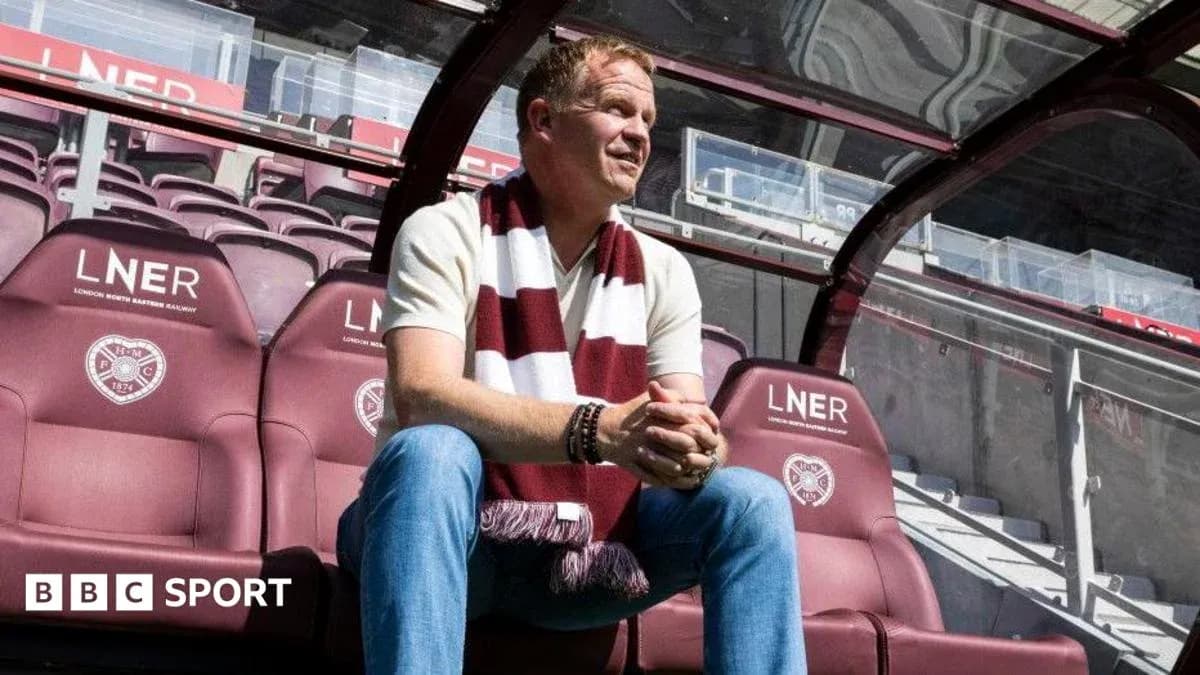
The captain is gone. Several mainstays have followed. Seven new signings are already through the door. Derek McInnes has departed. And now, at the end of the storm, sits Wouter Vrancken, a 47-year-old Belgian with a data dashboard behind him and a Champions League qualifier looming in front.
When he took his seat for his first media briefing as Hearts head coach, it felt less like an introduction and more like a line in the sand. The chaos of early summer gives way to a clear, if unforgiving, plan.
Data, Bloom and a new kind of Hearts
Tony Bloom’s fingerprints have been on Hearts for more than a year, his analytics operation quietly reshaping the club’s decision-making. With Vrancken replacing McInnes, that influence is no longer in the background. This is the model, front and centre.
Sporting director Graeme Jones called Vrancken “a standout” in the data when the search began. The numbers liked him. So did the story behind them.
At Sint-Truiden and Genk, Vrancken built sides that consistently punched above their weight. His teams were aggressive, ambitious, hard to ignore. That track record matters in Scotland, but so does his profile as a pure head coach – someone comfortable working inside a collaborative, recruitment-led structure.
McInnes operated in a different way. Vrancken has always lived in this head coach world.
It is just as well. Seven players have already arrived before he has taken a training session. The machine is in motion; he has to jump on.
There is another thread tying this together. Vrancken is close to Chris O’Loughlin, sporting director at Union Saint-Gilloise, another club in Bloom’s portfolio and one he faced in Belgium. He has seen this model from the outside. Now he steps behind the curtain.
“I always wanted to look behind the curtain, actually,” he said. “So maybe this is an opportunity to do it. I have a lot of confidence or trust in the way the recruitment works because I was confronted with it in Belgium. And now from the other side, I want to be part of it.”
Four weeks to reshape a team
If the structure is long-term, the timescale is brutally short.
Vrancken has four weeks to prepare Hearts for their first competitive test: a Champions League qualifier against Sturm Graz. Four weeks to install a style, sift through a swollen squad, and carry a club still nursing the scars of last season’s title near-miss.
He is not backing away from his principles to buy time.
His sides in Belgium were known for aggressive, attacking football. He intends to bring that to Tynecastle at speed.
“I like to have the ball,” he said. “I like to be positive and constructive and also a lot of joy in the game.
“So I think always players, when they want to reach their full potential, they have to enjoy the game and enjoy what they’re doing.
“We try to create this with a positive kind of play, as offensive as possible, with a lot of pressure, with a lot of intensity, energy.”
It is a bold promise given the calendar, but it fits the league and the club. Hearts fans expect their team to go at opponents, not wait for them.
Turnover, tension and a changing dressing room
The price of Bloom’s model is volatility. Hearts are living it.
Key figures from last season’s title-chasing squad have gone. Captain Lawrence Shankland has moved on. Beni Beningime has departed. Cammy Devlin, a heartbeat in midfield, has yet to commit to a new contract.
Michael Steinwender and Frankie Kent are out the door as well. Craig Halkett will miss the start of the season. Reports suggest Claudio Braga and winger Alexandros Kyziridis could be next to be sold.
The churn is relentless. Vrancken does not flinch.
“It’s already a good, big squad and they did very well last year,” he said. He is open to more additions, but not obsessed with a clear-out for its own sake.
“So I don’t think it’s needed for me to change a lot, just to have maybe other talents for the players that I need more than the previous coach, who did really great.
“You respect a lot the work that he did here, it’s incredible. But you’re never the same, two coaches are never the same, working on other things.
“I saw also with the squad who was playing last year that there are a lot of qualities that I can use in my way of playing.”
The message is pointed. This is evolution, not revolution, but it will be on his terms.
Learning to live with heartbreak
If anyone understands what Hearts went through last season, it is Vrancken.
He watched a title slip away in Belgium in almost identical fashion. In 2023, his Gent side were denied the championship by a late Royal Antwerp goal on the final day. Hearts lost the Scottish Premiership in the dying minutes of a thrilling campaign.
He knows that kind of wound does not close overnight.
“It takes time [to get over] for sure,” he said. “But with aiming on the new season and working for the new goals, that’s the only way to get over it and to work for it.
“I hope that we’re on the good side of the story, let’s say, the next time. I think it’s just putting the energy in it and what’s left to come and not looking back too much.”
Hearts do not intend to step back from the fight. The remit is clear: push again at the top of the table. No soft landing. No transition year.
“The best clubs to work in are those that have ambitions,” Vrancken said. “I think this is a good ambition, it’s a good point of focus, a good goal to have. And then we have to work for it and aim as high as possible and then we’ll see where we’ll end.”
The analytics are in place. The squad is shifting. The new head coach is on the clock.
In four weeks, against Sturm Graz, we start to find out whether this bold, data-driven Hearts can turn heartbreak into a different kind of ending.