Inter Miami's Messi Dependency Exposed by Nashville Defeat
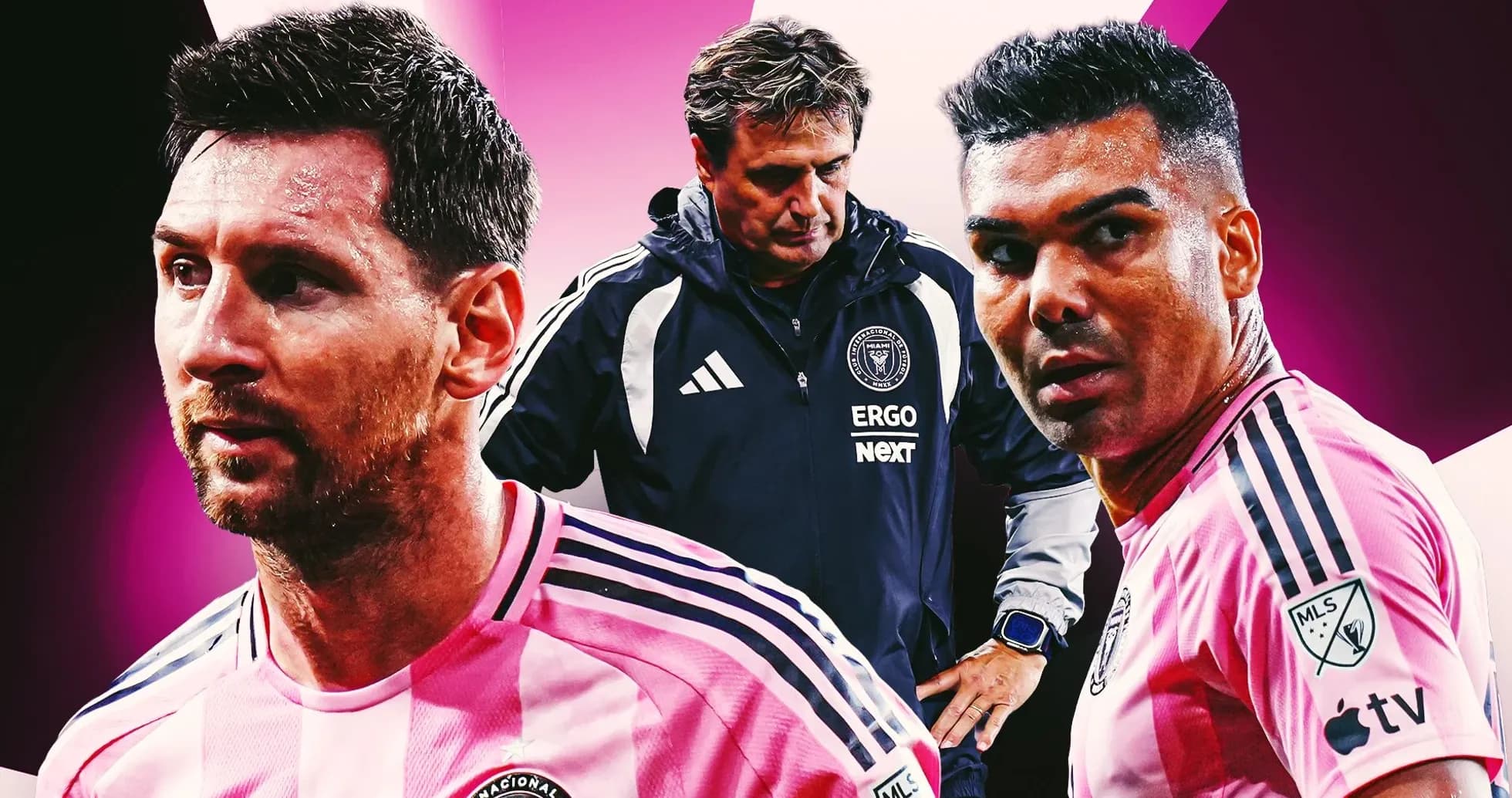
Inter Miami’s current reality is brutally simple: take Lionel Messi out of the equation, and what’s left looks painfully ordinary.
Saturday night in Nashville hammered that point home. The 4-1 defeat was not some freak scoreline. It was a dissection. Miami hogged the ball, but every turnover felt like an invitation. Nashville accepted, over and over again.
Hany Mukhtar, one of MLS’ most ruthless No.10s, toyed with them. He drifted into space, dictated tempo, then cut them apart. Two goals for him, another for Sam Surridge, and one from right back Andy Najar, who stormed forward untracked to finish as Miami’s defensive shape simply disintegrated.
In midfield, Eddi Tagseth and Matthew Corcoran didn’t just win the battle. They ran Miami into the ground. The Herons were stretched, slow, and permanently a step behind. It was a miserable night — and a revealing one.
A one-man ceiling
The formula to beat Miami is no longer a mystery. Quiet Messi, or at least crowd him, and the rest collapses under the weight of its own weaknesses.
Messi doesn’t defend. Luis Suarez, 39 and straining to squeeze every last drop out of his legs, simply can’t cover ground. Rodrigo De Paul works tirelessly on the right, but Casemiro, signed as a marquee post-World Cup arrival, looks like he’s slogging through mud in the middle of the pitch.
The drop-off at left back is just as stark. Jordi Alba’s decline was always going to come, but replacing him with Sergio Reguilón, who hasn’t played regular football since 2022, has left Miami exposed. There is no clever tactical tweak that hides all of this. At best, this is an average playoff team being dragged towards relevance by one man.
On paper, that shouldn’t be irreversible. Any clear-eyed observer can scan this roster and circle the problem areas: fresh legs in attack, dynamism in central midfield, a defensive structure that doesn’t crumble the moment Miami lose possession.
Miami have never been shy about bending around MLS’ salary constraints. They have pushed the edges, found loopholes, and executed the kind of “financial gymnastics” that infuriate rival fans and fascinate executives. Big names arrive. The bill always comes due later.
But the choices have not always been sharp. Elite central midfielders are rare and rarely choose MLS in their prime, but a world existed where a profile like N’Golo Kanté arrived instead of Casemiro. The club spent around $15 million on German Berterame, a forward who doesn’t dominate any one specific area of the game. Benjamin Cremaschi, a homegrown, energetic midfielder, publicly admitted he felt misused by Javier Mascherano. With more care, he might have become the youthful, high-energy centerpiece Miami so clearly lack.
Built to please Messi, not to outlast him
Underpinning all of this is a simple truth: this squad has been constructed first to keep Messi happy, and only second to build a sustainable winner.
It started back in 2023. Sergio Busquets and Jordi Alba were brought in, in large part, to help lure Messi to South Florida. De Paul has said his desire to play alongside Messi and stay sharp for the World Cup was central to his decision to leave Atletico Madrid. He and Messi were even holding extra training sessions in the buildup to the tournament.
Even Casemiro, a long-time rival from the Real Madrid years, framed his move in Messi’s orbit.
“For me, without a doubt, I am coming only to play with the best player of all time,” he told reporters at his introductory press conference. “I want to enjoy, I want to help him to keep winning because he is a winner. Another player is joining who wants to win, who wants to compete.”
Whether Messi is personally placing the calls or simply acting as the gravitational center hardly matters. The outcome is the same: this is a roster tailored to him, not a club built to stand when he walks away.
And that question — what Miami look like when he finally does — is getting harder to ignore.
A league about to change, a club stuck in the present
MLS is creeping toward a new era. The planned switch to a fall-spring calendar in 2027-28 will align the league with Europe and open different lanes in the transfer market. Owners have already heard proposals about loosening salary rules and allowing more spending.
This is the point where ambitious clubs can start to act like it.
Messi’s contract runs through the end of the 2028 season. On paper, Miami have him for next year’s “sprint season,” the first full fall-spring campaign, and what’s left of this one. That’s at least one full normal season plus transitional campaigns with the greatest player of all time as their anchor.
But if he decides to walk at the end of this year? The outlook darkens quickly.
Miami would be left carrying expensive Designated Players who don’t fit a post-Messi blueprint. De Paul is on DP money through 2029. So is Berterame. Casemiro currently does not occupy a DP slot, but Miami have already shown their willingness to get creative, as they did with De Paul, signing him on lower terms before upgrading the deal.
That kind of maneuvering, without Messi at the center, risks leaving the club with a bloated, inflexible cap sheet and no true star to build around.
The impossible succession plan
What Miami really need is not just another elite player. They need a new face of the franchise — someone who can carry both the sporting load and the commercial weight that Messi currently shoulders.
Julian Alvarez is the dream. He has the age, the quality, the relentless work rate, the Argentine connection, and enough star power to be the foundation of a genuine succession plan. Nobody can replicate Messi’s global pull, but Alvarez is the closest thing to a plausible heir in football and marketing terms.
The problem: he’s not just expensive. He’s in another financial universe.
Atletico Madrid paid an initial €75 million, plus up to €20m in add-ons, to sign him from Manchester City in 2024. This summer, they reportedly turned down a €150m bid from Real Madrid. For Miami, that means a transfer package that dwarfs anything MLS has ever seen — before they even talk salary.
Strip away Alvarez, and the list of realistic successors shrinks fast. If Miami decide that kind of outlay is impossible, the obvious pivot is to an American star.
Christian Pulisic and Weston McKennie are the only two who truly fit the bill. Pulisic is the most recognizable active American player. McKennie brings quality, charisma, and a personality that would resonate across the U.S. Both could front a new version of Inter Miami.
Neither can replicate the Messi effect. They don’t move global markets, ticket prices, and broadcast deals in the same way. They can be pillars; they can’t be the entire building.
A business built on one man
That’s the crux of Miami’s dilemma. Messi is not just their best player. He is their business model.
His presence drives sponsorships, ticket demand, and worldwide attention. A stand at Nu Stadium carries his name. His compensation reportedly includes ownership shares. Every part of the project — sporting, commercial, cultural — leans on him.
Miami have not yet shown how they intend to rebuild that structure once the foundation is gone.
The warning signs are already there. Before Messi arrived, Miami were one of the league’s worst teams. They had tried the star route before, with Blaise Matuidi and Gonzalo Higuaín, but neither moved the needle like Messi, on or off the pitch. Attendance sat in the bottom third of MLS. By July 2023, when Messi finally signed, Miami were effectively out of the playoff race and had never lifted a trophy. Phil Neville was gone, the roster was riddled with holes, and the club looked directionless.
The risk is obvious: once Messi leaves, they slide straight back into that version of themselves.
The transition is inevitable and will be brutal. Miami have built almost every strand of their identity around one man, who quite reasonably retains control over when his time in South Florida ends. The club, as a result, has limited room to prepare for life after him.
Yes, Messi might still have one more Herculean season in him. He could drag this flawed team to another trophy. But performances like the one in Nashville suggest that asking him to do it again, and again, with this supporting cast, is bordering on fantasy.
For now, Miami can only watch as their superstar disappears down the tunnel after each bruising defeat and ask themselves a question they’ve spent too long avoiding: when that walk is permanent, what exactly will be left?