Iran National Team Prepares for World Cup Amidst Conflict and Uncertainty
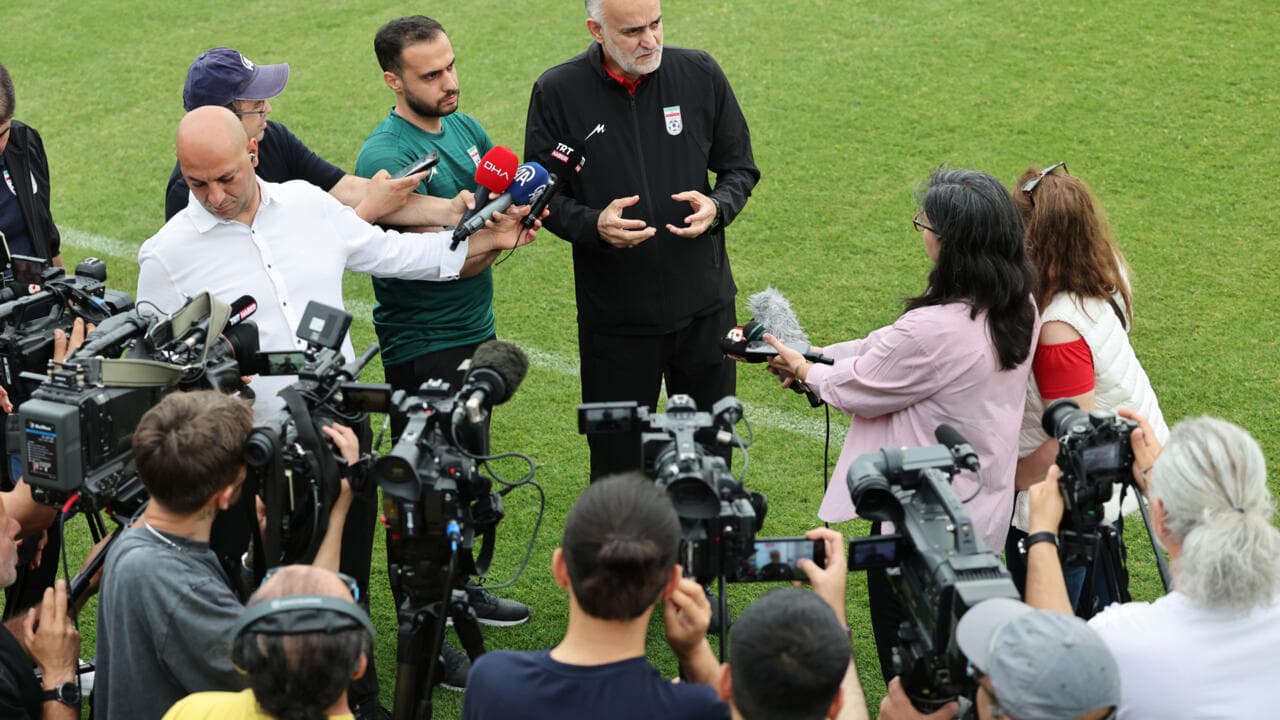
Iran’s national team slipped into Turkey on Monday, not for a friendly or a brief tune‑up, but for a long, uneasy wait before a World Cup like no other.
This is no ordinary pre‑tournament camp. The squad will spend several weeks on Turkish soil before flying to a World Cup co‑hosted by the United States, a country that, alongside Israel, began bombing Iran on February 28. The conflict has ignited a wider war in the Middle East, turning what is usually a month of football fever into a journey into a geopolitical storm.
Inside the camp, the message from the federation is one of composure and control.
“Everything will proceed properly according to the protocols and what FIFA has stipulated,” said national team director and federation vice-president Mehdi Mohammad Nabi, outlining a plan that leans heavily on football’s governing body and the structures around the tournament.
He pointed to the machinery already in motion on the other side of the Atlantic. “Inside the United States, they also have committees in place, including a security committee that cooperates with FIFA and is responsible for security matters,” he explained.
Iran have been here before, at least in footballing terms. World Cups bring layers of security, restricted zones, controlled movements. For this delegation, that familiarity is a rare comfort.
“In past years we've experienced all of this and we're fully informed about how these security committees operate at every World Cup we've participated in,” Mohammad Nabi said. “In this regard, we're very confident and we have a clear plan.”
The plan, though, still has a glaring hole: visas.
Despite the clock ticking toward kick-off, Iranian officials admit that players and staff have yet to receive US entry visas. The team intends to submit applications at the Canadian embassy in Turkey, using the camp as both a training base and a bureaucratic staging point.
Here, certainty gives way to doubt.
“We're not certain yet that all the players and staff will receive US visas,” Mohammad Nabi conceded.
That single line hangs heavily over Iran’s campaign. A World Cup squad is a finely balanced unit; the possibility that some players or staff could be blocked from entering the host country cuts to the heart of sporting integrity and FIFA’s own rules.
Mohammad Nabi did not shy away from that point. He stressed that the host nation carries clear obligations under FIFA’s statutes and competition regulations.
“One of the rules that applies to the host country is that they must provide guarantees, according to FIFA's statutes and the regulations of the competition,” he said. “One of their commitments is the visas: they have to grant the necessary visa facilities to all the teams that have qualified for the World Cup.”
The expectation from Tehran is that football’s institutions will hold firm.
“And FIFA has made arrangements so that the host country will provide the necessary cooperation to teams like Iran in this area,” he added, framing the issue as a test of the guarantees that underpin every World Cup.
While the paperwork drags on, the football calendar remains fixed. Iran will open their Group G campaign against New Zealand in Los Angeles on June 15, a fixture that, on paper, offers a chance to start fast. Belgium await next in the same city, a heavyweight clash that could define the group. Egypt follow in Seattle, a match that may decide who survives the first round.
The team’s base will be in Tucson, Arizona, far from the coastal glare of Los Angeles and the rain of Seattle. There, in the desert, Iran will attempt to carve out a bubble of normality: training sessions, tactical meetings, recovery work, all against the backdrop of a war involving their own country and the political tension of playing on American soil.
For now, the players run and sweat in Turkey, trying to think about New Zealand’s back line and Belgium’s midfield rather than air raids and visa stamps. The federation leans on FIFA’s promises. The schedule does not move.
The question is whether world football’s biggest stage can still be a neutral ground when one of its protagonists arrives from a nation under bombardment, fighting for both a place in the last 16 and the right simply to walk out of the tunnel.