Iran Faces Protests and Tension at World Cup 2026 Opener
By the time Iran walk out at SoFi Stadium to face New Zealand, the football will already feel like a sideshow.
This is no ordinary World Cup opener. It is the first time in the tournament’s 96-year history that a host nation is at war with one of the participants, and Iran’s campaign in the United States has been dragged into a vortex of geopolitics, internal dissent and raw anger from its own people.
A team on edge before a ball is kicked
Iran’s preparations have been battered from every angle. Captain Mehdi Taremi laid bare the strain as he spoke ahead of the game, describing a tournament that has felt heavy from the moment they landed.
“I have felt the tension from the first moment we arrived at this World Cup,” he said, pointing to the impact of his nation’s war with the US. Iran have been forced to move their base to Mexico, visa complications have hit members of the delegation, and travelling fans have even had match tickets stripped away.
“This kind of tension, it undermines that joy and it undermines the message of Fifa and our people, which is that football brings about peace. I feel like this World Cup could have provided a better atmosphere than it has.”
For a senior player to speak so starkly on the eve of a World Cup opener tells its own story. The mood around this team is not simply tense. It is combustible.
Protesters promise “hell” in Los Angeles
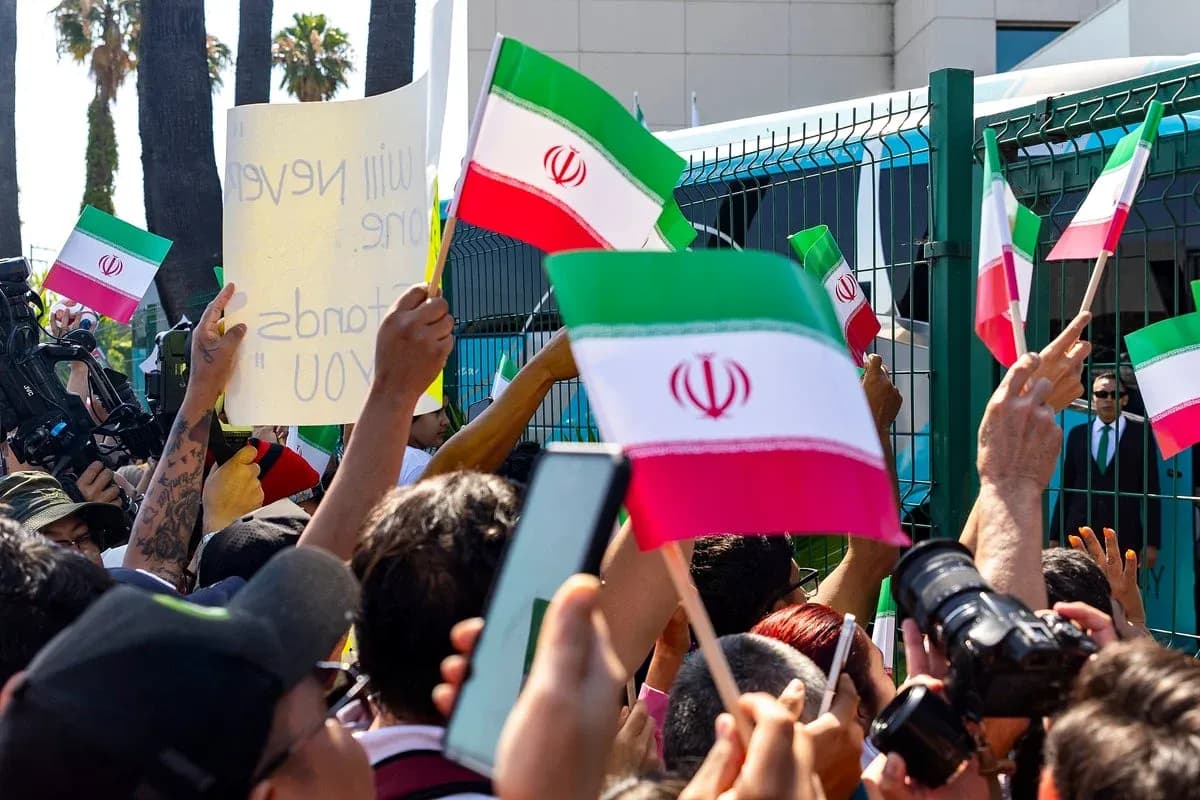
Outside the camp, the fury is building. Iranian protesters in the US, long opposed to the ruling regime, have targeted this match as their stage.
At SoFi Stadium in Los Angeles, demonstrations are planned both inside and outside the arena. Protesters intend to boo the anthem, turn their backs on the team and reveal pre-revolutionary Iranian flags – symbols Fifa currently prohibits inside stadiums.
“We’re going to make it hell,” one activist told the Daily Mail, explaining how groups from San Diego, Orange County and across Los Angeles are travelling in to confront the regime’s flag and anthem. “We’re going to boo the anthem that is going to play. We're going to turn our backs during the anthem so we will have our flags showing.
“I know Fifa banned it [the flag] but we will make a way to get it in. So we're going to see this flag, not the terrorist regime’s flag.”
For many in the diaspora, this is not about football at all. It is a rare, global platform to challenge a government they accuse of brutality, now locked in a war with the host nation.
The order from Tehran: stop the game
The protests will not just be noise in the background. They could directly affect the match itself.
Iran head coach Amir Ghalenoei has been given explicit instructions from the country’s government: if pre-revolutionary flags are brandished or if negative chanting against the regime is clearly audible, he is to stop the game.
That surreal possibility hangs over the night in Los Angeles – a World Cup match potentially halted on political orders from thousands of miles away.
Ghalenoei tried to push the politics to the edges during his press conference on Friday, insisting the squad’s focus must remain on the pitch.
“We don’t pay attention to any of the hype and anything that goes on around us,” he said. “We are here to represent the respectful people of Iran, be it the Iranians inside Iran or the Iranian diaspora.
“We are not political people... football is separate from politics.”
The words are familiar. The reality is not. When a coach walks into a stadium knowing he may be required by his government to intervene mid-game, the line between sport and state has already been erased.
A World Cup like no other
The tension around Iran’s opening fixture is a microcosm of a tournament that keeps veering into the surreal.
Kieran Jackson has already framed this as perhaps the most perilous World Cup campaign in history for any nation, and the description does not feel exaggerated. The hard fact is stark: never before has a competing country gone to a World Cup on the soil of a nation it is at war with.
Now layer on top the internal dissent, the threat of mass protest, the possibility of a match being brought to a standstill at the behest of a government watching from afar. It is a cocktail Fifa has never had to manage.
Tonight in Los Angeles, the anthem will play, the boos will rise, the flags will be smuggled in or seized at the gates, and somewhere in the middle of it all, 22 players will try to play a football match.
How long that match runs uninterrupted, and what it looks like if it doesn’t, will say as much about this World Cup as any goal scored in the group stage.