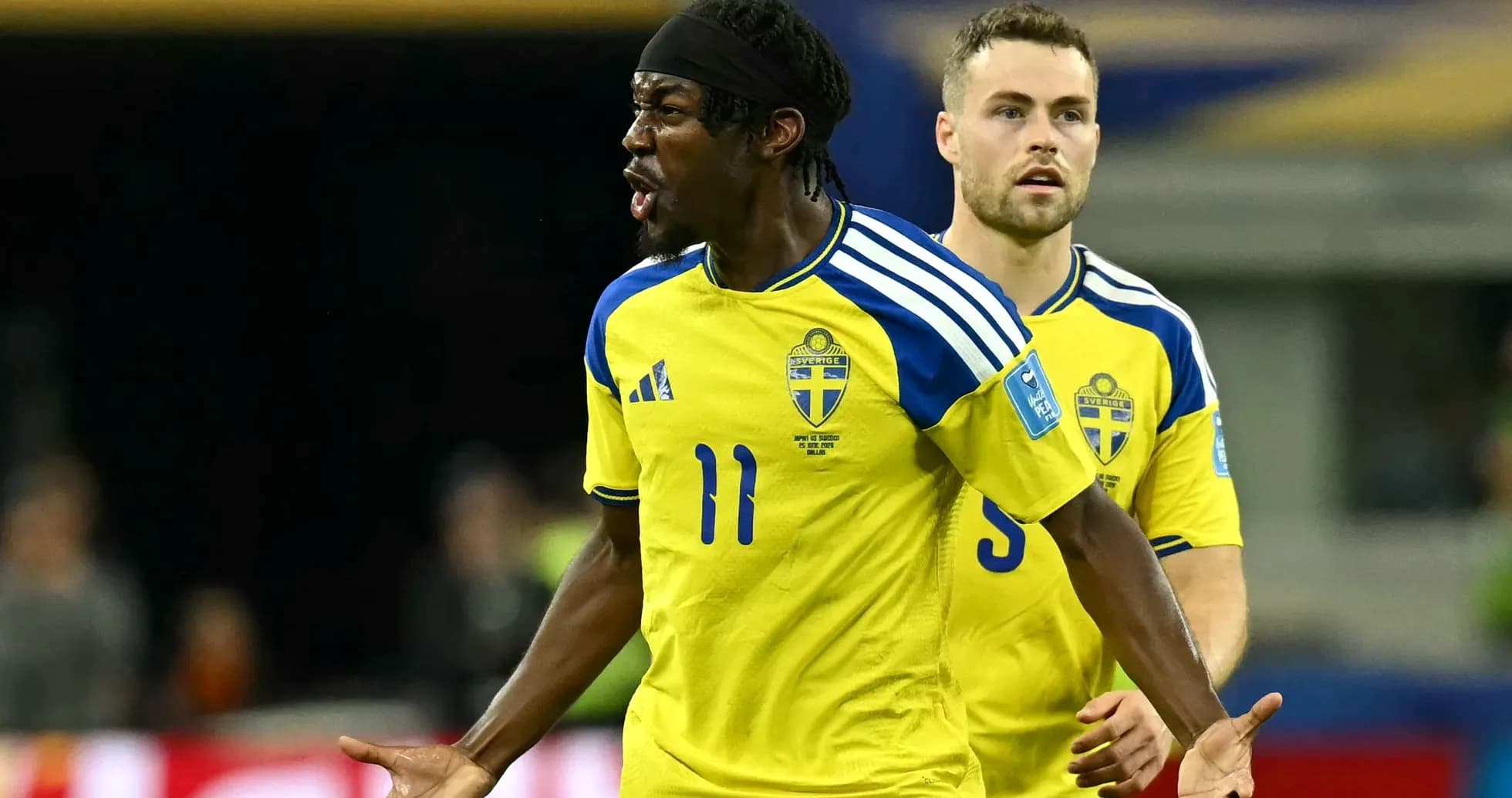
Japan vs Sweden: Elanga's Equalizer Sparks Thrilling Match
Japan and Sweden spent 45 minutes shadowboxing. The ball moved, the players ran, but the game never truly caught fire. Then the second half began, and everything changed.
Maeda strikes, Elanga answers
On 56 minutes, Japan finally pierced the tension. A sharp, incisive move sliced through Sweden’s lines, and Daizen Maeda arrived to apply the finishing touch. It was a goal that felt like a release as much as a breakthrough, the product of the first genuinely slick passage of play in a match that had been stuck in low gear.
Sweden could have sagged. Instead, they snapped back.
Almost immediately, Anthony Elanga dragged them level with a moment of pure individual quality. Cutting in from the right, the Newcastle United forward shifted the ball onto his weaker left foot and unleashed a superb strike, arrowing past the keeper. One swing, one clean connection, and Sweden were back in the game – and, as it turned out, back in the tournament.
It was Elanga’s second goal of the competition, and it carried far more weight than a simple equaliser. That strike ultimately delivered the point Sweden needed to squeeze through as one of the best third-placed sides from Group F.
Chaos, calculations and a crossbar rattled
From there, the match frayed into something far more frantic. Japan probed, Sweden countered, and the final minutes turned into a test of nerve as much as quality.
Alexander Isak almost tore up the script entirely. Late on, he rose to meet a cross and sent a thudding header crashing against the crossbar, inches from becoming the hero and sending Sweden through in far more comfortable fashion. The woodwork shook; so did Swedish hearts.
On the touchline and in the dugout, calculators were effectively out. Staff and substitutes scrambled through permutations, eyes flicking between the pitch and the group standings. A goal either way could have rewritten everything.
Out on the grass, Elanga had no interest in arithmetic.
“I was just screaming: ‘Come on, we can go for more’,” he admitted afterwards. He revealed he had no idea Sweden were already safe as the clock wound down. The forward simply ran, chased, pressed, and kept demanding more. “I’m glad we’re through, I didn’t know that at the end,” he said, a mix of relief and amusement in his words.
He even blanked the instructions coming from the sidelines. Veteran coach Sebastian Larsson and other staff members tried to relay the situation, but Elanga’s response was to keep pushing.
“I think they were trying to scream to me,” he explained. “I obviously wanted to keep running. I got cramp at the end but didn't want to stop running. I'm happy and the whole team is too.”
Isak could scarcely believe it. He admitted he gave his teammate “a bit of a telling-off” once he realised Elanga had been oblivious to the stakes and the standings. “He was a little frustrated towards the end of the match, and you can understand why now,” the Liverpool striker sighed.
Manager Graham Potter saw the funny side. “That explains a few things. We couldn't have been clearer... Bless him! But I love him,” he said with a chuckle. Captain Victor Lindelof joined in the teasing, joking that Elanga must have missed – or slept through – the pre-match briefing on permutations: “He can't have been awake enough.”
Behind the jokes, though, sat a serious point: Sweden had stared at the possibility of elimination and refused to blink.
Potter’s gamble pays off
Potter did not drift into this decisive fixture. He reshaped his side.
Elanga came into the starting XI, while Jacob Widell Zetterstrom was handed the gloves in goal. It was a bold show of faith in the squad’s depth after a bruising, heavy defeat to the Netherlands in their previous outing.
The response he demanded arrived.
“We analysed the game against the Netherlands. We had to defend the box and wide areas better [today],” Potter said. He explained the decision to turn to Widell Zetterstrom: “We decided to use Jacob's attributes because I think he's a fantastic goalkeeper. His distribution was very impressive. Anthony comes in and offers a counter-attack threat and his pace is destabilising for the opponent.”
Sweden were not flawless, but they were far more resilient. They bent under pressure, especially after Maeda’s opener, yet refused to break. When the chance came, Elanga seized it. When the storm arrived late on, they clung to their point.
By the final whistle, they had done enough. Sweden finished third in Group F, tucked in behind the Netherlands and Japan, but still very much alive.
A daunting path, but no fear
Progress comes with a price. By landing in third, Sweden have at least dodged a direct collision course with Brazil, who will now take on Japan. The reprieve is relative. There is no soft landing from here.
Potter’s side are likely to face the winner of Group I, in a tie pencilled in for June 30 and dependent on the outcome of the looming clash between France and Norway. Germany, who topped Group E, also lurk as a potential opponent. These are the names that define tournaments, the fixtures that can make or break reputations.
Elanga, though, refused to flinch.
“Both are good teams. It will be a challenge. All teams are good, but we are ready for what comes,” he insisted. There was no bravado, just a clear-eyed acceptance of the level Sweden must now reach.
Three games. Four points. A balanced goal difference. After the shock of that heavy loss to the Netherlands, the Blue and Yellow have steadied themselves and rediscovered a platform.
They have survived the group. Now comes the real question: can this blend of youthful fearlessness and hardened experience turn survival into something far more memorable?