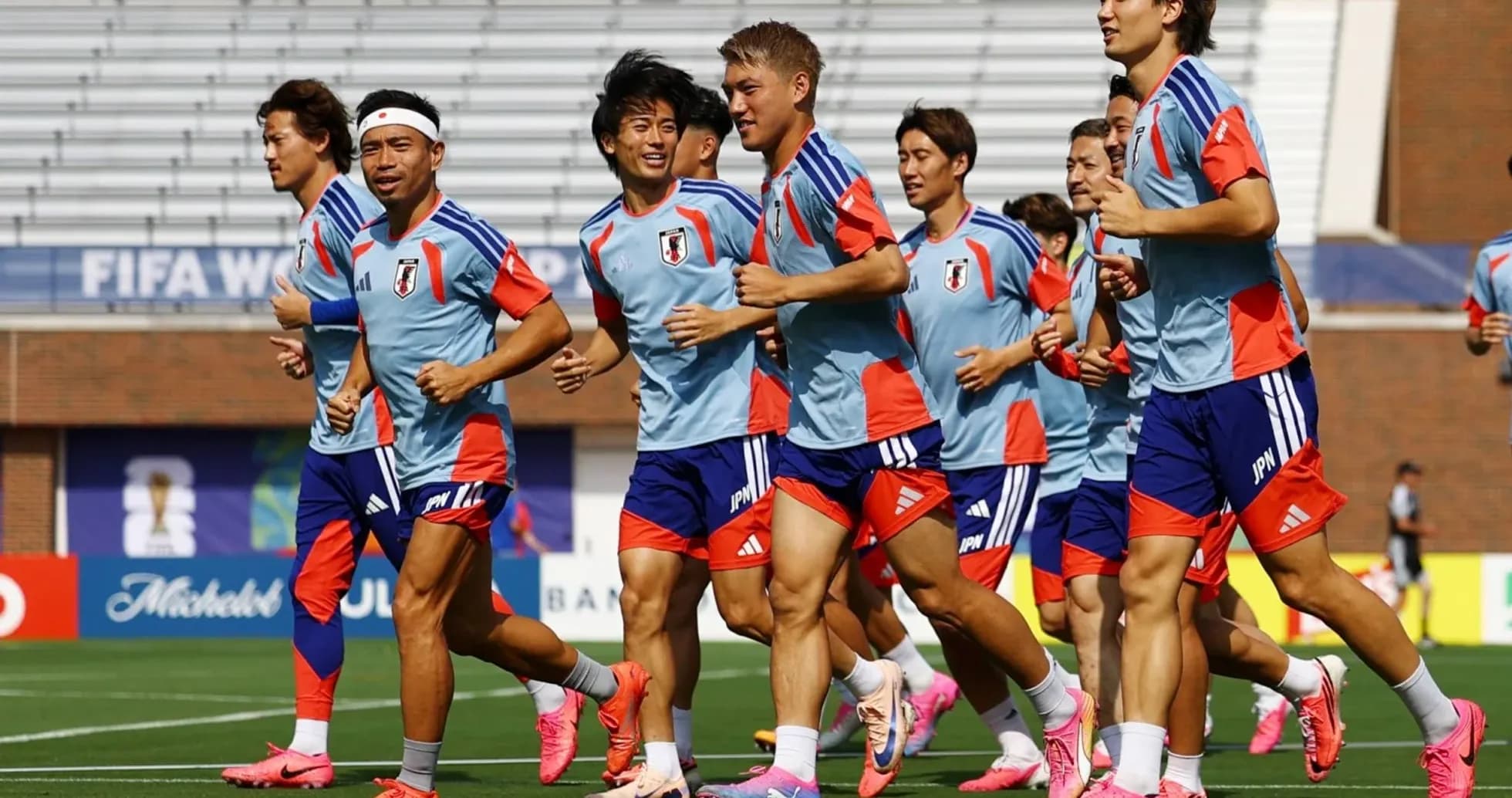
Japan's Resilience in World Cup Chaos: Aiming for Group Top
Hajime Moriyasu has seen enough World Cups to know that plans rarely survive the first whistle. This one has already cost him a captain, a creator, a winger and now, almost certainly, his brightest young star. Yet Japan stand on the brink of the knockout rounds, playing with a clarity that belies the chaos around them.
Japan bend, don’t break
A 4-0 dismantling of Tunisia on Saturday did more than boost goal difference. It underlined how quickly this patched‑up Japan have found their rhythm. They had already shown their resilience by fighting back twice to draw 2-2 with the Netherlands, and those four points have left them within touching distance of the last 32 ahead of Thursday’s Group F finale against Sweden.
All this without a spine that, on paper, should have defined their tournament.
Former captain Wataru Endo never made it to the starting line. Kaoru Mitoma, the winger who stretches defences and drags markers out of shape, is out. Takumi Minamino, the playmaker meant to stitch everything together between the lines, is missing as well. Now Takefusa Kubo, the man expected to carry much of the creative load in their absence, is set to miss the Sweden clash after a knee problem picked up against the Dutch.
On most teams, that list reads like a ready‑made excuse. Moriyasu has turned it into a rallying point.
“Anyone can play with anyone else, that’s the readiness we wanted to ensure,” he said, laying bare the philosophy that has kept Japan steady while the personnel churns. It sounds simple. It rarely is.
“When there’s a change over in the team, it’s not that simple or easy to play with different players and achieve good results or be successful,” he added. The last two matches suggest his squad have embraced that challenge rather than shrunk from it.
A squad built for turbulence
Moriyasu’s gratitude was directed as much at the process as at the scorelines.
“I’m very grateful that the other coaches and the players have been developing themselves towards such a great achievement,” he said. Japan have not just survived; they have functioned. Tactically sharp. Collectively tuned in.
“In the last two matches the team has functioned tactically and with the teamwork they are developing and increasing their readiness.”
That “readiness” has become Japan’s defining trait. Interchangeable parts, consistent output. Players stepping into unfamiliar roles without the performance dropping off. In tournament football, where injuries and suspensions can rip through even the most carefully constructed squads, that flexibility is gold.
With four points already banked, Japan are well placed. Even a defeat to Sweden may not be enough to deny them a place in the last 32. But Moriyasu has no interest in creeping through the back door.
Eyes on top spot, not just survival
“We are basically thinking of winning, that’s what’s in our mind,” he said, dismissing any suggestion that Japan might play the percentages. The ambition is clear: top the group, and do it on their own terms.
“If possible we would like to advance on top of the group by scoring as many goals,” he continued, before immediately drawing a line in the sand. “But distorting the balance of the team is more of a risk. We will see.”
That balance has become non‑negotiable. Japan will chase the win, but not at the cost of the structure that has carried them this far. Open the game up too much against Sweden and the punishment could be swift.
Moriyasu is under no illusions about what lies beyond Group F either.
“We don’t know what kind of team we will come up against in the next round,” he said. The bracket can twist in an instant. Seedings mean little once the knockout phase begins. His answer is to control the controllables.
“What’s important is that we are solid and that we play against a team that we are able to deal with no matter what appears. First we want to think about ourselves and how we play tomorrow. In terms of our target we would like to win and qualify for the knockout stage on top of the table.”
The message is consistent: identity before opponent, performance before permutations.
Sweden’s wild swings and two looming threats
If Japan have been steady, Sweden have been anything but. A 5-1 thrashing of Tunisia suggested a side ready to roll through the group. A 5-1 defeat to the Netherlands in their next outing ripped that image apart.
Which version turns up on Thursday is anyone’s guess. The one constant is their front line.
Alexander Isak and Viktor Gyokeres bring a threat that Japan have not yet faced at this tournament: power, movement, and a ruthless edge in front of goal. They can turn a half‑chance into a problem, a loose pass into a sprint back towards their own box.
Moriyasu, though, chose not to dwell on the danger. He framed it as a test to embrace.
“They’re world class, wonderful strikers so I would like us to enjoy facing these players,” he said. Enjoy might sound like an odd verb for defenders staring down that kind of firepower. For Moriyasu, it fits the bigger picture.
“It’s going to be a good opportunity for our players to develop themselves further.”
That is the tightrope Japan now walk. One result from safety, one performance away from making a serious statement. They have already proved they can absorb the loss of leaders and creators. The next question is sharper, more ambitious: can this adaptable, unified group not only survive Sweden’s volatility and star forwards, but stride past them and seize control of the group?