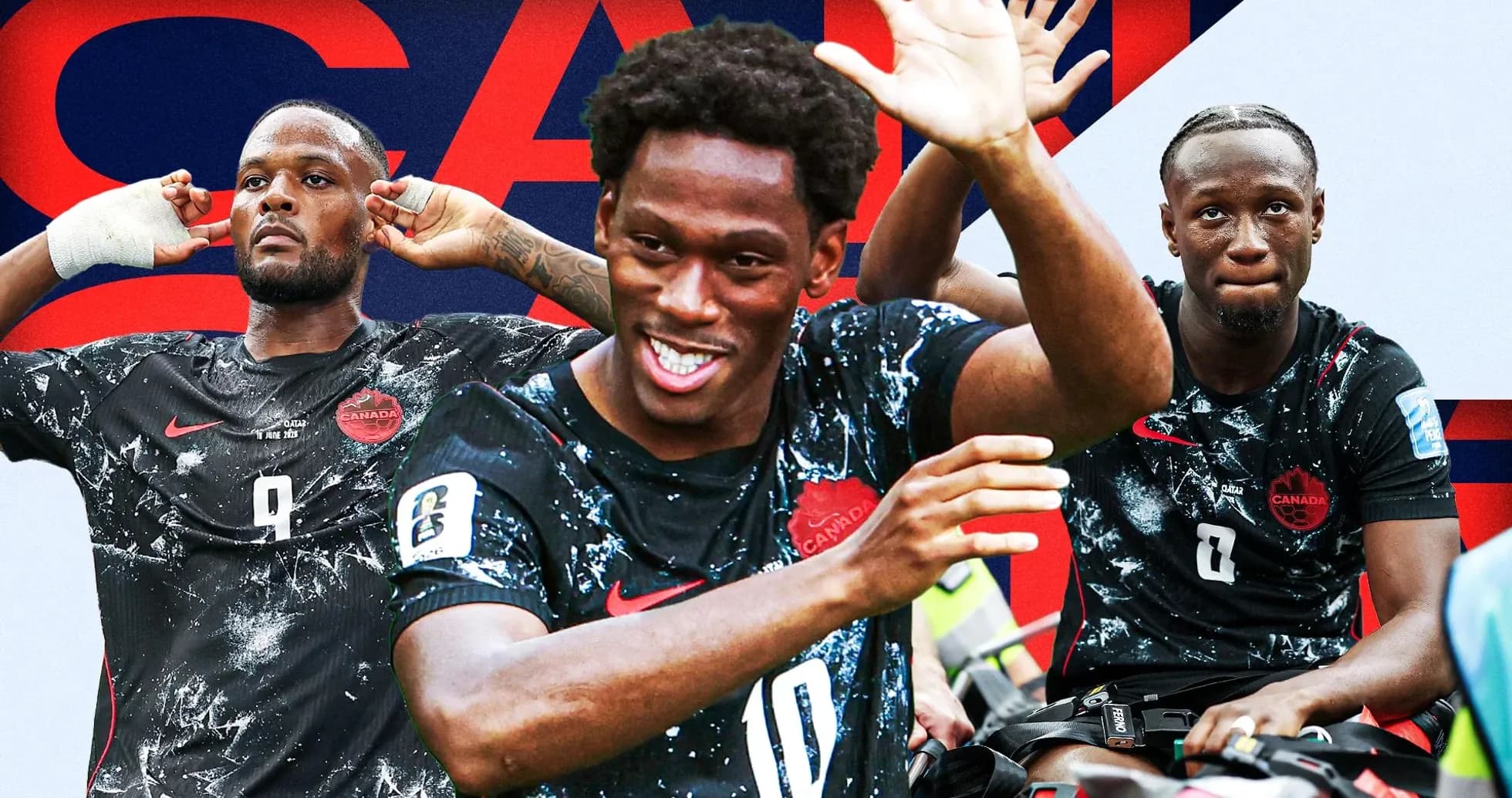
Jonathan David's Hat-Trick Powers Canada to Victory Over Qatar
Jonathan David walked into this World Cup week with questions swirling and criticism humming in the background. Ninety minutes against Qatar later, the noise had been drowned out by the sound of the net.
The Juventus striker, withdrawn before the hour mark in the opening draw with Bosnia and Herzegovina, responded in the way he knows best. Not with interviews or gestures. With goals. Relentless, ruthless goals.
David answers the call
From the opening whistle, David looked like a man intent on rewriting the narrative. He hunted Qatar’s back line, chased lost causes, snapped into duels, and gobbled up second balls. The tone of his night was set long before the first roar from the Canadian fans.
The breakthrough came in the 16th minute. David thundered a right-footed volley that Qatar’s goalkeeper could only parry, and Cyle Larin reacted first to lash home his second of the tournament. The striker who had been dropped in the first game now has a goal in each match. Another doubter silenced.
The pressure didn’t ease. Canada’s right flank, a carousel of movement and aggression, carved Qatar open minutes later. Tajon Buchanan and Alistair Johnston worked a sharp triangular exchange, slicing through the defensive line. David arrived on cue, took the final pass, and passed a perfectly placed shot into the corner. His first World Cup goal, delivered with the calm of a man who had been there for years.
The roles reversed later. Larin took aim first, his shot forcing yet another rebound, and David stormed into the box to bury it. Qatar’s back line, already reeling, had no answer to the constant waves of red.
And still he wasn’t finished.
In the dying moments, with Qatar already beaten and the scoreline swollen, David broke through once more and rolled in Canada’s sixth. Hat-trick complete. History made. He became the first Canadian to score three in a World Cup match, and did it on a night when his reputation was on the line.
“It was amazing. After every goal, it got louder and louder,” David said of the crowd. “It gave us motivation to get the next goal and the next goal.”
This is what Canada had been waiting for. Their all-time leading scorer, now on 42 international goals, finally carrying his club form into the biggest stage, finally playing with the conviction a nation had been begging to see.
“That’s a player, that's a striker, that's a goal scorer. I never had any doubts in Jonny, and the one thing I said is, for us to really be successful as a team, we need Jonny driving what we do in the attacking part of the pitch,” head coach Jesse Marsch said. “He set up the first goal with the shot, then he obviously scored the hat trick, but I thought he was fantastic in general.”
On a night that should have been pure celebration, though, the soundtrack shifted.
Koné’s cruel blow
Canada left with three points and a statement win, but they may have lost the heartbeat of their midfield.
Ismaël Koné, whose elusive touches and daring carries have been central to Canada’s transitional play, went down in a moment that silenced the stadium. His ability to thread passes through tight gaps, to pierce defensive lines and play under pressure, has no like-for-like replacement in this squad.
There was no official medical update, but the tone around the camp was grim.
“You could hear the bone snap,” Marsch said, confirming Koné had been taken to hospital for surgery. “Your heart goes out to him. Everybody’s shaken for him.”
Canada’s World Cup build-up had already been shredded by injuries. The “next man up” mantra isn’t a slogan for this group; it’s a survival plan. Alphonso Davies is on his way back, and Samuel Saliba came off the bench to score from a free kick after Koné’s exit. They’re strong options, good profiles, but none bring the same blend of bravery and vision on the ball that Koné supplied.
“For us to be at our best, he's a big part of it. But, look, it's given us now something else to play for,” Johnston said. “That's what this team is all about, it really is a brotherhood. So it's really difficult to see one of your brothers go down. But, look, if we needed any extra motivation for this tournament, we got it now.”
The mood on the pitch told its own story. As Koné lay on the turf, Johnston – one of the most vocal figures in the dressing room – moved between teammates, consoling, steadying, all while glancing anxiously toward the stricken midfielder. Leadership isn’t always about the huddle and the speech; sometimes it’s about how you react when the air goes out of the stadium.
Johnston walks the tightrope
Johnston had entered the night on a disciplinary knife-edge. One yellow card, and he would miss the Group B finale against Switzerland. Many players in that position retreat into themselves, take fewer risks, play within a narrower frame.
He did the opposite.
The Celtic fullback attacked the game with an edge, throwing himself into wide overloads with Buchanan, Koné, and David down the right. He was a constant outlet, a constant nuisance, a constant decision for Qatar to solve. They never did.
Johnston picked up the assist on Canada’s second goal, then kept going. He finished with four accurate crosses and six big chances created, numbers that underline just how much of Canada’s best work flowed through his flank. All of that, and he managed to avoid the booking that would have ruled him out of the Switzerland match. With cards wiped before the Round of 16, Canada will have their right-back general available when it matters.
“We knew that the idea was kind of to build up against the Akram Afif. He's a maverick; you could see some of the quality he had on the ball. Defensively, though, the idea was to play against him, make him defend, because we didn't think he was going to,” Johnston explained. “We're trying to find that balance of me being in the defensive three in a build-up, but then also give me the license, as I have with my club, to really join in and help Tajon.”
The plan worked. Afif had flashes, but Qatar never found a foothold. Every time they looked up, Canada were running at them again.
Qatar unravel under the lights
Qatar arrived at this tournament still carrying the scars of finishing bottom at their home World Cup four years ago. Against Switzerland, they had shown grit and structure, nicking a late goal to snatch a 1-1 draw and a sliver of belief.
Canada ripped that away.
On Thursday, Qatar looked overwhelmed, underprepared, and unable to match the tempo or intensity of the co-hosts. They were dragged into a game they didn’t want to play and never found a way out.
Head coach Julen Lopetegui, a man who has managed some of the sport’s biggest clubs and biggest nights, could not steady his team. The defensive shape crumbled under pressure, the composure evaporated, and by the final whistle, Qatar had slumped to a level no other side had reached at this World Cup.
They will now almost certainly exit Group B and face their final match without two starters. If this performance is any indication of where the program stands, the road back to a World Cup stage could be long.
Larin, David, and a shifting narrative
The story of Canada’s attack across these opening games has been one of rotating skepticism.
Before the opener against Bosnia, the noise swirled around Larin. Was he still the man to lead the line? Marsch answered by dropping him from the starting XI for Tani Oluwaseyi. Since then, Larin has scored in both matches, including that early strike against Qatar.
As soon as he quieted his critics, the conversation swung to David. Where were the goals? Where was the killer edge?
All of that talk evaporated under the weight of a hat-trick. Between them, Larin and David have gone from question marks to exclamation points in the space of two games.
Canada’s 6-0 win did more than just boost goal difference. It showed that this team can do more than survive on the World Cup stage. They can dominate. They can impose their game, control the tempo, and overwhelm opponents – and they can do it without their captain and superstar.
Davies watched this one from the sidelines, granted another week to sharpen up before the showdown with Switzerland for top spot in the group. His return, combined with a rampant forward line and a right flank humming with confidence, gives Canada a platform few would relish facing.
But everything now orbits around a single, painful question: can this group hit its ceiling without Koné?
Canada will move on with a striker reborn, a right-back in full voice, and a dressing room united around a fallen teammate. The goals against Qatar lit up the night. The real test begins with how far they can carry Koné’s absence into the tournament’s biggest moments.