Jude Bellingham's Reflections on Euro 2024 and England's Brotherhood
Jude Bellingham leans back in his chair in the United States and doesn’t bother dressing it up. England might have reached the Euro 2024 final, but behind the scenes, he says, the picture was far less impressive.
“At the Euros I think we got a few things wrong off the pitch, I don’t feel the group connected as well as it could have for a number of reasons,” he admits.
For a player who has become the heartbeat of this England side, it’s a stark assessment of a campaign that, on paper, looked like progress.
England stumbled rather than strode their way to that final in Germany, where Spain finally punished them. Performances never matched the hype. The dressing room, Bellingham suggests, never quite matched the billing either.
“We were seen as one of two or three teams that could win it,” he says. “We weren’t playing well, which doesn’t help, so even when we were winning, we didn’t get the feeling that we were as happy as we should be.”
Those words cut through the myth of a united, surging camp. The late escapes tell the rest of the story. A last-gasp overhead kick from Bellingham to drag Slovakia into extra time in the last 16. Penalties required to edge past Switzerland in the quarter-finals. Another late winner to squeeze by the Netherlands in the semi-finals. Drama everywhere. Conviction, not so much.
Bellingham’s acrobatic rescue act against Slovakia instantly joined the highlight reel of England’s tournament history. Yet he confesses the memory still makes him uneasy.
“I still remember how I was feeling at the time. It always makes me feel a bit uncomfortable because it was such a bad situation,” he says. “We weren't playing well. I remember as a kid watching World Cups and Euros where we crashed out against teams we shouldn’t have gone out to and I remember thinking, ‘Wow, I’m about to be a part of one of those moments’. It shakes up the whole of English football.”
That sense of looming disaster, a familiar English tournament dread, framed one of the great goals of his career. The overhead kick didn’t just save a match; it briefly saved an era. But it also underlined how fragile things had become under Gareth Southgate by the end.
Now the mood music is different. Thomas Tuchel has walked into the job talking about “brotherhood”, about a group that lives together as much as it plays together, as he chases the World Cup this summer. The word is deliberate. Bellingham’s reflections on Euro 2024 make clear why.
Tuchel wants a tighter, tougher inner circle. Fewer silences in the hotel. Fewer invisible divides between starters and squad players. The Real Madrid midfielder’s comments are a reminder that talent and tactics are only part of the equation. Connection matters. England, he says, simply didn’t have enough of it two years ago.
Now Bellingham finds himself at the centre of a very different kind of tension: a straight fight for the No 10 role in England’s World Cup opener against Croatia on Wednesday. Tuchel appears to have put him head-to-head with Morgan Rogers for that slot behind the striker.
On the surface, that sounds combustible. Two ambitious, upwardly mobile attackers, one shirt. But the reality is more nuanced. The pair grew up in the same part of the West Midlands, played junior football together, and have carried that bond into the national setup.
“As a person, he is a top guy, he can get along with anyone, can have conversations with anyone,” Bellingham says of Rogers. “He can be a bit loud. We have debates that turn into arguments a lot. But we get on like brothers, to be fair.”
There’s the “brotherhood” Tuchel wants, already in miniature. Competition without bitterness. Edge without fracture.
“The manager has made it very clear in a lot of the times where he has spoken that we are playing for the same position,” Bellingham continues. “I know that has eased up a bit more now that he sees me playing more positions and Morgs playing more positions, but I honestly have no ill feelings when he is playing and I’m not playing.”
That last line matters. England’s recent history is littered with squads where rivalries simmered, where club loyalties and personal agendas gnawed away at cohesion. Bellingham is adamant this is different. Or at least, that it must be.
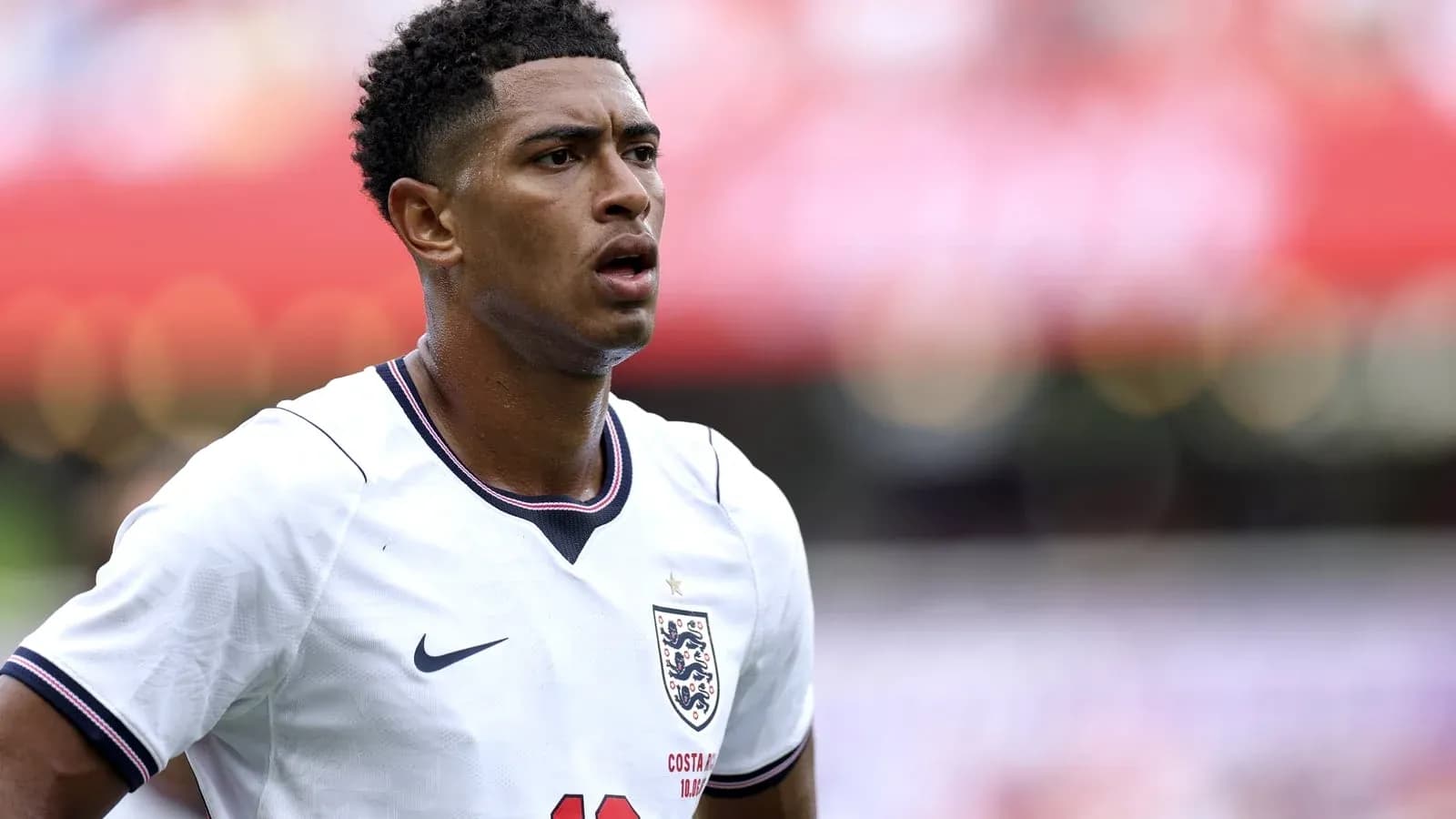
His case for starting could hardly be stronger. In the final warm-up match, a commanding, inventive display against Costa Rica underlined why he is viewed as one of the defining players of his generation. He dictated the tempo, found pockets of space that didn’t seem to exist, and played as if the No 10 shirt already belonged to him.
Yet Tuchel’s England is being built on merit and flexibility, not reputation alone. Bellingham knows it. Rogers knows it. The squad knows it. That, in itself, marks a shift from the more entrenched hierarchies of the past.
Two years on from that uneasy run to the Euro 2024 final, the same player who saved England from humiliation in Germany is now helping to redefine what the national team should feel like from the inside. The overhead kick against Slovakia will always live in the clips. The question now is whether the “brotherhood” Tuchel craves can turn those moments of rescue into a campaign of authority – starting against Croatia, and stretching all the way through a World Cup England have long believed they should be capable of winning.