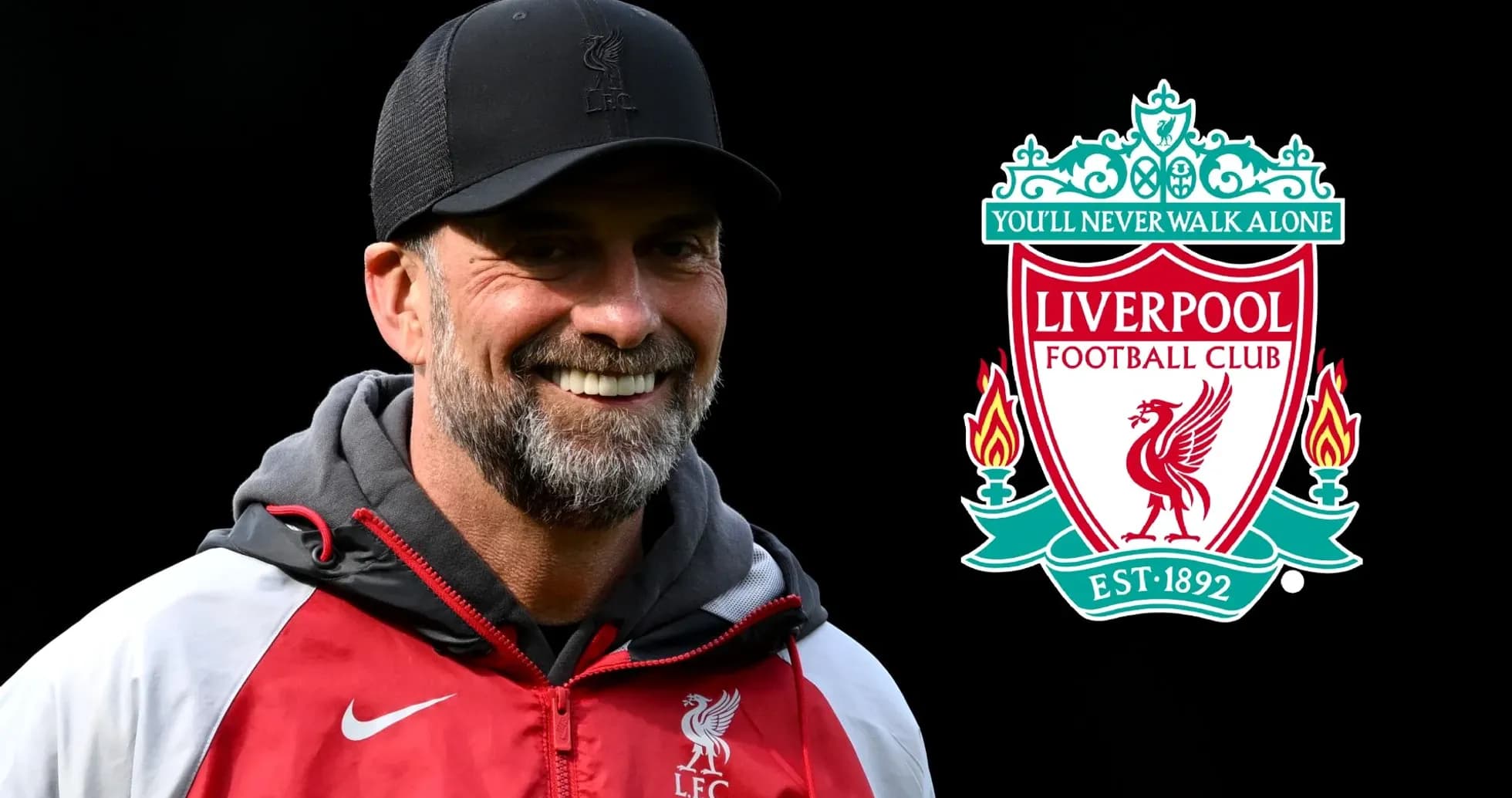
Jurgen Klopp's Future: The Risks of a Liverpool Return
Jurgen Klopp has been out of the Liverpool dugout since 2024, but he has never really left the conversation. Not in a city that still sings his name, not in a sport that feels a little flatter without him prowling the touchline.
He chose to walk away early, cutting short his Anfield contract to recharge and step off the treadmill of elite management. The break has been real, not cosmetic. As Global Head of Soccer for Red Bull, Klopp has swapped the daily grind of team talks and touchline tension for a broader, more strategic role. No team sheets, no press conferences, no fourth officials in his ear.
And crucially, no sign from him that he is ready to jump back in.
Others, though, are more than willing to do the talking for him.
The pull of Anfield – and the risk
Speculation has already sketched out a potential route back. Real Madrid’s name has surfaced, with the Spanish giants reportedly eyeing him as a long-term answer once Xabi Alonso’s spell ends. In England, the questions are more pointed: what happens if Arne Slot, only a year on from delivering the Premier League title, fails to secure Champions League football? Would Liverpool dare to pick up the phone?
Emile Heskey hopes not – at least, not for Klopp’s sake.
Asked by GOAL whether a return to Anfield should tempt the German, the former Liverpool striker, speaking in association with Freespins.us, did not hesitate: “I think it would be a risk to his legacy. I think if he really wants to get back into it, he'd probably look to go somewhere else.
“Why risk that? It would always be a shadow over every manager. We've seen it down the road with Sir Alex [Ferguson] at Manchester United. How long ago was that? Over 10 years. That's still a shadow hanging over them. The manager has to figure out how to get the best out of his players in the formation that he wants and it fits the way Liverpool are.”
Heskey’s warning cuts to the heart of the issue. Klopp did not just win trophies at Liverpool; he rewired the club’s identity. Anyone who follows him, or any version of him, will always be measured against the man who turned doubters into believers. Coming back, in that context, is not just romantic. It is dangerous.
2026 talk – and a boardroom reality check
Stan Collymore, another former Liverpool forward, also doubts the story ends with Klopp marching back into Anfield in 2026.
He has already laid out, in stark terms, what would have to happen for the Liverpool hierarchy to even consider it. Speaking to GOAL, Collymore said: “Unless it was a case of, in the summer, Jurgen Klopp says ‘I’m coming back to football and Liverpool is the only club for me’ - which would undoubtedly prick the ears of the Liverpool board. If he said ‘I’m coming back but I want a new challenge’, I don’t think the Liverpool hierarchy would go chasing for him. I think they would give Arne Slot the opportunity to be able to get it right, because he has won the league in his first season.”
That is the crux. As long as Slot carries the credibility of a title winner, Liverpool’s board can argue they are not a club living in the past, even if the stands still sing about it. Klopp would have to force the issue, declare Liverpool as his only destination, to shift that calculation.
And right now, there is no sign of that declaration coming.
“You can never say never”
Not everyone is ready to close the door. Gary McAllister, a cult figure at Anfield and a man who understands the emotional pull of the club as well as anyone, leaves room for the improbable.
“You can never say never on things like that,” he told GOAL, before drifting back to the early days of Klopp’s rise. “When I watched him when he was managing Dortmund, the rapport with the Yellow Wall and how it's a big industrial city, Dortmund, and he was just custom made for that type of job - the city he was in, the fans he was working for, and the fans he was trying to please. Then you roll the years forward and he comes to Liverpool and again, it's the perfect storm. Again, for me, you've got a charismatic leader, somebody with a very massive personality, feels the same way as the Kop. Again, very similar to the Yellow Wall at Dortmund.
“For me, it's always very difficult to go back to somewhere where you’ve been unbelievably successful. But you can never say never. It's a crazy game and it's getting crazier as we speak. But for me, I think the game in general misses Jurgen Klopp.”
McAllister touches on something beyond tactics and trophies. Klopp fits certain clubs in a way that feels almost civic, not just sporting. Dortmund and Liverpool are industrial, emotional, tribal. He plugged into that energy and amplified it. That is hard to recreate elsewhere – and even harder to revisit without diluting what went before.
Yet football has a way of circling back on itself.
A game that misses its showman
For now, Klopp enjoys something managers rarely get: time. Time with his family, time away from the relentless scrutiny, time to breathe. McAllister recognises that, too.
“He's obviously got the ability to spend more time with family and stuff, because you know how demanding management is. So the job that he's in at the moment, I'm assuming it gives him more time to be with family. But people who are involved in football just love being on the grass at a training ground. I'd like to see him back wherever it is, because I think the game in general has missed him.”
That last line lingers. Wherever it is.
Real Madrid. A new project somewhere else in Europe. A national team. Or, against all logic and all warnings, a second act at Anfield.
Right now, Klopp is the one man keeping that door firmly shut. The sport, and a fair portion of Liverpool’s fanbase, will keep rattling the handle until he decides whether he wants to walk through it again.