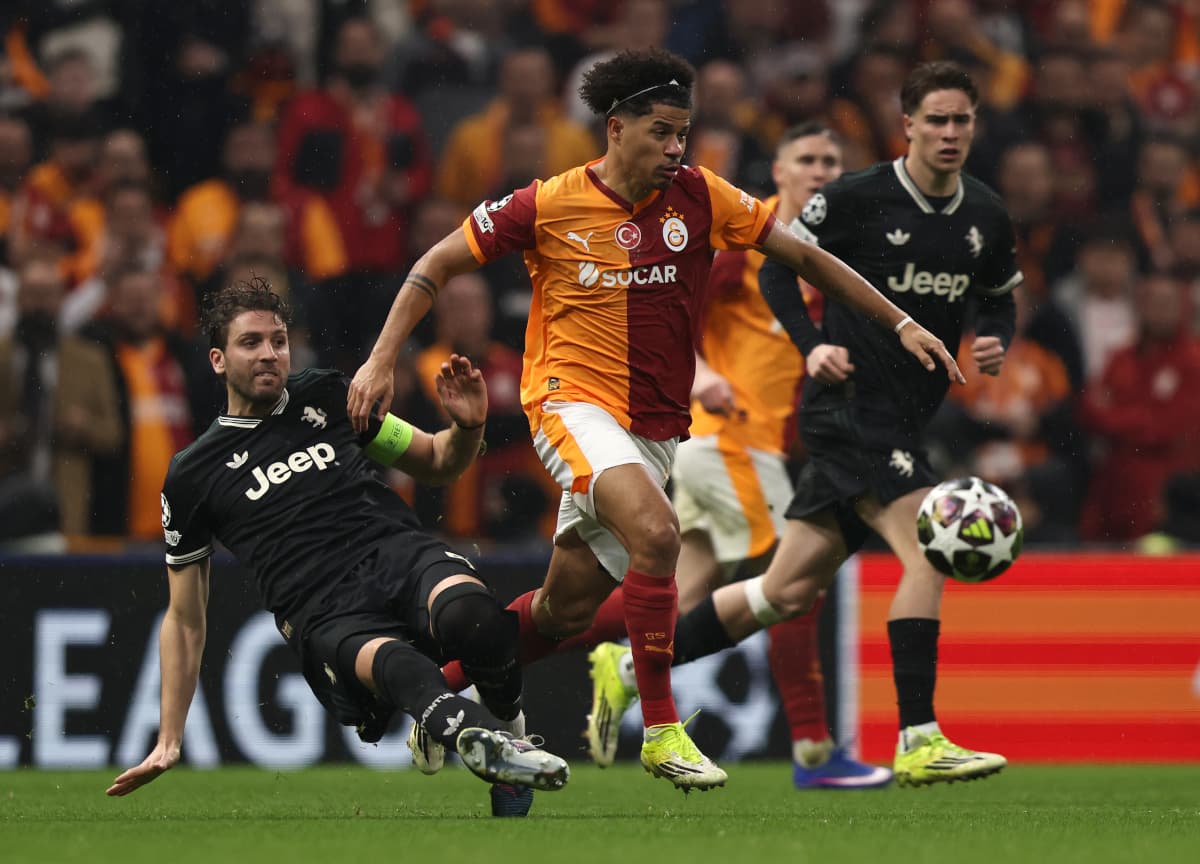
Juventus vs Galatasaray: Tactical Analysis of the Strategic Battle
Across 120 minutes, this was a clash between territorial control and transitional punch. Galatasaray edged the ball with 53% possession and a higher passing volume (576 passes at 83% accuracy), pointing to a game plan built on structured buildup and circulation. Juventus, with 47% possession and fewer passes (498 at 79%), were less focused on long spells on the ball and more on turning recoveries into direct pressure. The turning point in the strategic balance was Juventus’ red card on 49 minutes: from there, their 4-3-3 effectively became a compact, undermanned block. Yet despite being a man down, they continued to threaten, showing they controlled space and transitions more effectively than pure possession phases.
Offensive Efficiency
Juventus’ attacking approach was high-volume and penalty-box oriented. Their 28 total shots to Galatasaray’s 16, with a huge 23 attempts from inside the box, underline a plan to flood central areas and attack quickly once possession was gained. An expected_goals value of 5.06 confirms that these were not speculative efforts but repeated high-quality looks. Nine corners further indicate sustained pressure in the final third. Even after the red card, Juventus still generated enough threat to lead 3-0 by full time, suggesting a ruthless focus on direct routes to goal rather than patient circulation.
Galatasaray, by contrast, were more selective but less explosive. Sixteen shots, with 11 inside the box and xG of 2.01, show they eventually created decent chances, especially as Juventus tired in extra time. However, their lower shot volume despite more possession suggests long periods of sterile control: a lot of ball circulation without consistently disorganizing a deep, reduced Juventus side. Their four corners versus Juventus’ nine also reflect that they struggled to pin the hosts back for long stretches until very late.
Defensive Discipline & Intensity
The match was physically intense and tactically disruptive. Juventus committed 17 fouls and collected three yellow cards plus a red, pointing to an aggressive, foul-heavy strategy to break up Galatasaray’s rhythm, especially after going down to 10 men. Galatasaray’s 14 fouls and four yellows show they responded with similar intensity, particularly as they chased the game.
Goalkeeping did not dramatically skew the outcome: both keepers made six saves each, suggesting that the shot quality profile, not miraculous shot-stopping, dictated the scoreline. Juventus’ six blocked shots to Galatasaray’s three further illustrate their commitment to protecting the box, especially once reduced in numbers, turning their defensive third into a congested zone that forced Galatasaray to work extremely hard for every clear sight of goal.
Juventus’ high-volume, box-focused attacking and compact, foul-heavy defending outperformed Galatasaray’s possession-based control. The hosts turned 47% possession, 28 shots, and 5.06 xG into a decisive advantage by 90 minutes, while Galatasaray’s 53% possession and 16 shots only paid off late, once Juventus’ resistance finally faded in extra time.