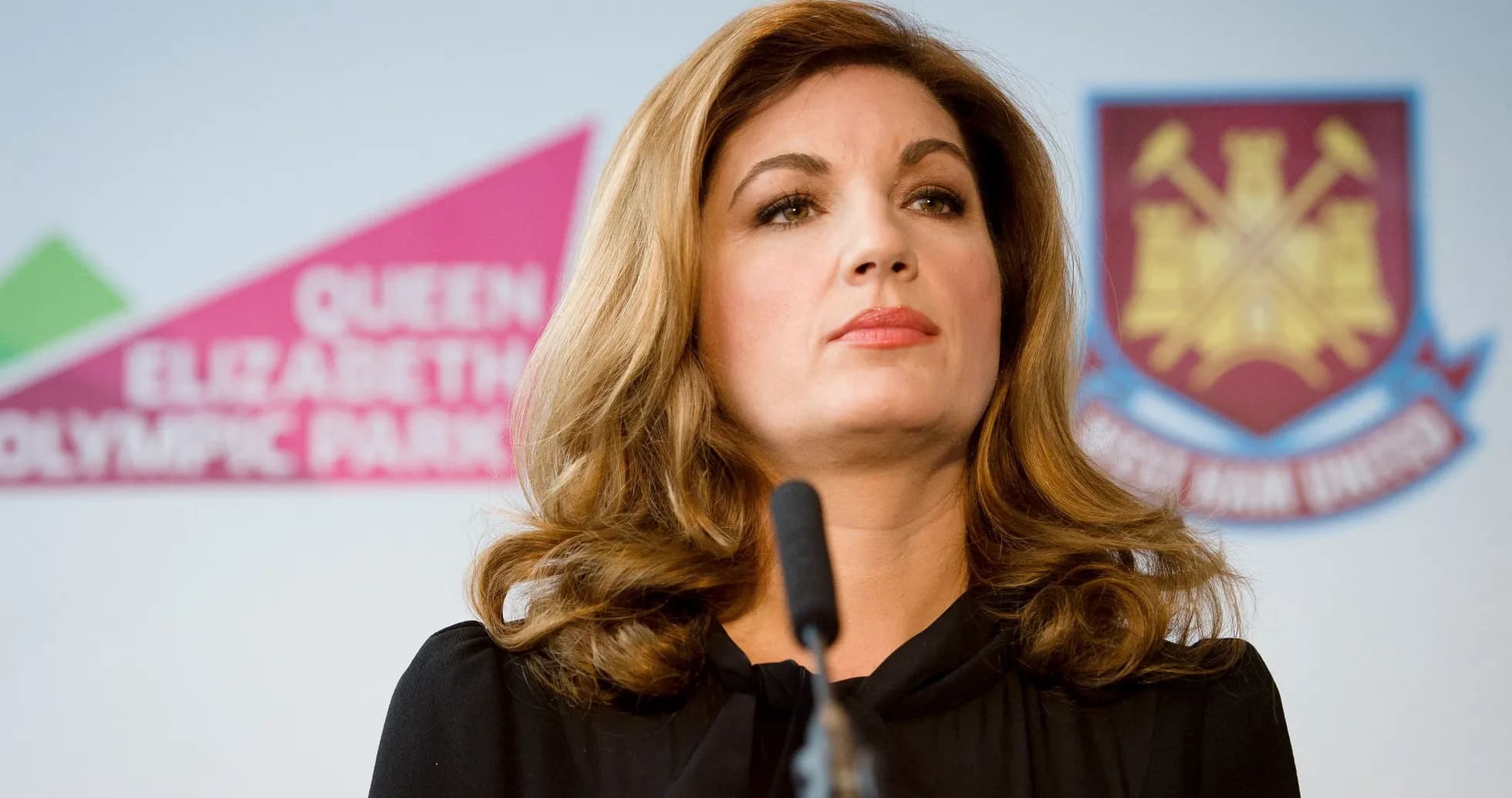
Karren Brady's Departure Marks a New Era for West Ham United
Karren Brady steps away from West Ham United with the weight of an era on her shoulders and a European trophy in her hands.
After nearly four decades working alongside joint-chairman David Sullivan, her departure closes one of the most enduring and influential partnerships in English football’s boardrooms. From Birmingham City in the early 1990s to the turbulence and triumphs of East London, Sullivan and Brady have been a constant double act in a sport that rarely stands still.
The architect of a new West Ham
When Brady arrived at West Ham in 2010 with Sullivan and the late David Gold, the club was clinging to its traditional identity at the Boleyn Ground while staring at an uncertain financial future. She quickly became the driving force behind the most contentious and transformative decision of the club’s modern history: leaving Upton Park for the London Stadium.
The move in 2016 split opinion and still does. But commercially, it changed the scale of West Ham overnight. Brady led the negotiations that secured tenancy of the 62,500-capacity arena, a deal that allowed the club to build a season-ticket base in excess of 50,000. That shift turned West Ham from a tight, atmospheric old ground into one of the Premier League’s largest homes.
It was her project, her gamble, and ultimately her legacy.
On the club’s official channels, Brady called it “a privilege” to work with the board, management, players, staff and supporters, highlighting one moment above all: lifting the UEFA Europa Conference League trophy in Prague in 2023. For a generation of West Ham fans, that night – a first major trophy in more than four decades – will always be tied to the era she helped shape.
Glory in Prague, strain at home
The image of West Ham’s players celebrating in Prague sits in stark contrast to the backdrop of Brady’s final season. Off the pitch, the club reported a pre-tax loss of £104.2 million in February. On it, Nuno Espirito Santo’s side has been dragged into a relegation fight, and the mood has darkened.
Fan protests have periodically turned on the board, a reminder that in football, success never fully shields decision-makers from scrutiny. The same executives who oversaw European glory also stand accused by some supporters of losing direction as the team struggles to stay in the top flight.
Yet even critics rarely question Brady’s commercial clout. She has been central to almost every major deal of the club’s recent history: from the London Stadium contract to the headline-grabbing, British record transfer fee received for Declan Rice’s move to Arsenal. Those negotiations underpinned West Ham’s attempt to compete with the Premier League’s elite while balancing its books.
Praise from the power brokers
Sullivan, who first appointed Brady as managing director of Birmingham City in 1993 when she was just 23, did not hold back when reflecting on her exit. He described her as “an exceptional leader and a key figure in the Club’s development over the years,” thanking her for an “outstanding contribution” across 16 years in claret and blue.
Joint-chair Daniel Kretinsky, who arrived later but quickly came to rely on her experience, went further in detailing the breadth of her influence. He highlighted the London Stadium’s long-term contract, the transition of shareholders and the Rice transfer as “absolutely essential” to West Ham’s growth, noting that her impact was “not always fully appreciated.”
Inside the Premier League corridors of power, Brady has long been a prominent figure. Kretinsky underlined how highly regarded she is within the league’s leadership circles, calling her an excellent representative of West Ham at that level. Few executives have straddled club politics, commercial expansion and league governance as visibly as she has.
A door closes, but not on football
Brady now walks away from the daily grind of running a Premier League club – the endless meetings, the negotiations, the crises that flare up with every bad result. Yet she has made it clear her connection to the game is not ending here.
She insists her passion for football remains intact and that she intends to keep backing the next generation of leaders. For someone who broke into the industry at 23 and became one of its most recognisable female executives, that commitment carries weight.
Her departure, though, leaves a sizeable gap in West Ham’s boardroom. The club must now navigate financial pressure, a relegation battle and the long-term questions around squad building and stadium identity without the executive who fronted so many of its defining decisions.
West Ham have already changed stadium, squad and status during Brady’s tenure. The next change comes at the top of the club’s hierarchy. How they handle life without her will shape what this new era really looks like.