Khvicha Kvaratskhelia: PSG’s Game-Changer After World Cup Absence
The World Cup was sold as a festival for the game’s biggest names, a month where every superstar took centre stage. They did, to a point. But as the club game returns with the UEFA Super Cup in Salzburg, the spotlight swings back to a man who never made it there – Khvicha Kvaratskhelia.
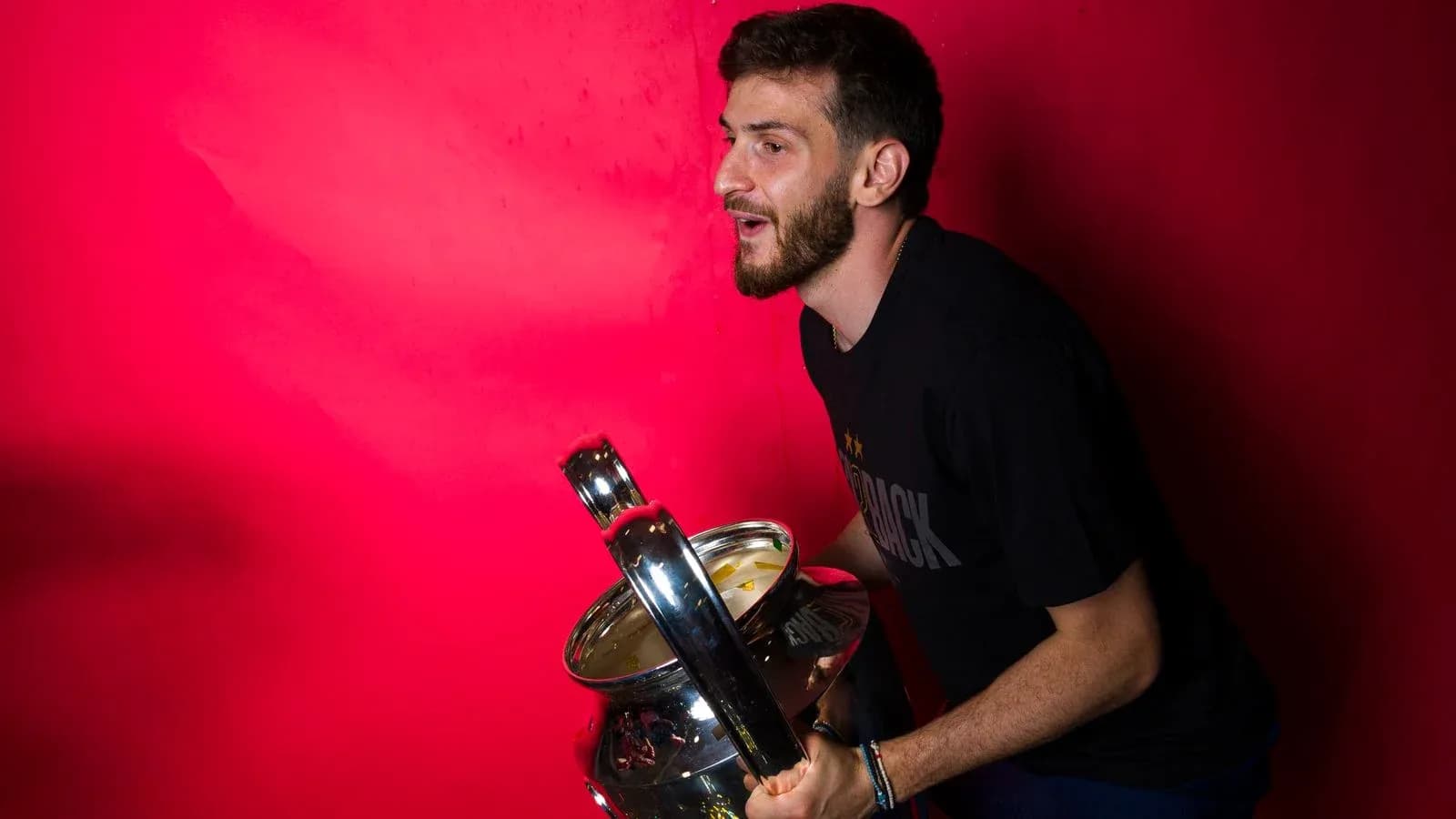
The 25-year-old arrives as the reigning Champions League player of the season, the driving force behind Paris Saint-Germain’s successful title defence in May. In August, he goes hunting a threepeat, determined to remind everyone that one of Europe’s most devastating footballers watched the World Cup from afar.
Others have collected the trophies and the headlines. Marquinhos has lifted the Champions League twice in PSG colours. Desire Doue and Vitinha walked away with man-of-the-match awards in Munich and Budapest. Ousmane Dembele claimed the Ballon d'Or after spearheading that first historic European crown.
But the hinge point of this PSG era, the moment their dominance truly took shape, came with one signing from Naples.
The signing that changed everything
When PSG plucked Kvaratskhelia from Napoli in January last year, they were good, dangerous, always in the conversation. Yet in Europe they felt short of terrifying. Something in the mix did not quite click.
That changed overnight.
Kvaratskhelia turned them into a snarling, relentless pressing side. His energy without the ball matched his imagination with it. Luis Enrique’s demands suddenly looked less like theory and more like habit. The Georgian’s intensity reset the bar for the rest of the forward line. Standards went up. So did the trophies.
Aston Villa, waiting for them in this season’s UEFA Super Cup, have already felt the full force of that shift. In the first leg of last season’s Champions League quarter-final, Kvaratskhelia’s dancing feet shredded Axel Disasi, a tormenting display that left Villa hanging on. Over two legs, it was arguably PSG’s sternest test of the entire knockout run.
Kvaratskhelia did not just pass that test. He owned the latter stages of the competition. From the play-off round onwards, no player scored more goals. No one produced more assists from open play in the Champions League. When the pressure peaked, he rose with it.
The body of work is starting to look imposing.
Before Paris, he had already written himself into Napoli folklore. He dragged them to a long-awaited Serie A title, smashing the myth that only Diego Maradona could deliver such a miracle. The nickname “Kvaradona” was born not from marketing, but from nights when he looked genuinely unstoppable.
An outlier in a world of systems
Part of the fascination with Kvaratskhelia is that he does not fit the modern template. He is not the product of a polished academy machine, not another graduate of a carefully engineered pathway.
Many of his PSG team-mates are. France churns out elite talent with conveyor-belt efficiency. In England, revamped academies, Premier League money and high-performance environments have combined to produce wave after wave of stars.
Kvaratskhelia comes from a different place entirely.
Leonid Slutsky, who coached him at Rubin Kazan, captured it succinctly back in 2023. “Nobody knew about him before he came to Italy and that is understandable,” he said, before delivering the line that still rings around Naples: “I congratulate Napoli because they won the lottery.”
Slutsky spoke of “abnormal thinking” on the pitch, a player who instinctively chooses the option nobody else sees. Xisco Munoz, who played and coached at Dinamo Tbilisi, believes the roots lie in where and how he learned the game.
“In Spain, we stop and pass, maybe learning on a training ground or at school,” Xisco told Sky Sports. “In Georgia, it is street talent. In Georgia, they play their football on the street. They have to fight and have the contact. It is difficult to teach this in school.”
That edge shows. The feints, the sudden changes of direction, the refusal to play safe when the game screams for caution – they all look like habits forged on rough pitches, not manicured academies.
David Webb, who worked with him in the Georgian national set-up, remembers a player who simply would not leave the training ground. Process-driven. Obsessive. Not a showman practising tricks for the cameras, but a professional who has attacked every day of his career in the same way.
A quiet summer, a louder season?
All of that makes this summer’s absence from the World Cup a strange twist in his story. Georgia’s failure to qualify shut the door on the game’s grandest stage. For Kvaratskhelia, who had dragged his country to Euro 2024 and then played in the Club World Cup last year, it finally opened a window to breathe.
His body needed it. Years of constant football, constant responsibility, constant travel – something had to give. This was his first real opportunity to reset.
The trade-off is obvious. Ballon d'Or races in World Cup years are often decided under the glare of that tournament. Kevin Keegan managed to win the award in a World Cup year without England even qualifying, but that was a different era, when only European players were eligible and Argentina had just lifted the trophy.
Now the field is crowded. World Cup-winning Spaniards carry both medals and momentum. Kylian Mbappe and Harry Kane continue to post absurd scoring numbers for club and country. The narrative tilts towards them.
Kvaratskhelia has to drag it back.
The Super Cup in Salzburg offers a platform to do exactly that. One game, under the lights, against a hungry Aston Villa side who know exactly what he can do and still might not be able to stop it.
Right now, his individual brilliance does more than decorate PSG’s play. It drives it. The best team in Europe leans on his chaos, his courage, his refusal to play within the lines.
Khvicha Kvaratskhelia, the outstanding player of last season’s Champions League and PSG’s warrior on the wing, has had his rest.
Now he goes again.