Klement's Model Predicts Netherlands to Win World Cup 2026
Paul the Octopus needed nothing more than a glass tank and a couple of mussels to become a global star in 2010. Eight arms, zero spreadsheets, and a perfect record on Germany’s World Cup results.
Fourteen years on, the oracle of world football is not a cephalopod in Oberhausen, but a bespectacled economist in London armed with data, probability and a healthy dose of cynicism.
Joachim Klement has done what Paul never could: he hasn’t just called matches, he has nailed the last three World Cup winners in a row. Germany in 2014. France in 2018. Argentina in 2022. Each one spat out by a model he originally built to mock the very idea that economists can predict the future.
Now his numbers say the Netherlands.
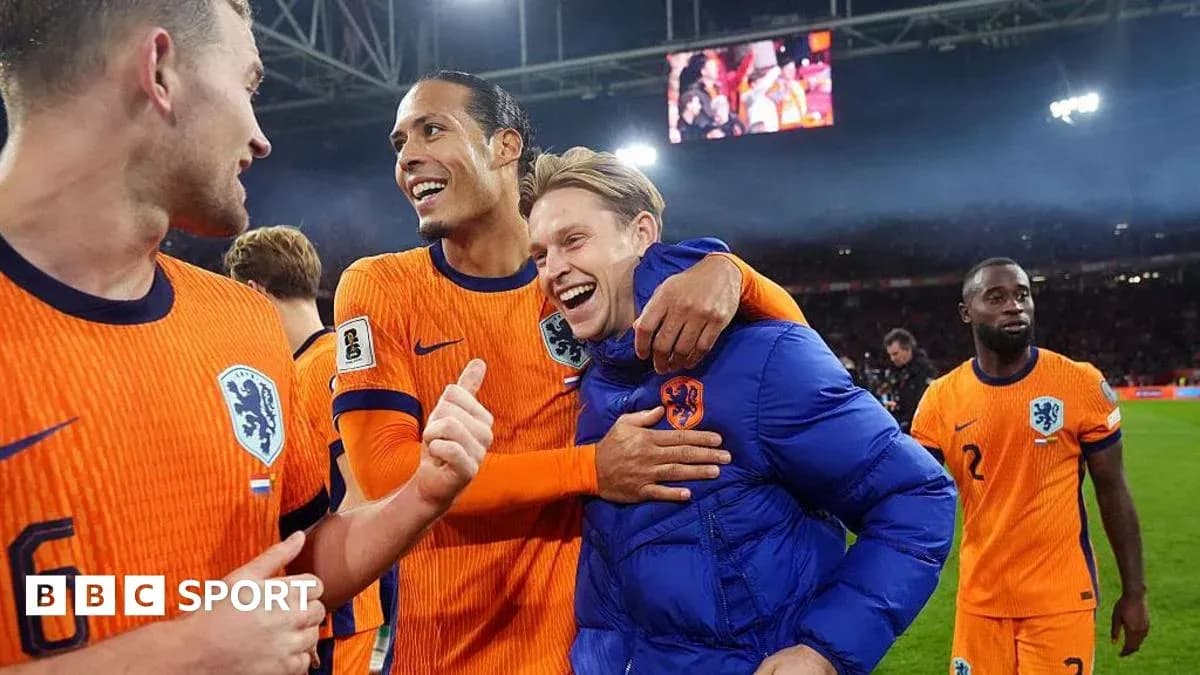
If Virgil van Dijk lifts the trophy in July, the Dutch will become the fourth straight champions to validate Klement’s statistical prophecy, turning a tongue‑in‑cheek academic exercise into one of the most uncanny streaks in modern sport.
A model that was meant to fail
Klement, a strategist at investment bank Panmure Liberum and a self-described “pessimist”, never set out to become football’s data guru. He wanted to expose hubris.
“This started as an exercise in showing the world a hubris of economists who think they can forecast stuff that they actually have no clue about,” he says. “And now it's become an exercise in how, if you're lucky often enough, people will think you're a guru.”
The idea was simple. Take the big, structural forces that shape international football – population, national wealth, climate, Fifa world rankings – and see how far they go in explaining who wins a World Cup. Not the bounce of a ball or a wayward whistle. The cold, systemic stuff.
He ran the model for Brazil 2014. It pointed to his native Germany. They won.
That, he assumed, was the punchline. Run it again four years later, let it fail in Russia, and the lesson would be obvious: even the best models break.
Except in 2018, the numbers said France. They won.
He tried again in 2022. This time the output was Argentina. Lionel Messi completed his career’s missing chapter in Qatar, and Klement’s “this will show them” project quietly morphed into something very different.
“Because I was right three times in a row, people now think that this model is unbeatable and that I obviously will have to be right as well next time,” he says.
Netherlands to rule the world?
The next time is 2026, and the model has spoken. The Netherlands, historically the great nearly men of international football, are his pick to win it all.
That’s not all it forecasts. Klement’s projections sketch out the full shape of the expanded 48-team tournament. They have Japan springing a shock by beating Brazil in the second round. They have Scotland failing to escape their group. They have England, as so often, charging deep into the knockout stages only to run into an old ghost.
According to the model, England reach the semi-finals before Portugal knock them out – 20 years after the Portuguese ended their 2006 campaign. The spreadsheet does not go as far as predicting “penalties, again”, but the echo is obvious enough.
It reads like a script. Klement insists it isn’t one.
The other 50 per cent
For all the attention his work now attracts, he is the first to underline its limits.
Yes, World Cup success leans heavily on those systemic factors: the size of your talent pool, the money in your game, how your players cope with heat or altitude, the form line of your national team. Those are measurable.
But they are not decisive on their own.
“The other 50% is luck,” he says. “Every match – especially when you have these high-quality teams playing against each other that are very similar in skills and quality – it really depends on the form of the day, a ref call, a piece of luck in the sense of hitting the post versus the ball going in.
“Things like that are completely unpredictable.”
That tension is the point. The model can map the terrain. It cannot script the drama.
Distraction in a fractured world
Every four years, as another World Cup looms, Klement returns to his code. It is, he admits, a welcome escape from the grind of his day job and the state of the wider world.
“In particular in 2026, when there are so many crises, wars and things going on, it is something that makes me feel good and hopefully the readers feel good and gives them a little bit of a distraction from all the kind of bad stuff that is going on in the world.”
The readership has grown with each successful call. So has the pressure.
What began as a playful jab at economic forecasting now comes with real money on the line – not his, but that of colleagues and readers who have started treating his quadrennial note as a betting guide.
Office oracle
Inside Panmure Liberum, the questions come thick and fast. Not about inflation or interest rates, but about Dutch squad depth and injury lists.
How will Xavi Simons’ ACL injury affect the Netherlands’ chances? Does the model adjust for that? Can one absent midfielder tilt a probabilistic universe?
Klement hears it all at his desk. He patiently reminds people that his work is built on long-term structural data, not last-minute team news. Then he watches them place their bets anyway.
“I've got several colleagues who bet some money on the Netherlands in response to me publishing that note,” he says.
So what happens if the Dutch crash out early, if the streak ends with a whimper in the round of 16?
“And if the Netherlands get eliminated from the World Cup, I think the next day I have to work from home.”
The economist who set out to puncture the myth of prediction now lives with a different burden: three World Cups of perfection, a fourth on the line, and a workplace full of gamblers refreshing their betting apps every time the Oranje take the field.