Kubo Takefusa's Injury: Japan Faces Brazil Without Their Star
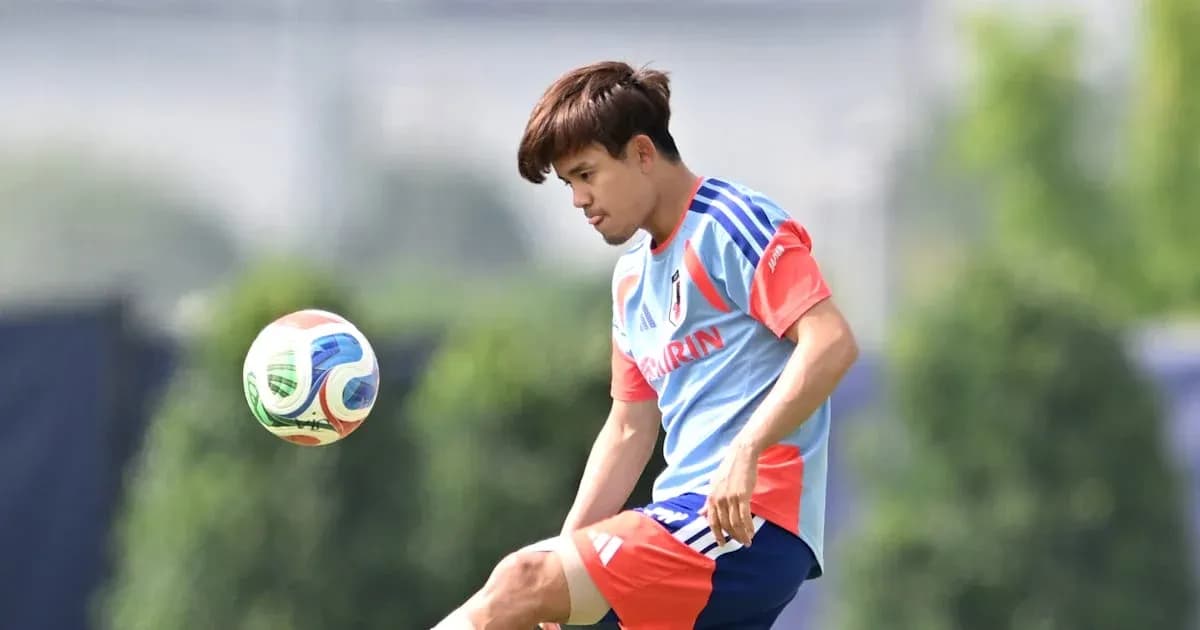
The tape around Kubo Takefusa’s left knee tells a different story to his words.
“I’m good,” he said on the eve of Japan’s World Cup round of 32 showdown with Brazil, a casual shrug at an injury that has already cost him two matches. In reality, since crumpling to the turf in Japan’s tournament-opening draw with the Netherlands, the Real Sociedad playmaker has done little more than rehab work and solitary running. The knee is heavily strapped. The ball has barely been at his feet.
On Sunday, coach Moriyasu Hajime cut through any lingering optimism.
Kubo will not play.
For a country preparing to stay up until 1am to watch Brazil under the floodlights and perhaps whisper “what if?” into their living-room walls, it was a blunt blow.
“I’m hoping for a speedy recovery and he’s doing everything he can to pick up his conditioning,” Moriyasu said at the pre-match press conference, choosing his words carefully but leaving no room for debate. Japan’s most gifted left foot will be watching this one.
A missing magician
There is no real argument here: Japan are a better side with Kubo than without him. At 25, he brings a flair and inventiveness that no one else in this squad quite replicates. He can slip between lines, change tempo, unlock a defence with a half-glance and a disguised pass. In a team built on structure and cohesion, he is the player who bends the script.
His influence had only grown as Japan’s injury list lengthened. With Mitoma Kaoru, captain Endo Wataru and Minamino Takumi all ruled out, Kubo had begun to step into a leadership void. Around the training camp, his voice carried a little further, his presence a little heavier. This was becoming his team as much as anyone’s.
Now, suddenly, it is not.
Depth as a weapon
Japan, though, have spent this tournament proving they are more than one man’s imagination. Their backbone is depth, genuine depth, the kind that allows a coach to shuffle the deck without the whole structure collapsing.
Moriyasu has already used all but three of his 26-man squad. The only outfield players yet to feature are the two backup goalkeepers. Everyone else has been asked to contribute; almost everyone has. The “next-man-up” mantra that often sounds like a hollow sporting cliché has, for this group, become a way of living.
So Kubo’s absence hurts, but it does not automatically spell doom. It simply asks a different question of Japan: can the collective outshine the lack of a star turn?
No fear of the old giants
The opponent, of course, is Brazil. For generations of Japanese football fans, that single word carried an aura that needed no explanation.
When the J.League launched 33 years ago and professional football finally took root in Japan, Brazil were the gold standard. Their players were the idols, their style – Joga Bonito – the dream. Japanese youngsters grew up copying Brazilian stepovers in cramped schoolyards, and any meeting with the Seleção felt like an occasion to bow, figuratively if not literally.
Listen to this Japan side, and you hear something very different.
Asked who he considered the strongest teams at this World Cup, Wolfsburg striker Shiogai Kento name-checked France and Argentina. Brazil did not make his list.
“You don’t really hear about Brazil lately,” he said, a line that would have been unthinkable in 1993.
The same confidence coloured his answer about Neymar, the man who has scored nine goals in five previous games against Japan.
“That’s Neymar of the old. I think we’re OK right now.”
It was not disrespect so much as a statement of how far Japan believe they have come. The awe has gone. The deference has gone with it.
A nation on edge
Still, the stakes are unmistakable. Across Japan, lights will burn late into the night as fans gather around televisions, phones and projector screens. They will know Kubo is missing. They will know Brazil remain Brazil, even if this generation does not talk about them in hushed tones.
They will also know this team has not come to North America merely to make up the numbers. Japan have said it out loud: they think they can beat Brazil, and they are here to win the World Cup. With Kubo, that ambition felt like a bold but plausible dream. Without him, it becomes an even sterner examination of their belief in the collective.
The talent gap on paper is one thing. The mental gap that once existed between these nations has shrunk dramatically. Comments like Shiogai’s underline that shift. The question is whether the result will finally follow.
For decades, Brazil set the standard and Japan chased it. Tonight, with their creator-in-chief confined to the sidelines and tape wrapped tight around his knee, Japan will try to prove they no longer run in anyone’s shadow.
The awe has faded. Now we find out if the fear has gone with it.